Saturday Parts & Stuff


The Celtic goddess Epona was protectress of horses, asses, and mules, as well as their human caretakers. 

Epona’s feast day on the Roman calendar was December 18. The Romans embraced her as protectress of the Roman cavalry,  invoked her on behalf of the Emperor, and worshipped her as Epona Augusta or Epona Regina. She even had a shrine in the barracks of the Imperial Bodyguard.

The worship of Epona in stables is described in The Golden Ass by Marcus Apuleius.

Apuleius writes of shrines that were built for Epona, not just in temples but also in stables, presumably to protect the horses and asses in them. ♥

We’re heading out on an excellent adventure with Bernard today. I’m sure the scene before we leave will go a little something like this:

Bernard: Mamma, do you have to brush my hair? I hate it!

Me: Yes, Bernard. Remember you only get one chance to make a first impression, and I won’t have you looking like a vagabond when we get there.

Bernard has his first play date today. I’m so excited I can’t stand it. ♥

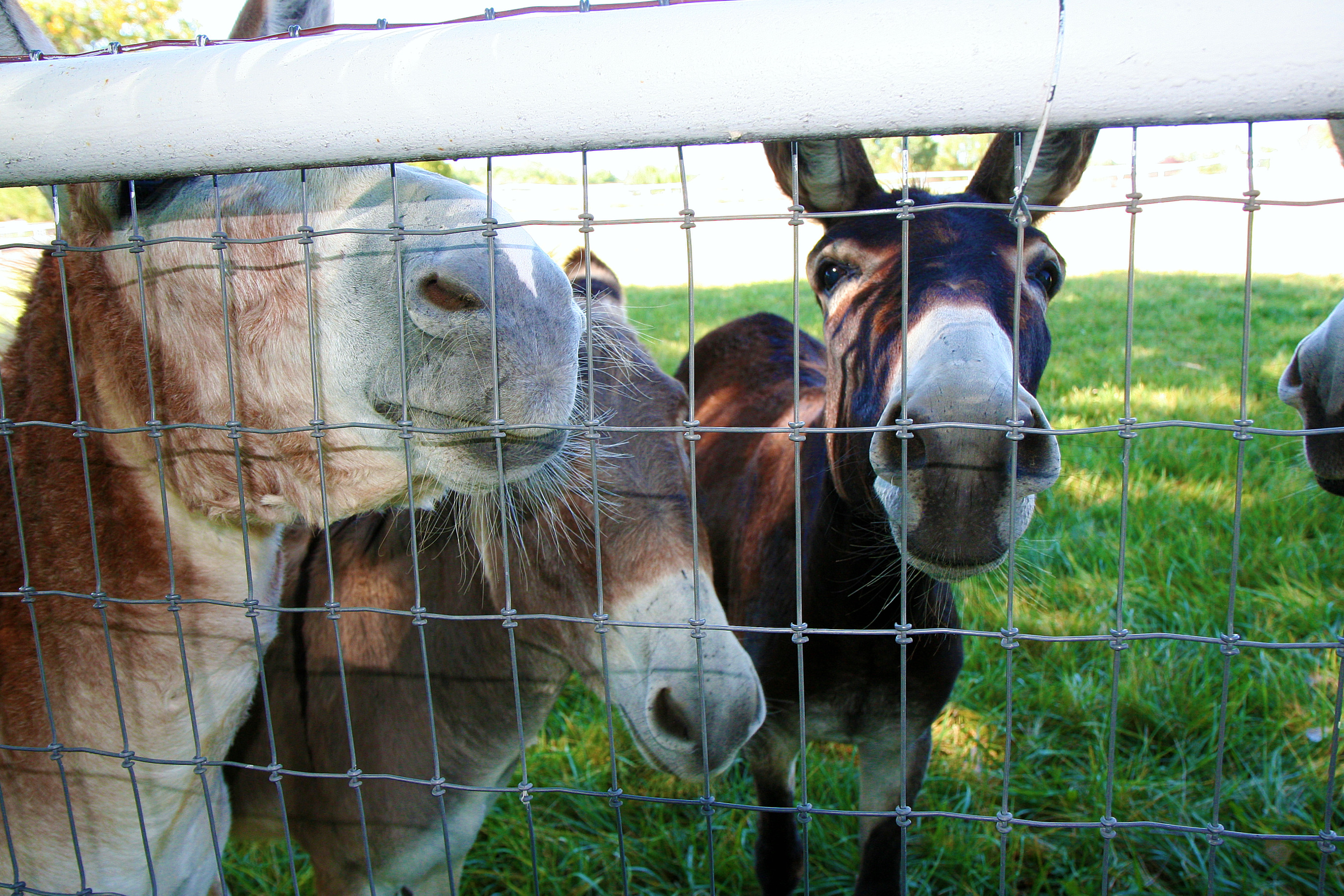
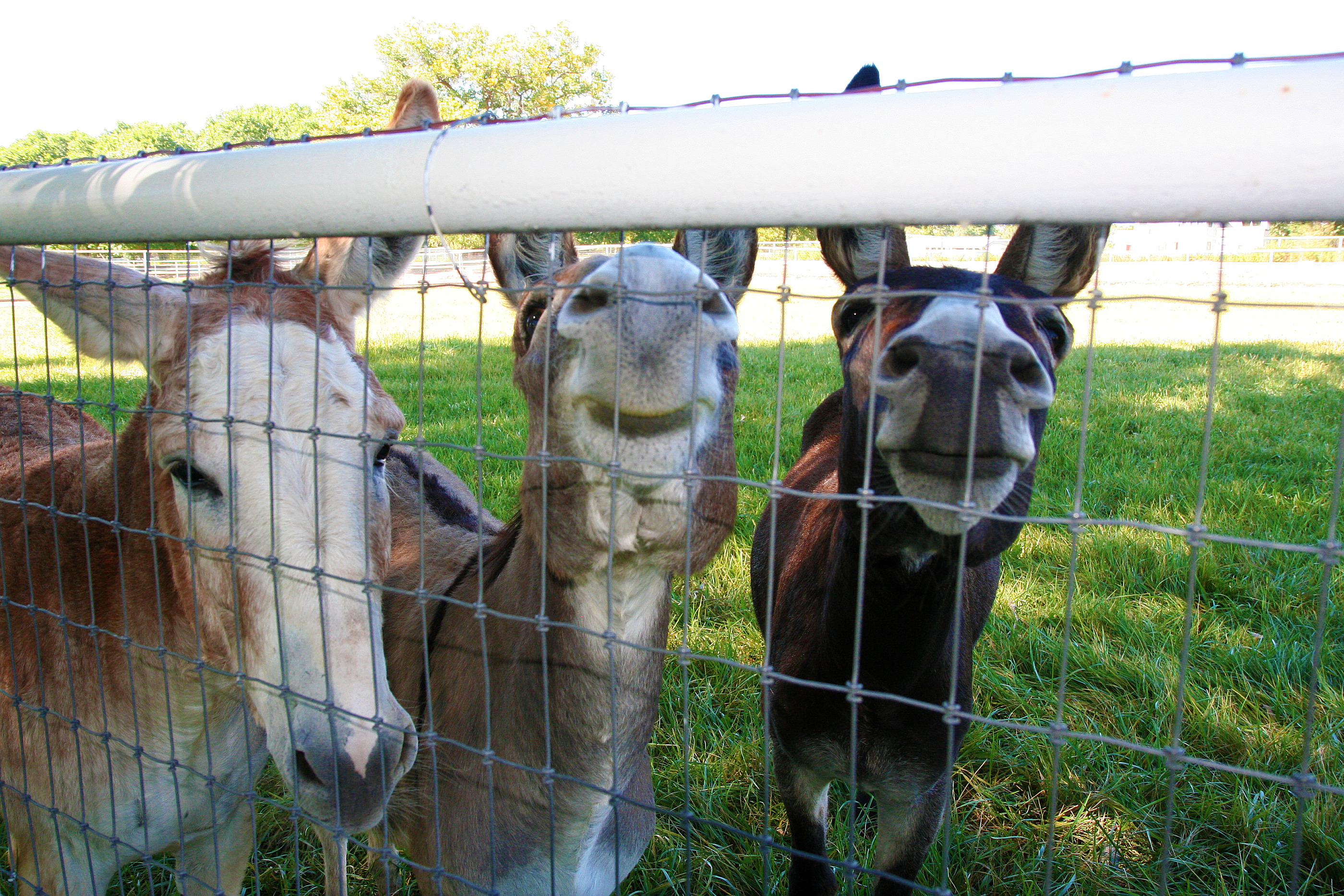
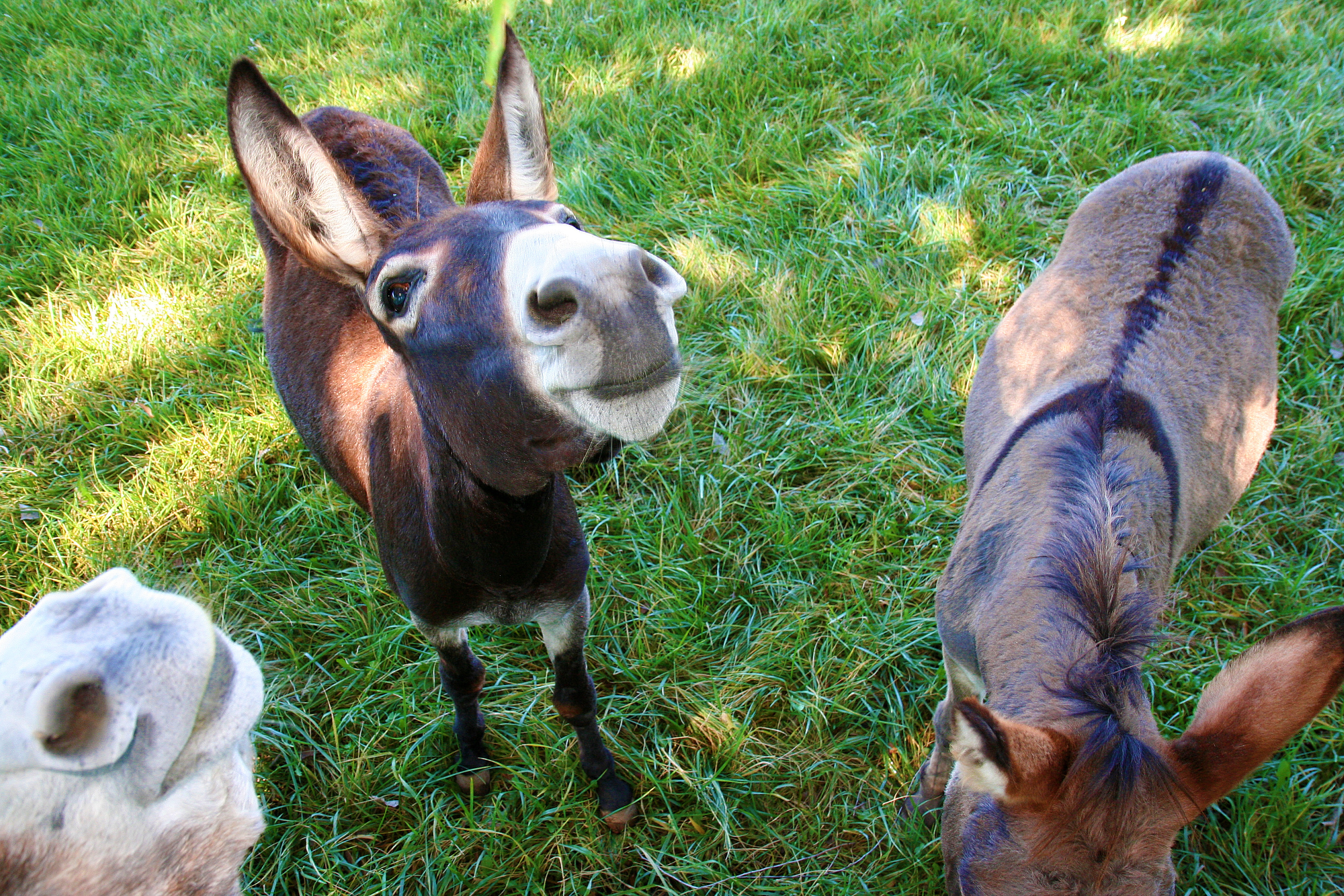
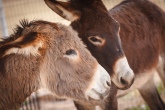
You know that one thing each of us has that can make us go weak in the knees? Turns out, Nigel’s weakness is weeping willow leaves.

(By the way, if you click on the picture below, you’ll see that not only is Bernard smiling, he has green lips.)

My goodness. Look at the unwavering concentration on Nigel’s face, and the cute pattern of color that travels up from his lips to his nostrils. Another discovery. I noticed this for the first time yesterday.

In any case, I’ve never seen Nigel so animated and excited… more proof he really is getting more comfortable here. Love it. ♥

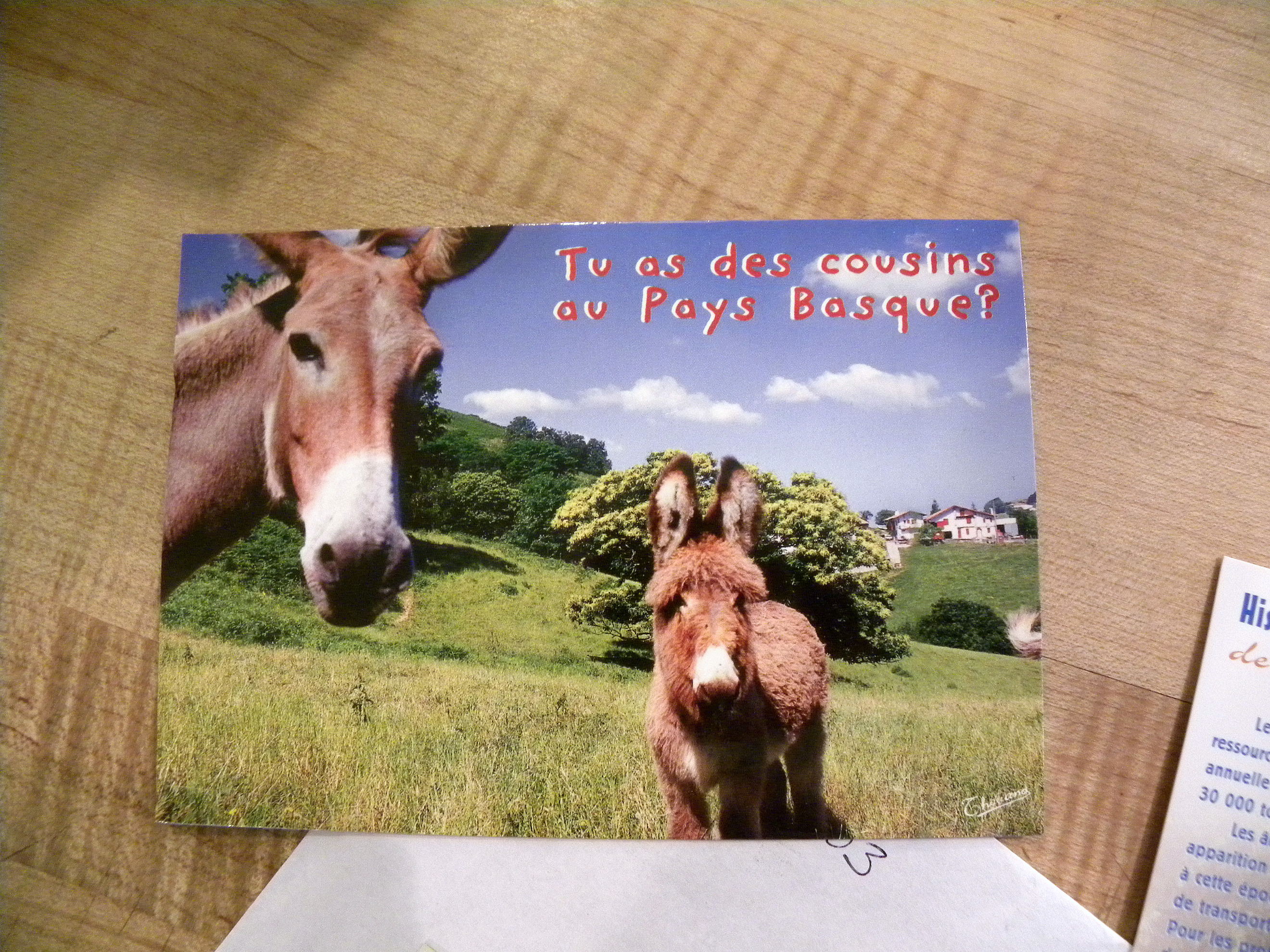
Look at what we received in the mail yesterday. Postcards from France. The boys were absolutely thrilled to know that someone across the pond was thinking of them. Thank you Vicki!

Vicki from I Need Orange recently returned from an amazing trip to France with her daughter. Be sure to check out Vicki’s blog to get the inside scoop.

Vicki found this postcard in Bayonne. It says, “You have cousins in Basque country?”  Vicki was sure she knew four guys in Albuquerque who did.
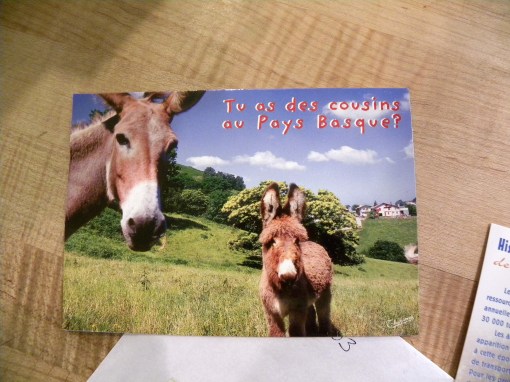
Then she got to La Rochelle, and there were donkeys everywhere. Donkeys everywhere – in pajamas! Sea salt is a major product of the area and donkeys help haul the salt. The “culottes” (typically described as stockings, leggings or knee-high boots) help to protect donkeys there from mosquito bites.

The postcard says the donkeys in culottes are one of the main folkloric elements of Ile de Ré – right by La Rochelle.

Needless to say, Bernard might be in a bit of a bind. I’m thinking Bernard would look adorable in a couple of pairs of culottes. We just happen to know someone who knits… Hi Cathy!

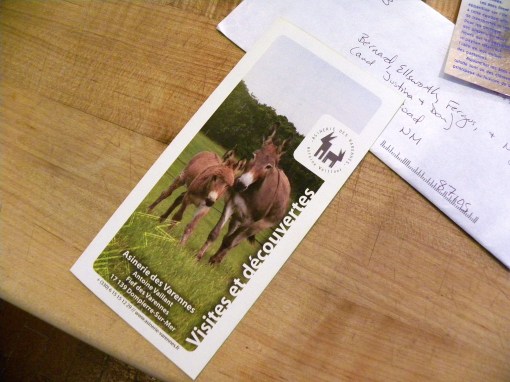
And then, goodness! Vicki said she saw this brochure and picked it up, but only as she was mailing it to us did she read it. They are keeping donkeys for their milk!  The brochure says that visitors can taste the milk, and that they make skin-care products, including soap, from the milk. As Vicki said, “Who knew??”

We’re surprised too! Vicki said that she ate lots of goat yogurt and sheep yogurt while she was in France… and just think, maybe she could have had donkey yogurt!!! ♥
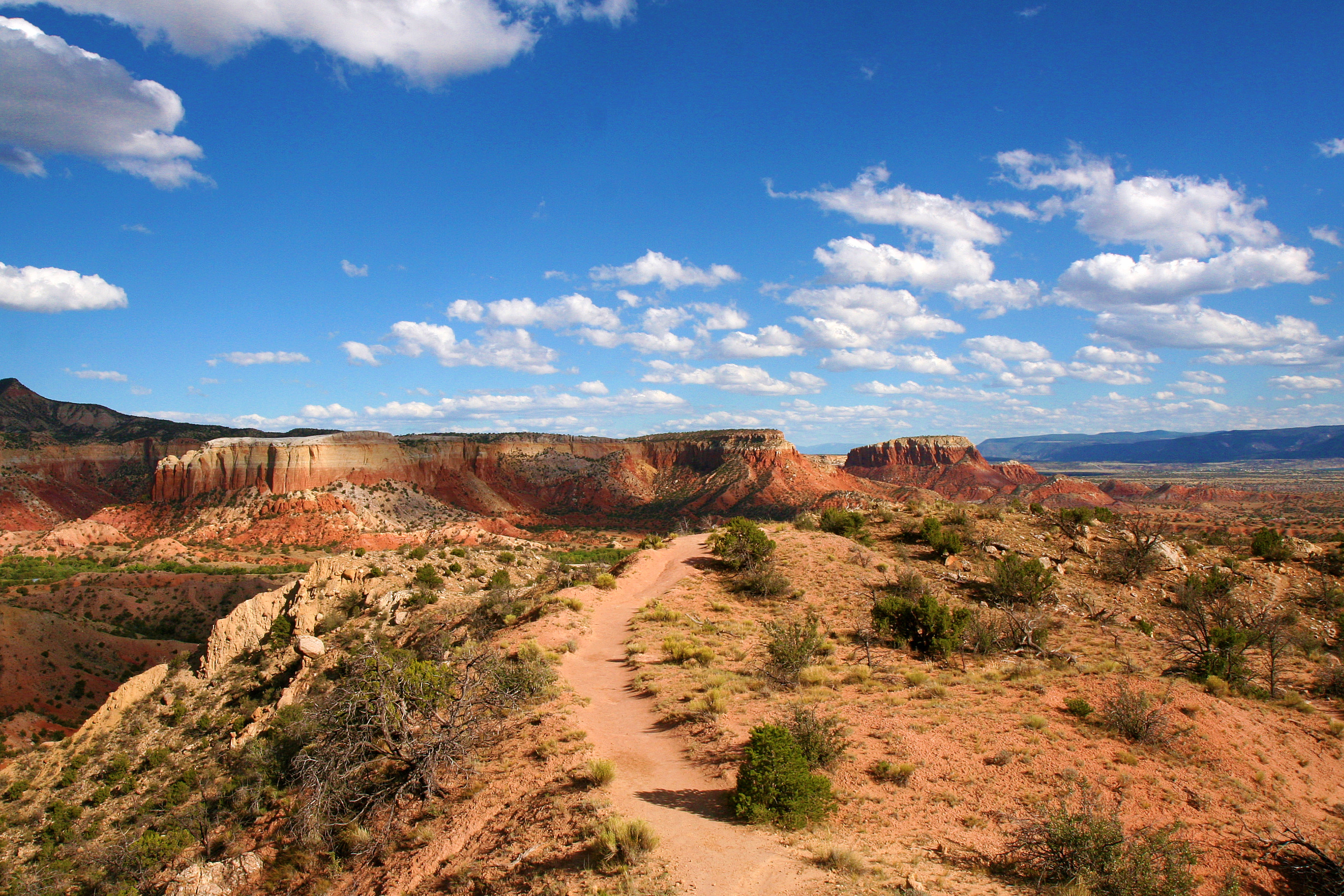
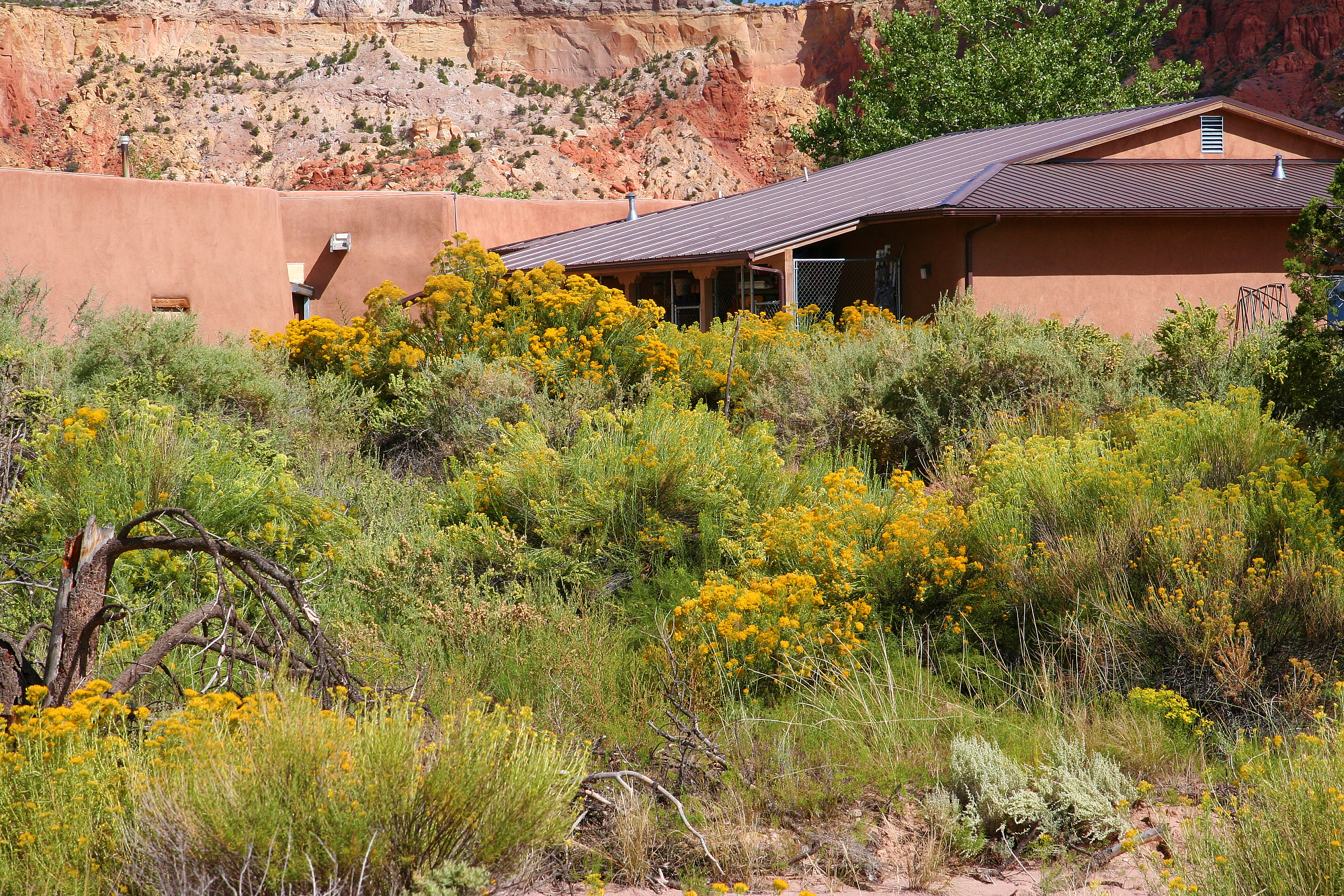
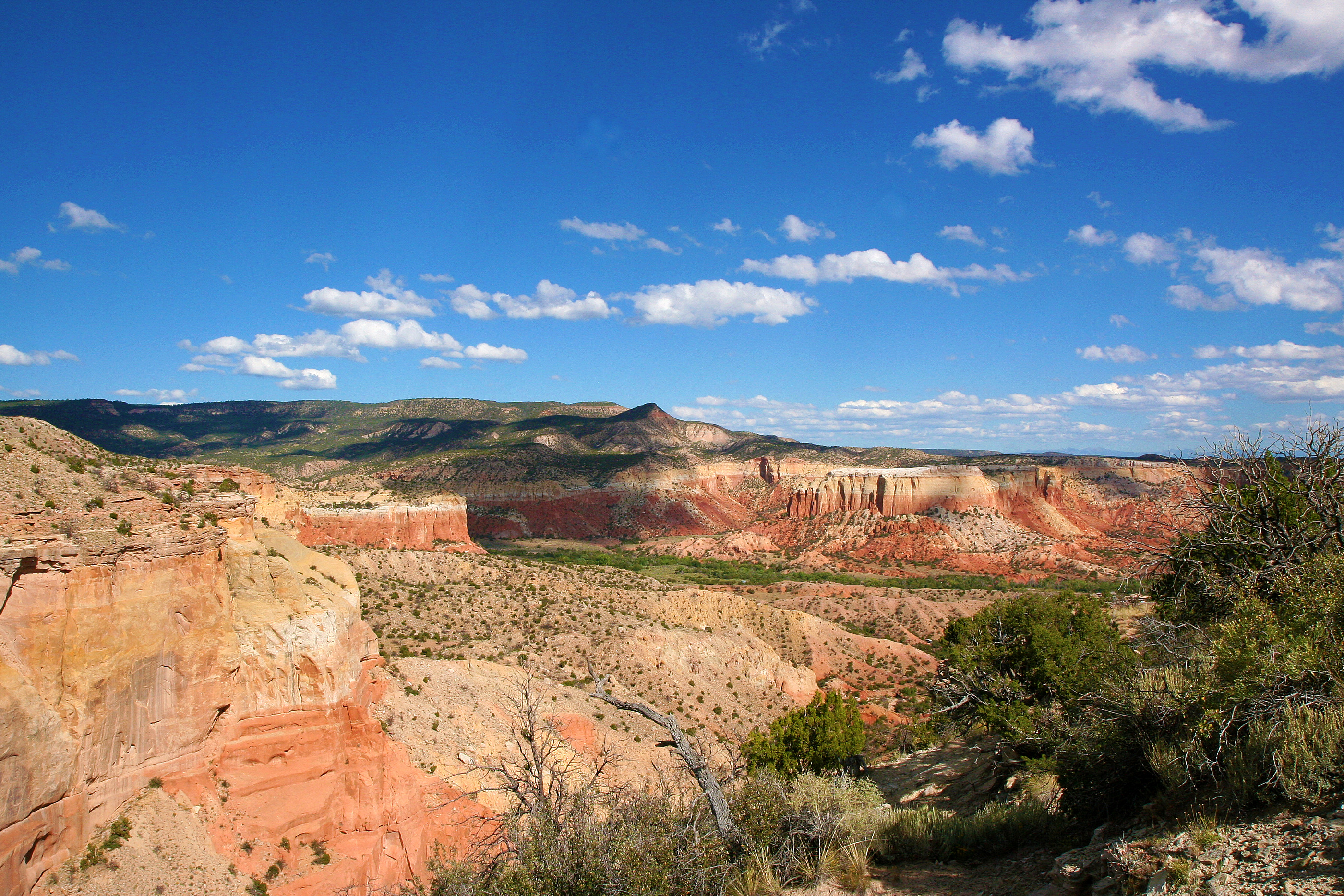
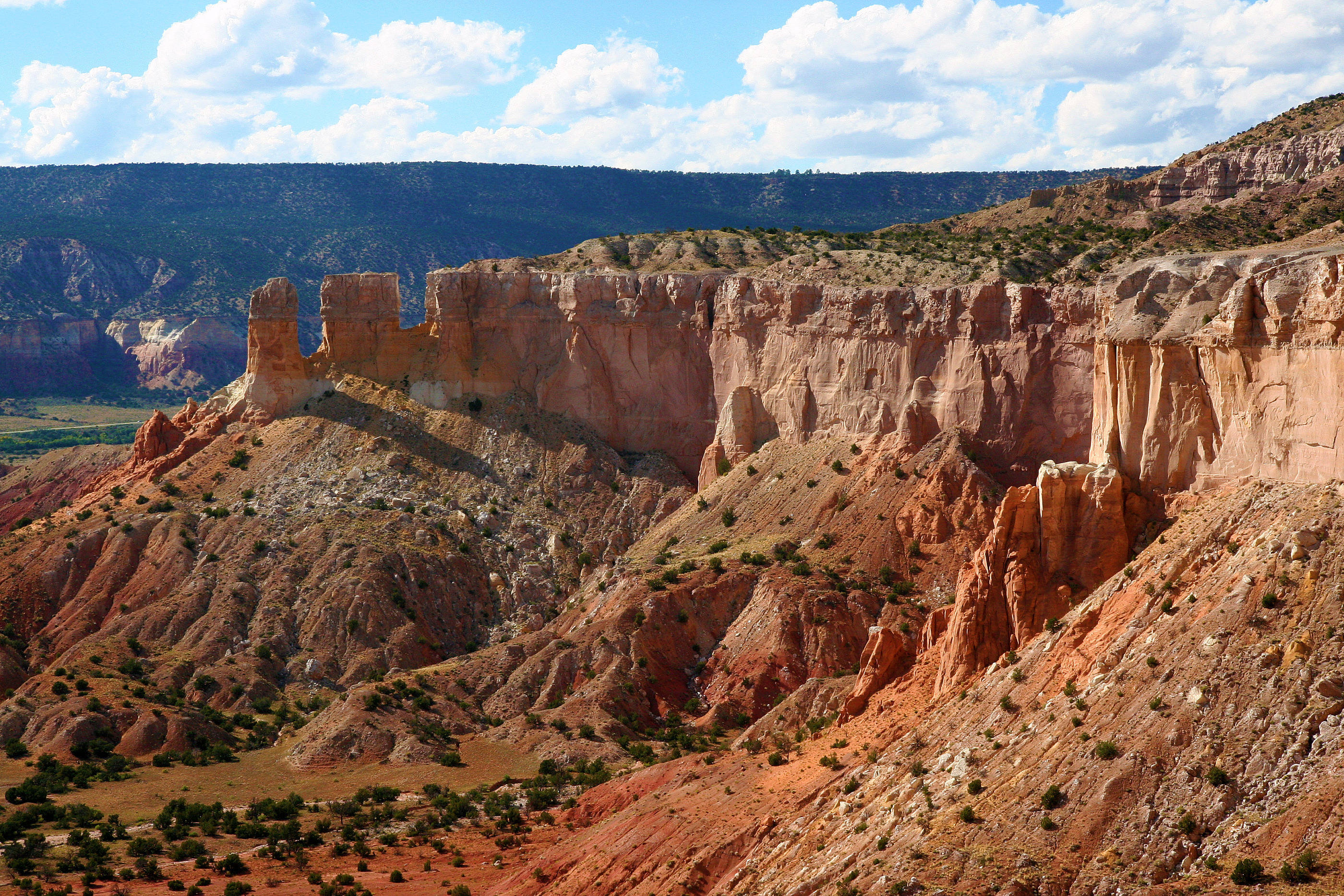
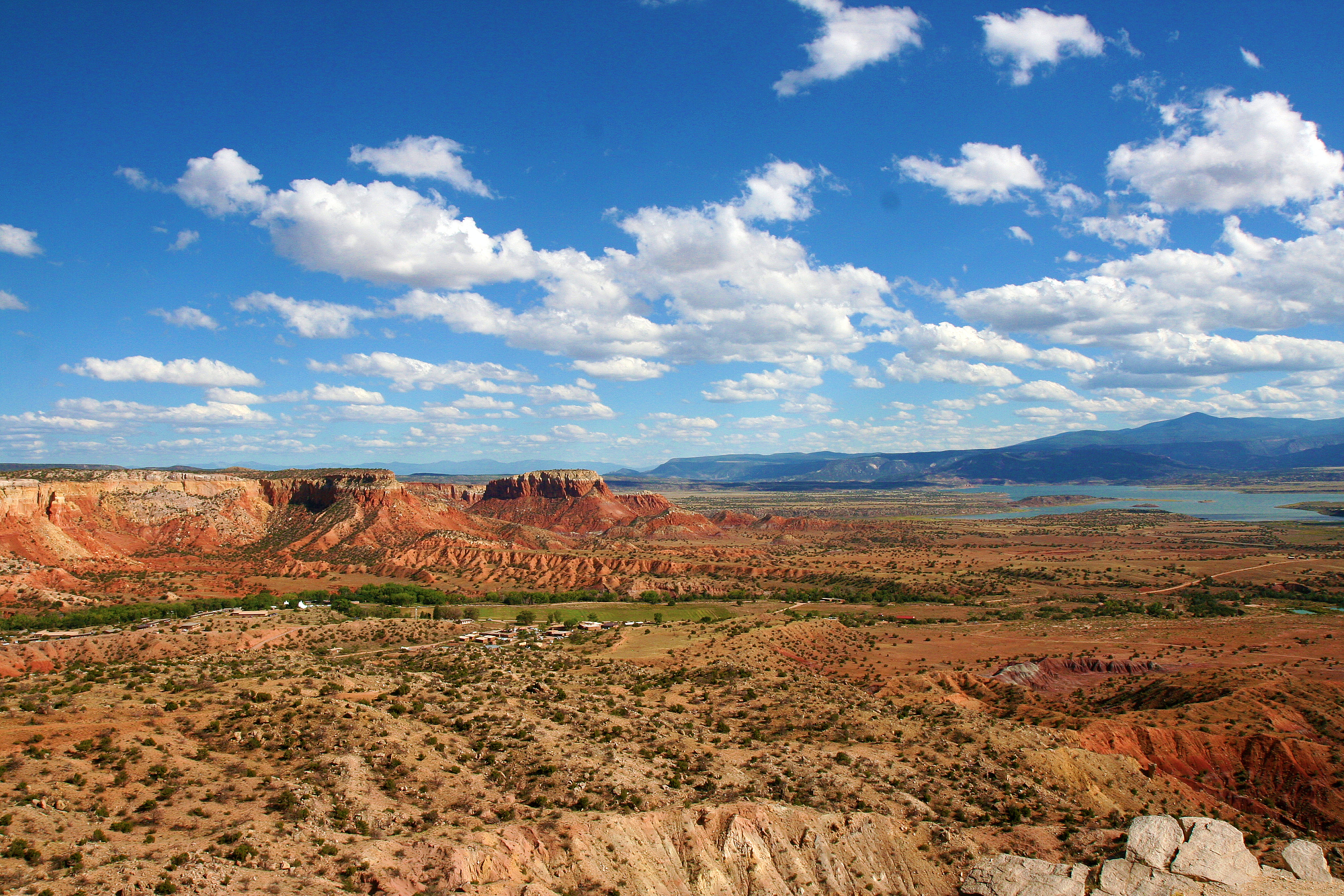
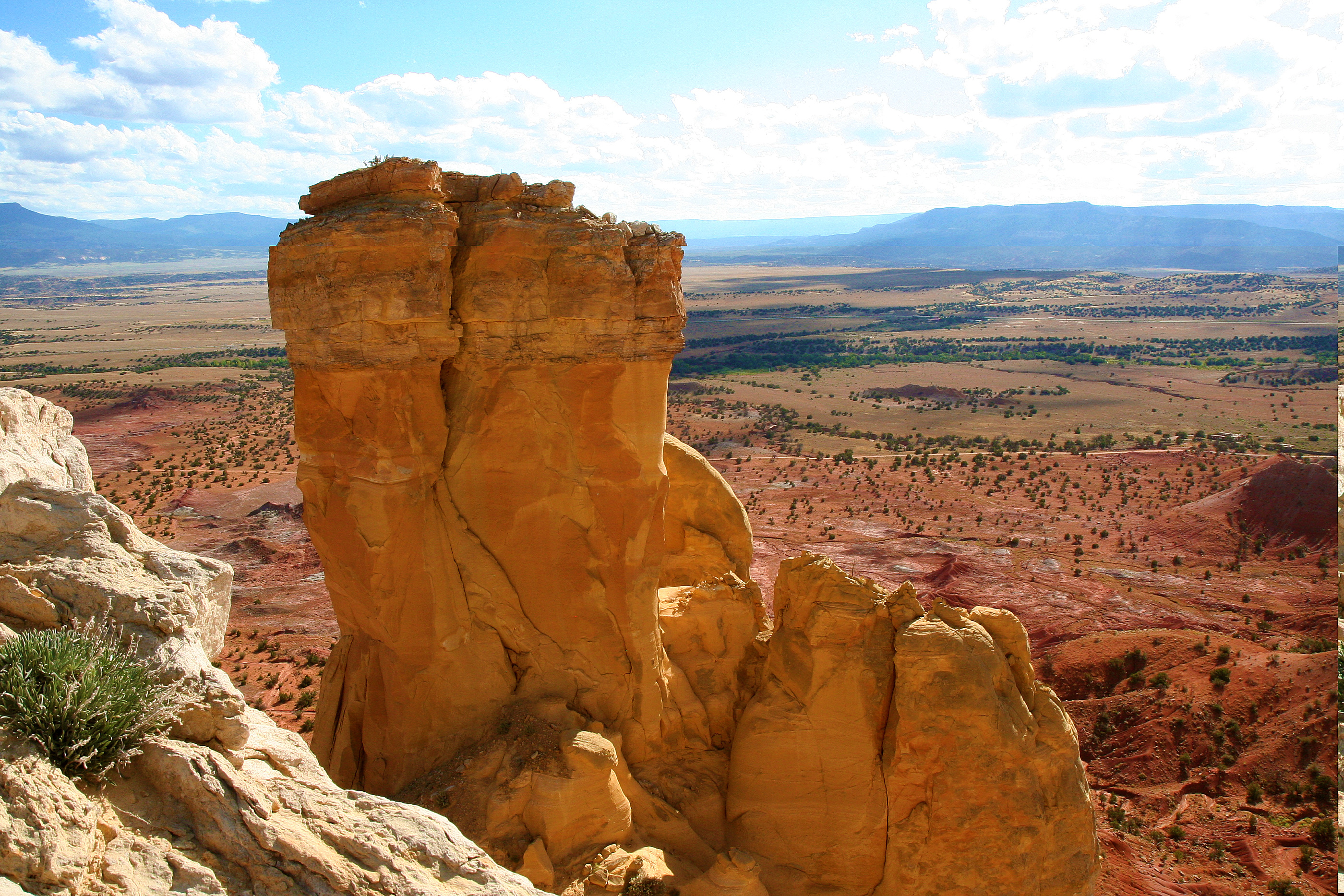
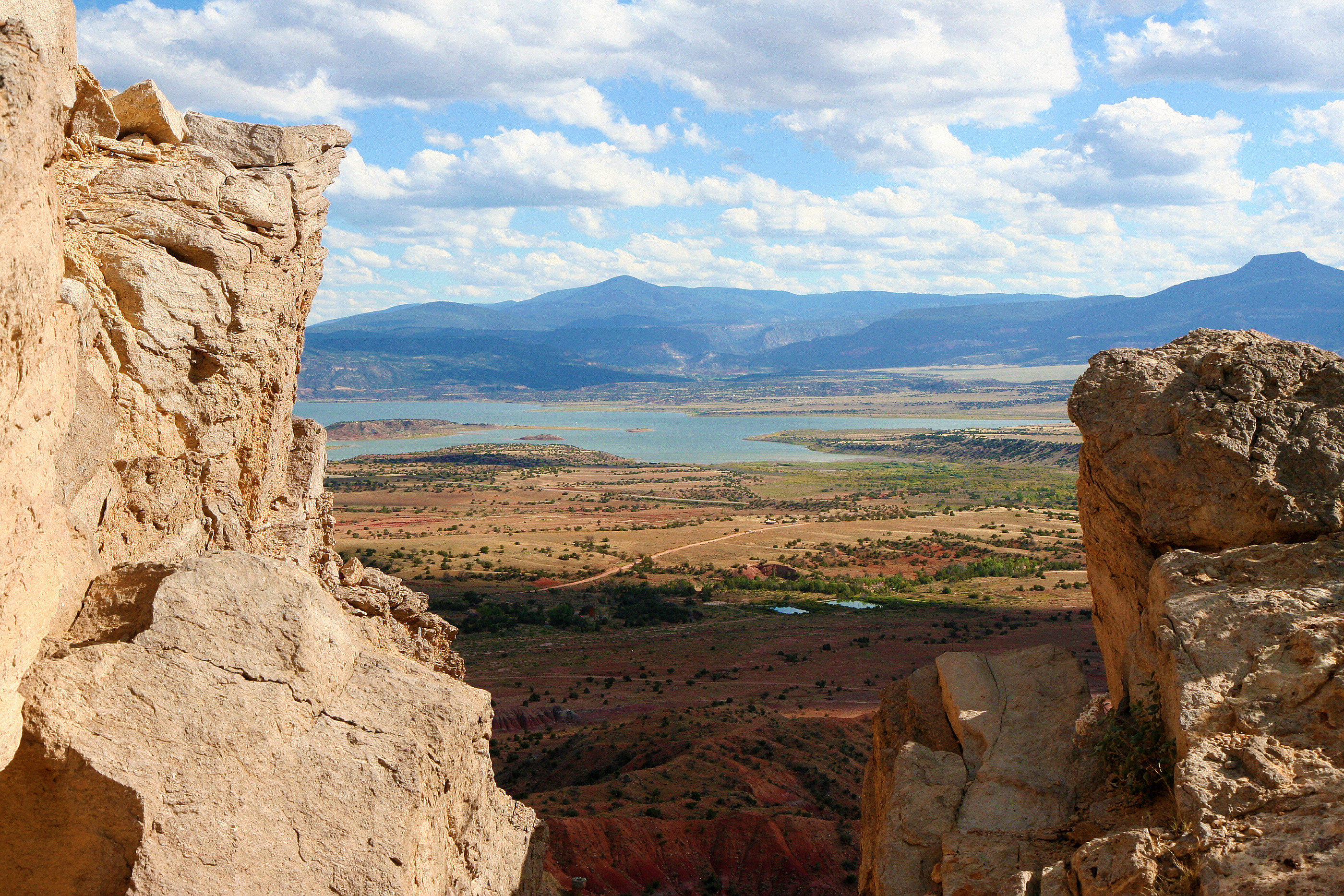
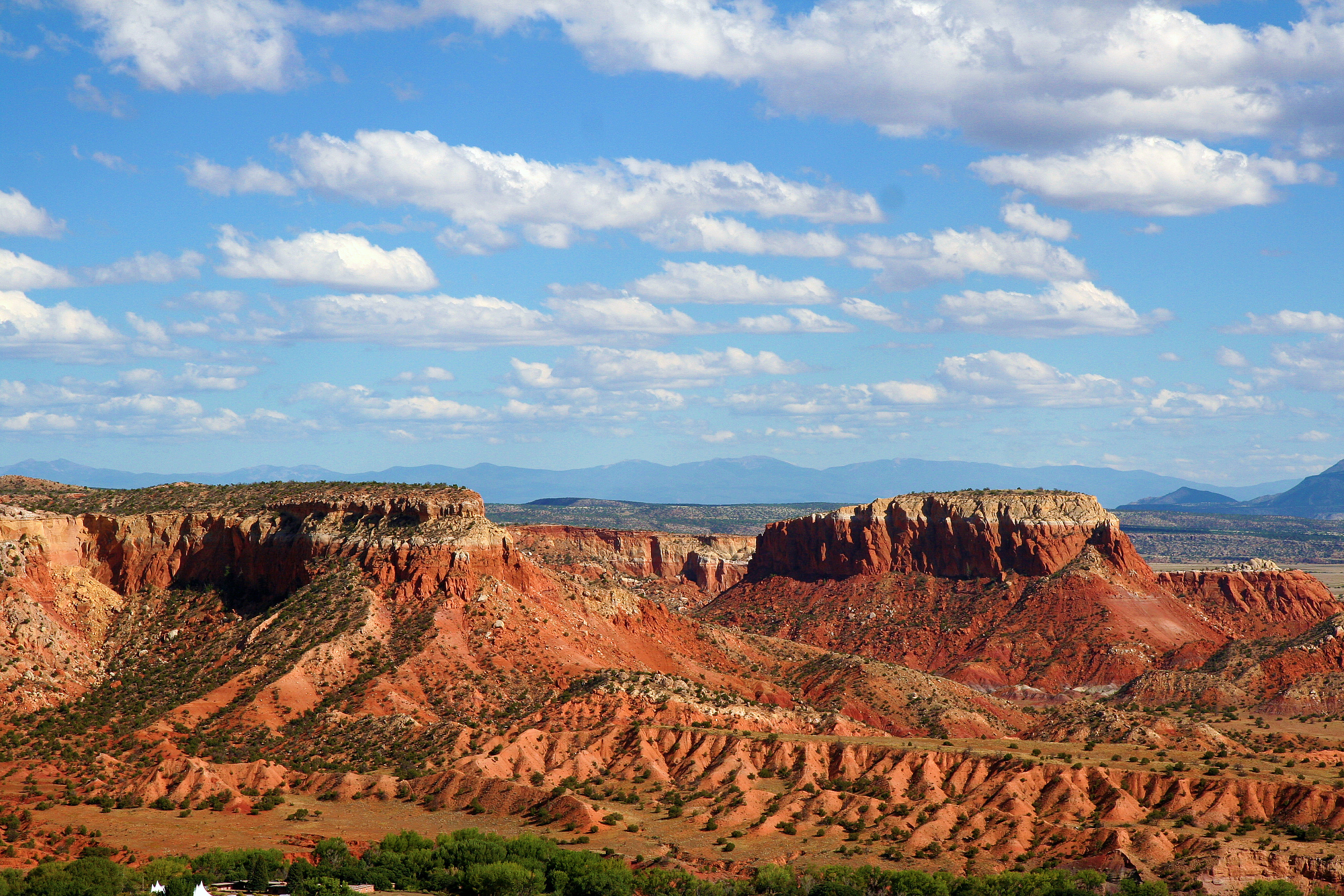
I used one word repeatedly to describe where I was the last couple of days… gorgeous. Simply gorgeous.

Abiquiu. Georgia O’Keeffe lived here from 1949 until her death in 1986 at 98 years of age.

The landscape. The colors. The light. Gorgeous.

I found I could say things with color and shapes that I couldn’t say any other way – things I had no words for. 

                                                                                                                       – Georgia O’Keeffe


Love. ♥

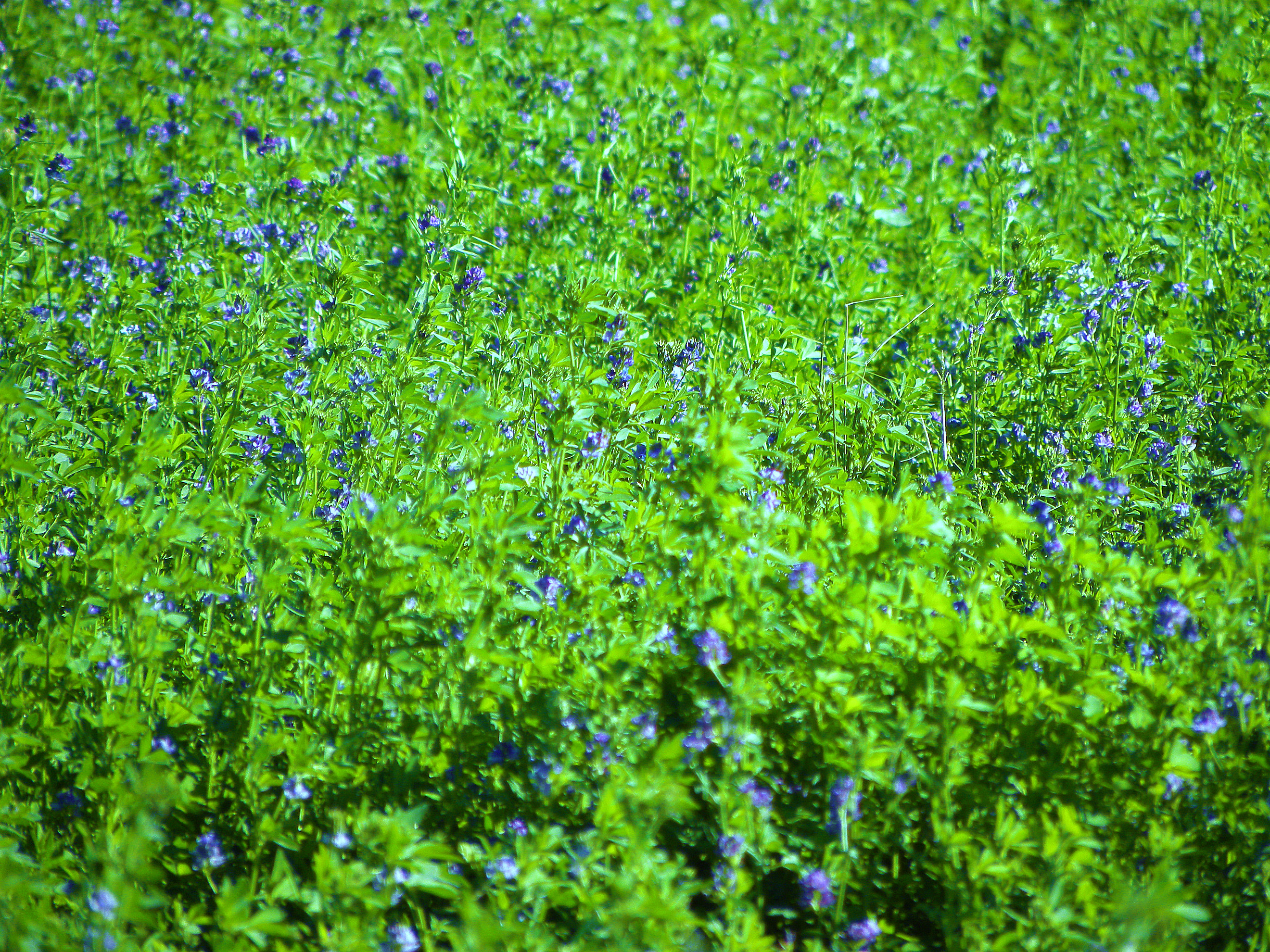
Up until last week when it was cut, the alfalfa field behind us was vibrant and alive with beautiful blue flowers.

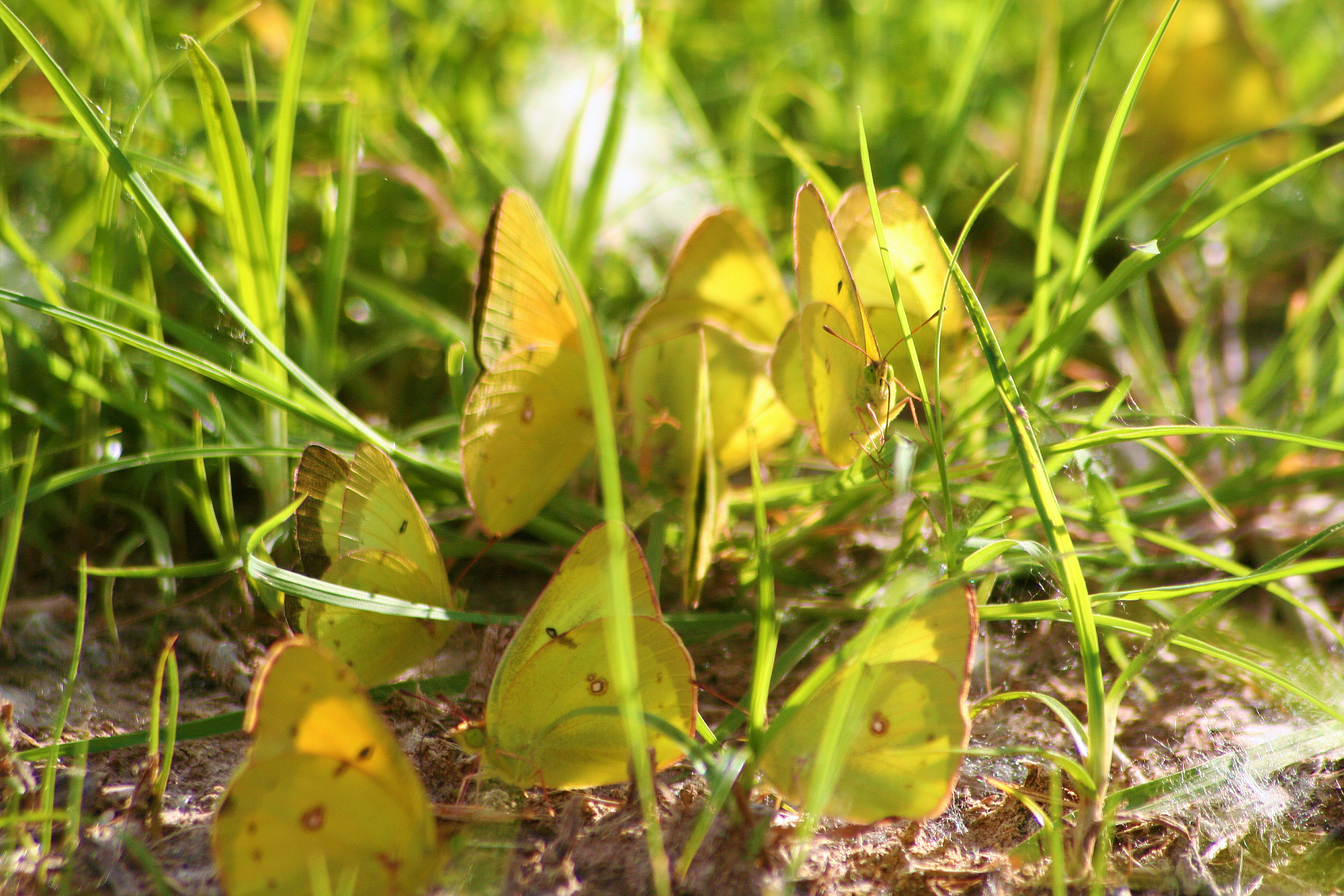
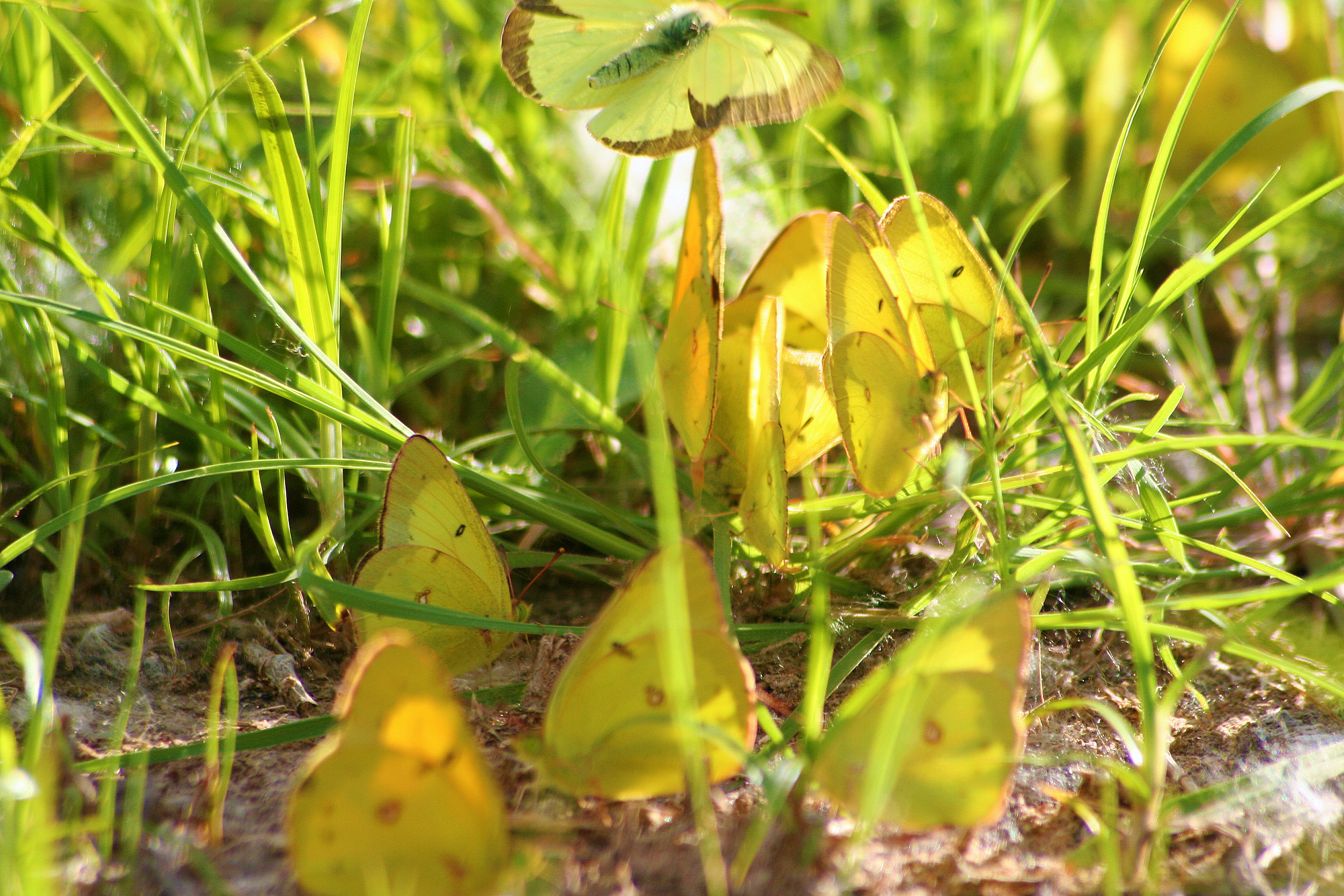
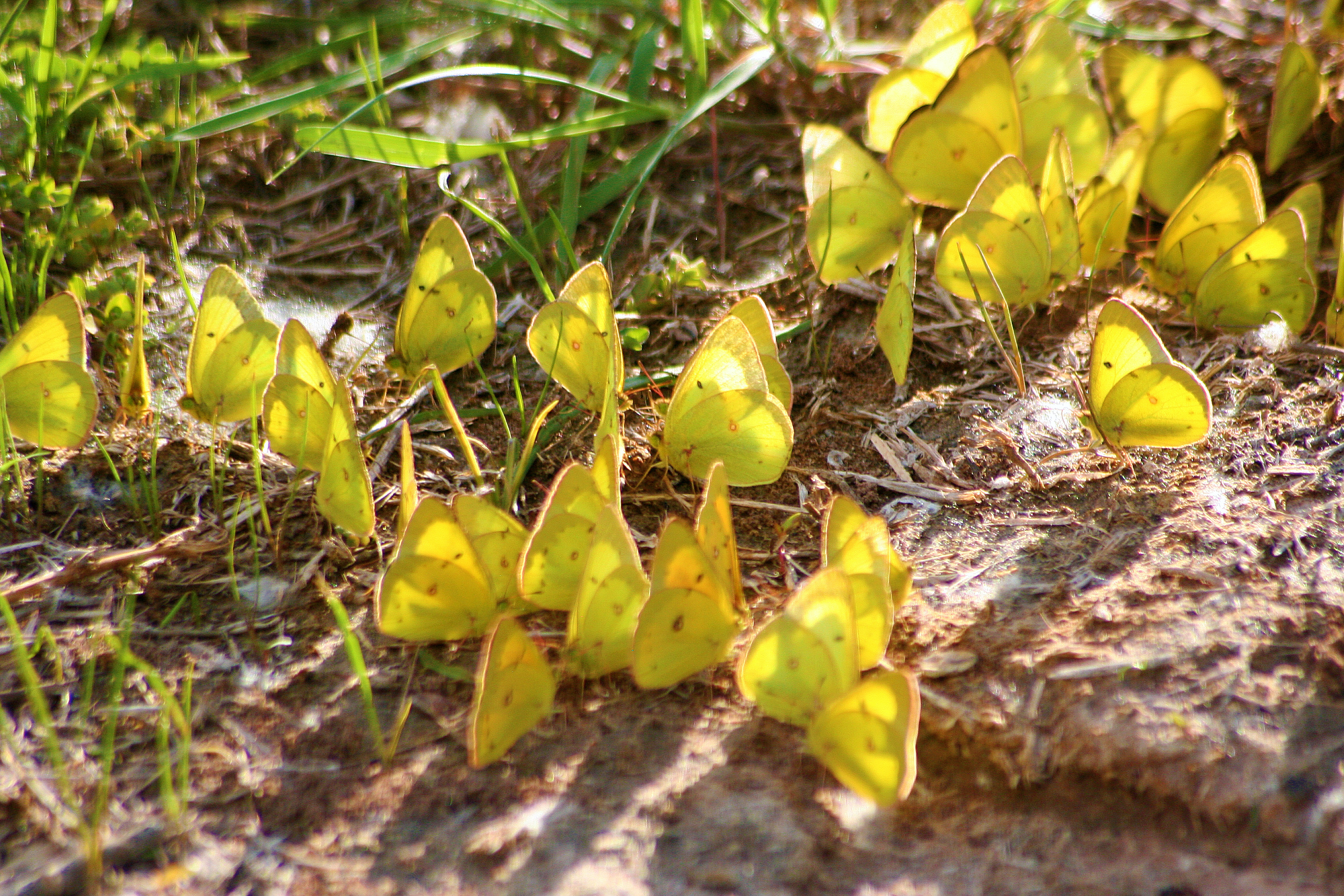
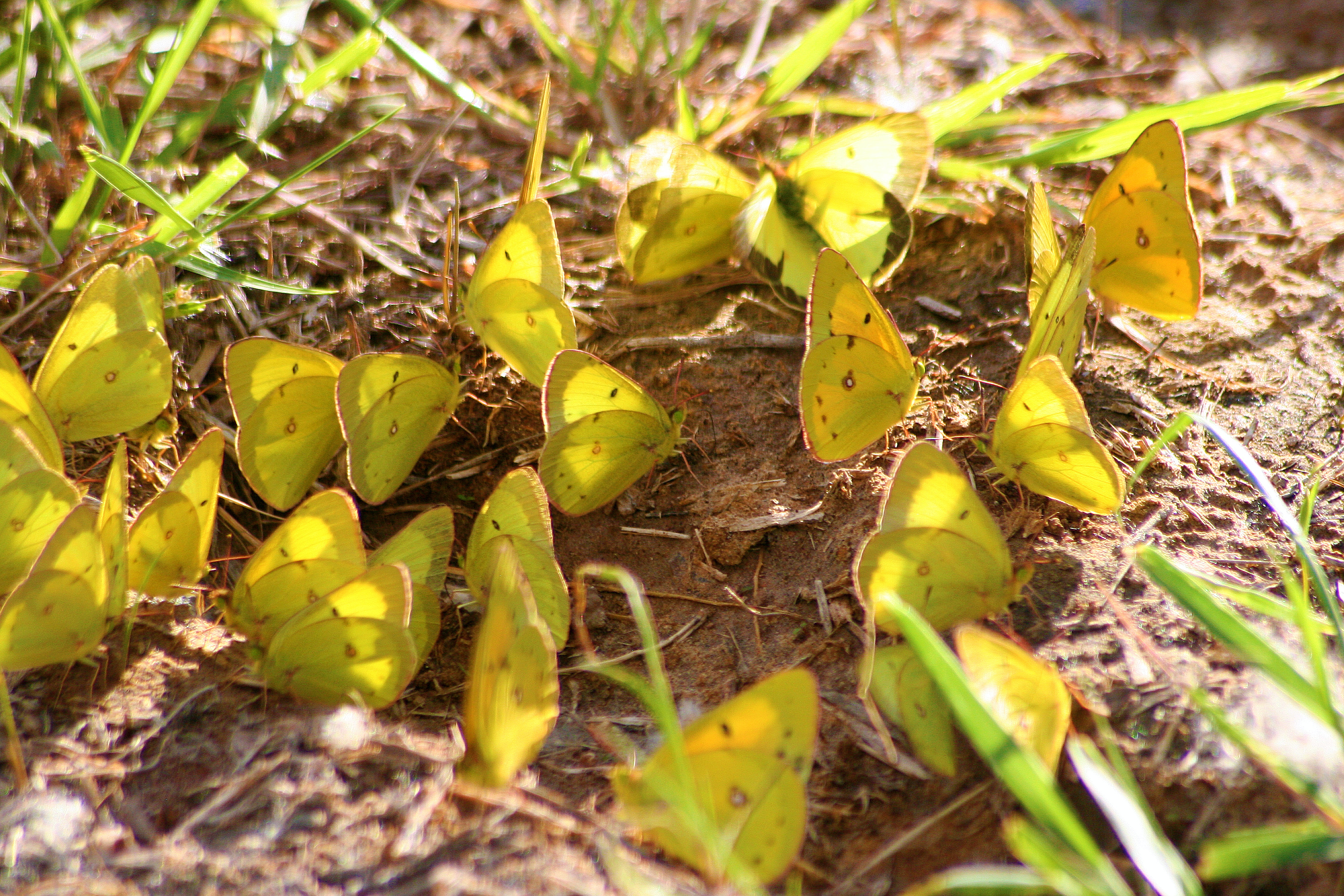
And what seemed like tens of thousands of small, yellow butterflies.

Turns out, they’re sulphur butterflies. Caterpillars of these butterflies feed on plants in the legume family. This includes beans, alfalfa, sweet clover and red clover. Because their caterpillars are readily found on alfalfa, the butterfly is sometimes called “alfalfa butterfly.” 

From what I’ve read, the butterflies pose little to no threat and aren’t likely to be a serious pest of agricultural crops.

That made us all too happy to sit back, relax and enjoy the show.

Perhaps Vicki in Michigan can help identify this one. For the life of me, I can’t remember its name.

Mexican hat

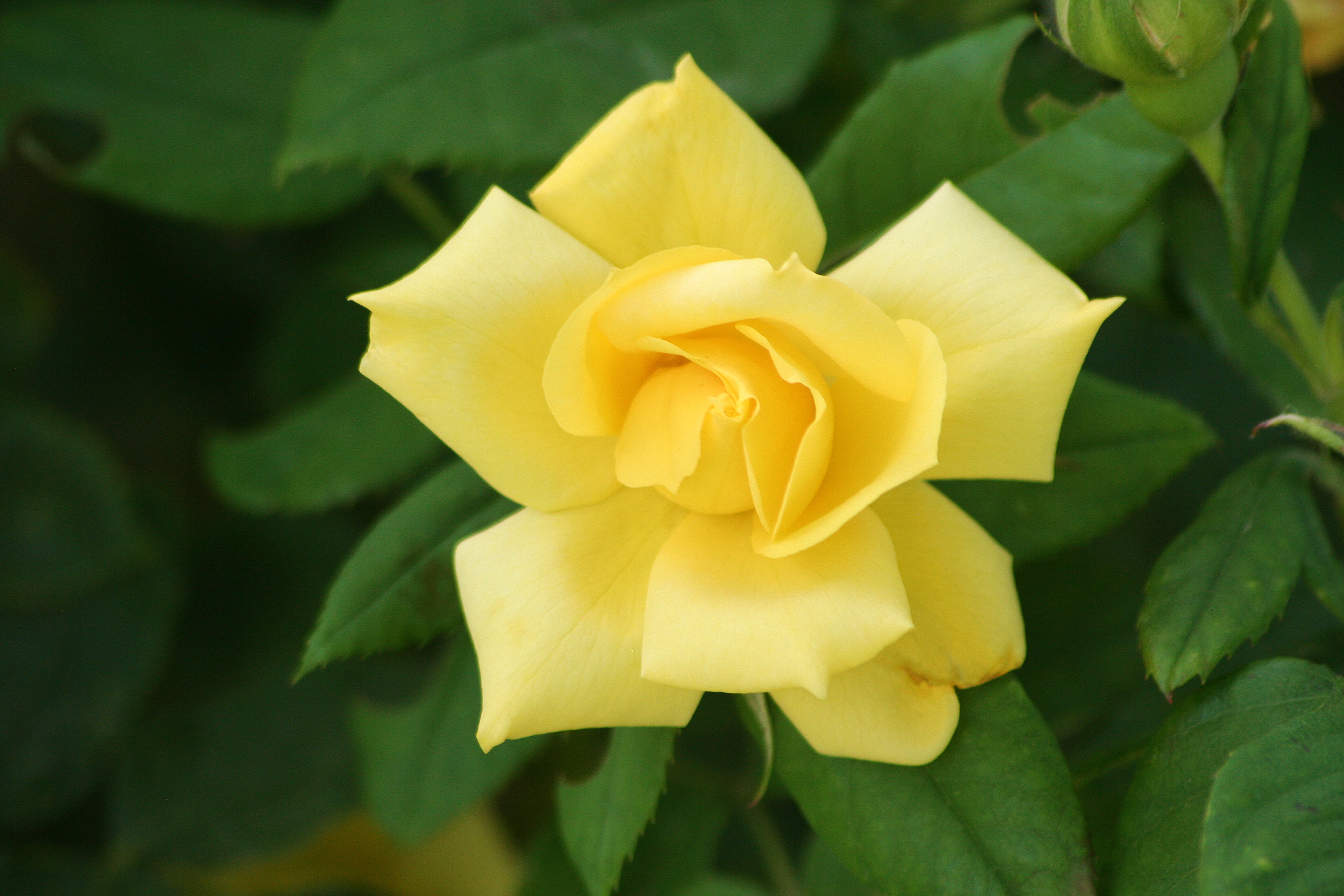
Rose

Bee balm and clematis

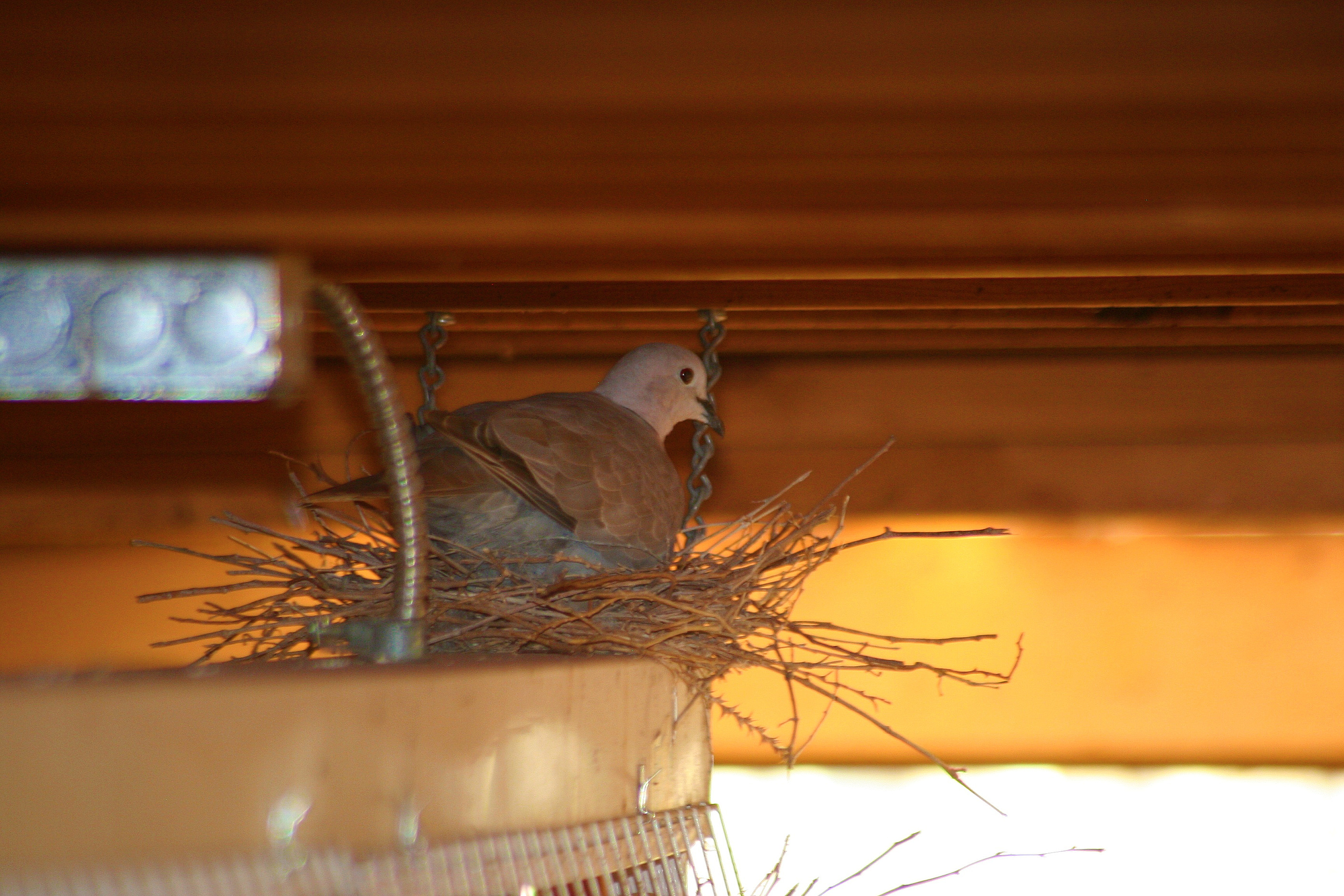
We have a dove nesting above one of the light fixtures in the barn. Not surprising due to the fact that we have a plethora of doves here.

One of the things I’ve come to love about blogging is that I learn so much – not only because I’m always looking things up to be accurate in my posts, but also because I’m constantly learning new things from all of you.

I found the screeching calls of the  doves in Albuquerque very strange until I took the time (only yesterday!) to identify our barn dove. She’s not a Mourning Dove. She’s a Eurasian Collared-Dove and has a very different voice than a Mourning Dove.

Some interesting facts about Eurasian Collared-Doves from whatbird.com:

  • The Eurasian Collared-Dove is one of two species that have been argued to be the wild ancestor of the domestic Barbary Dove.
  • Their scientific name, Streptopeleia decaocto, literally means a collar (streptos) dove (peleia). In Greek mythology, Decaocto was an overworked, underpaid servant girl. The gods heard her prayers for help and changed her into a dove so she could escape her misery. The dove’s call still echoes the mournful cries of her former life.
  • Introduced into the Bahamas in the 1970s, some migrated to Florida in the 1980s. They went unnoticed at first because they look much like the Ringed Turtle-Dove. It wasn’t until the mid-1980s that ornithologists realized the suddenly prolific and quickly spreading “turtle-doves” they were watching were actually Eurasian Collared-Doves. Their impact on native species is unknown; some have suggested that their spread represents exploitation of a niche made available by the extinction of the Passenger Pigeon.
  • A group of doves has many collective nouns, including a “bevy”, “cote”, “dole”, “dule”, and “flight” of doves.

« Previous PageNext Page »