
He’s here and he’s safe.
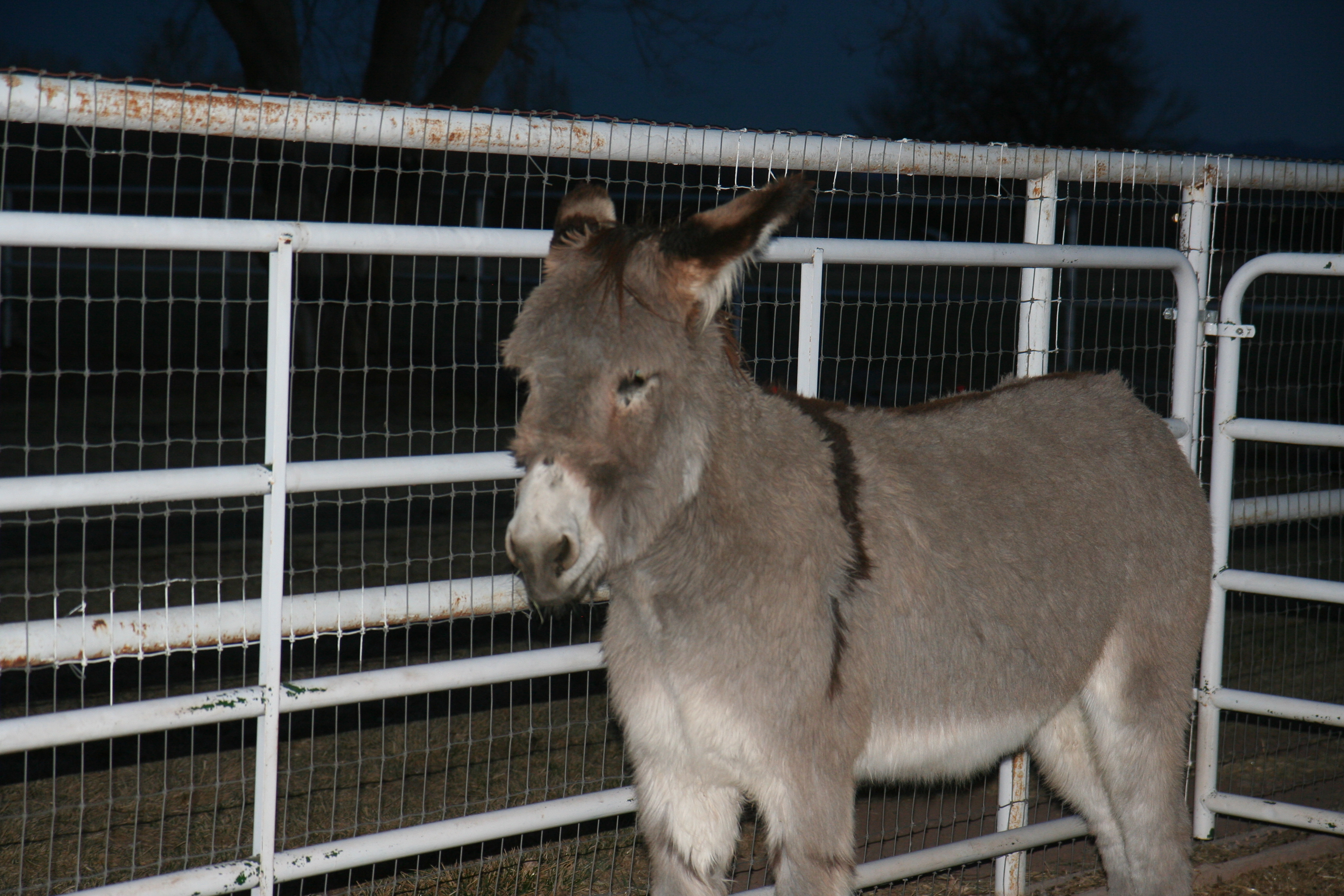
He will never be roped again.
March 14, 2011
March 4, 2011

Thank you all for the kind and supportive comments you left on yesterday’s post.
We don’t have the answers yet, so stay tuned. ♥
February 14, 2011
February 10, 2011
How ironic that we were talking about burro’s tails earlier this week, even if we were talking about plants.

Bernard’s donkey tail is perfectly fine.

So is Ellsworth’s.
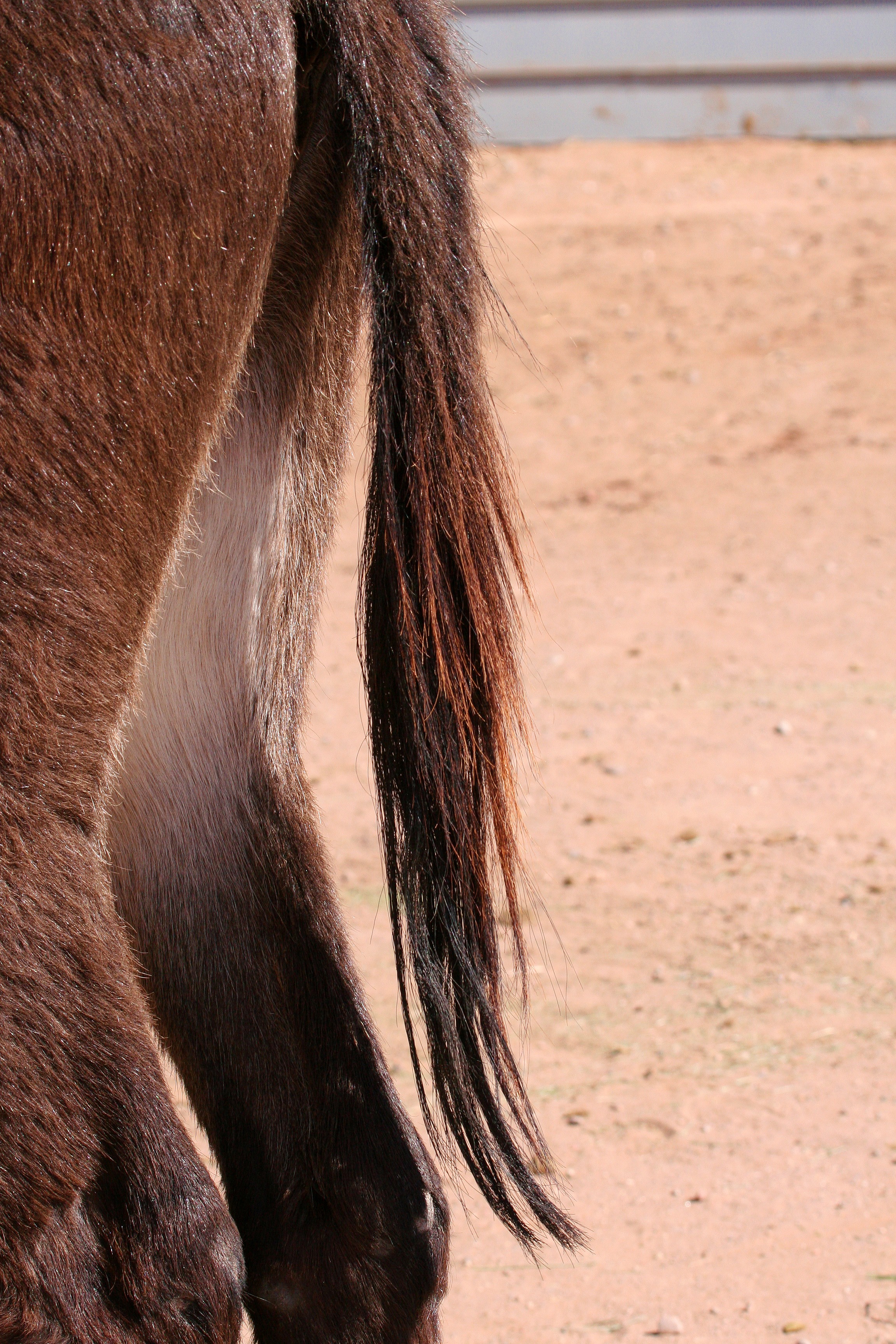
Nigel’s burro tail is fine too.
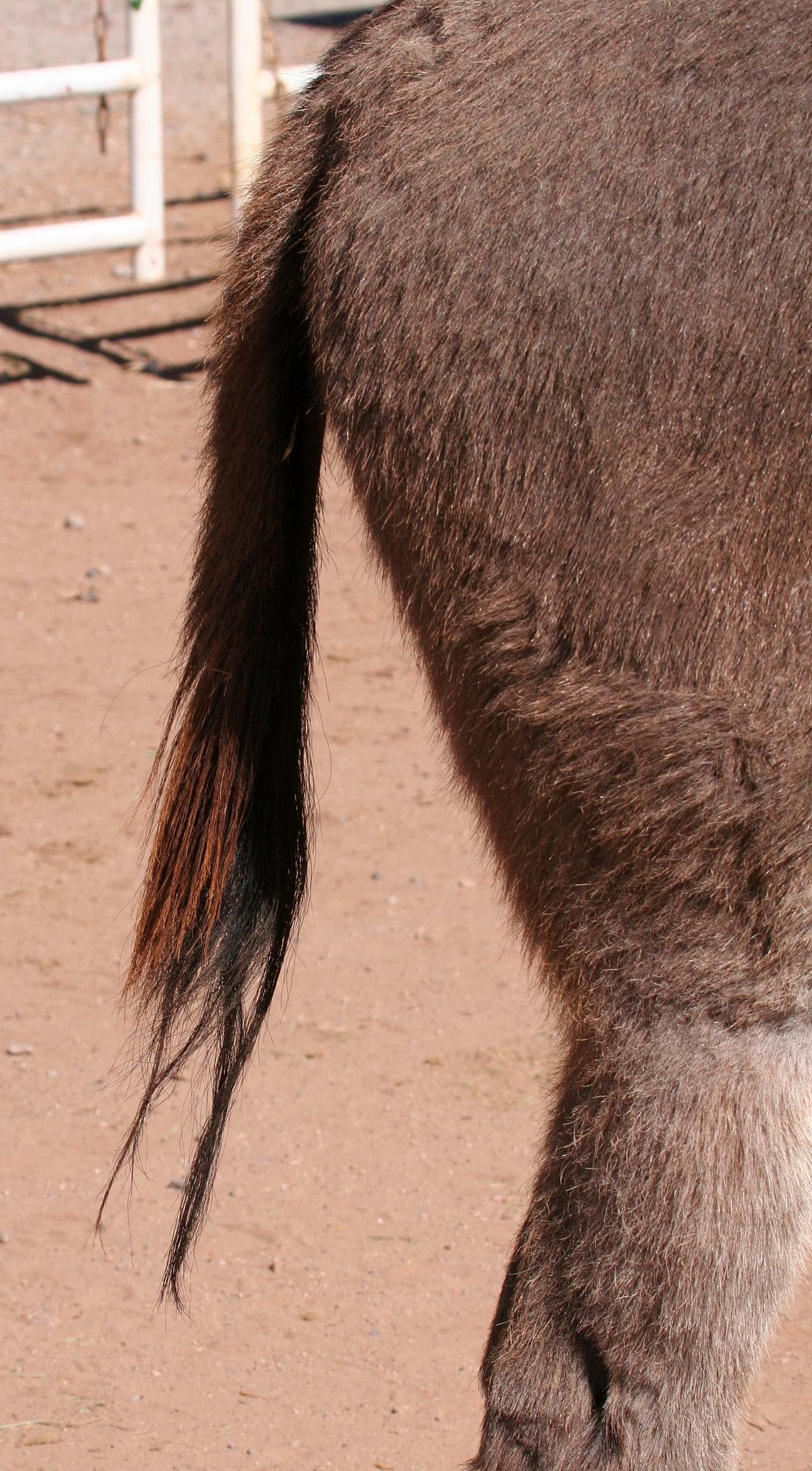
Fergus’s tail… well, that’s another story.
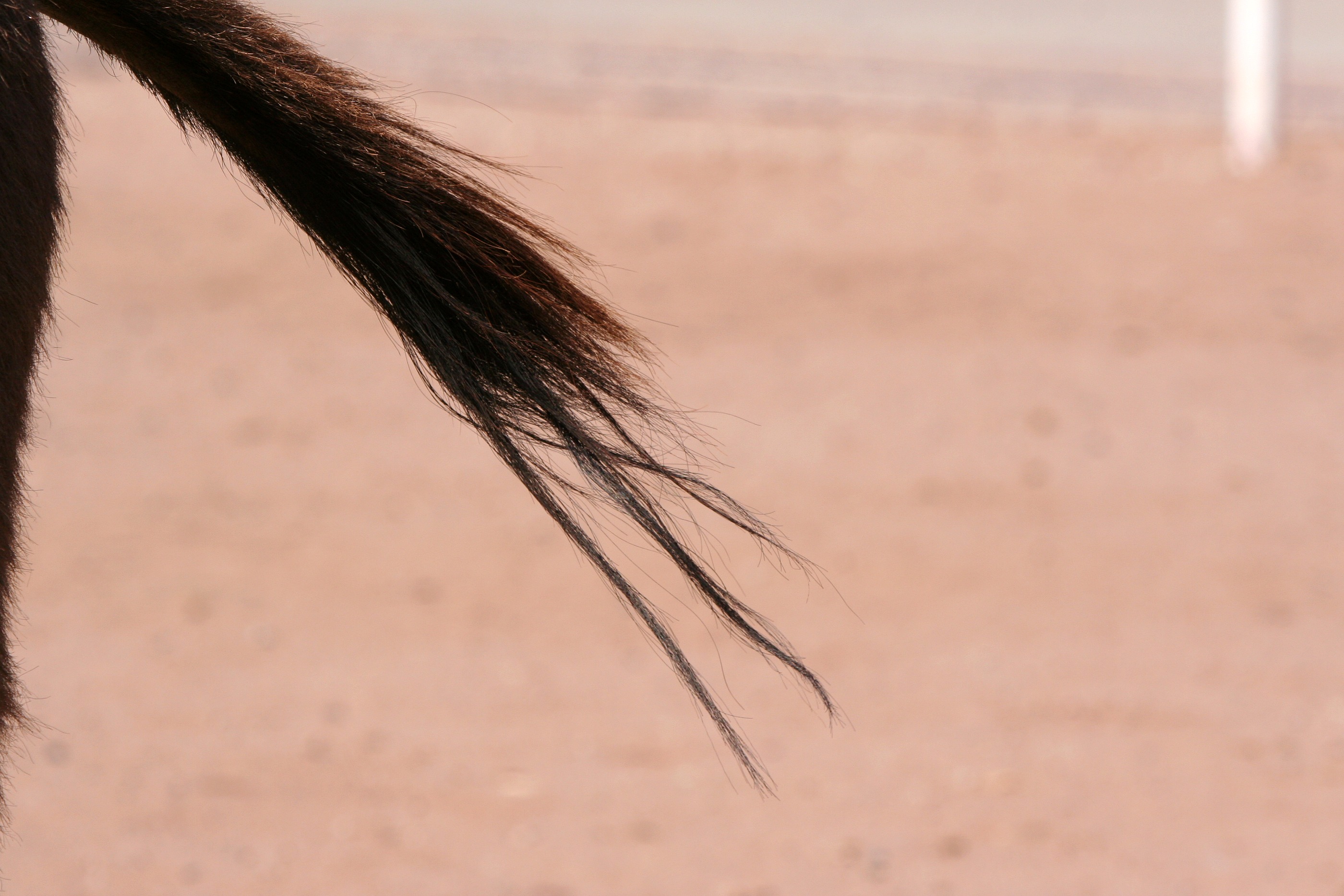
What or who is responsible for taking the long hairs from our handsome boy’s tail?
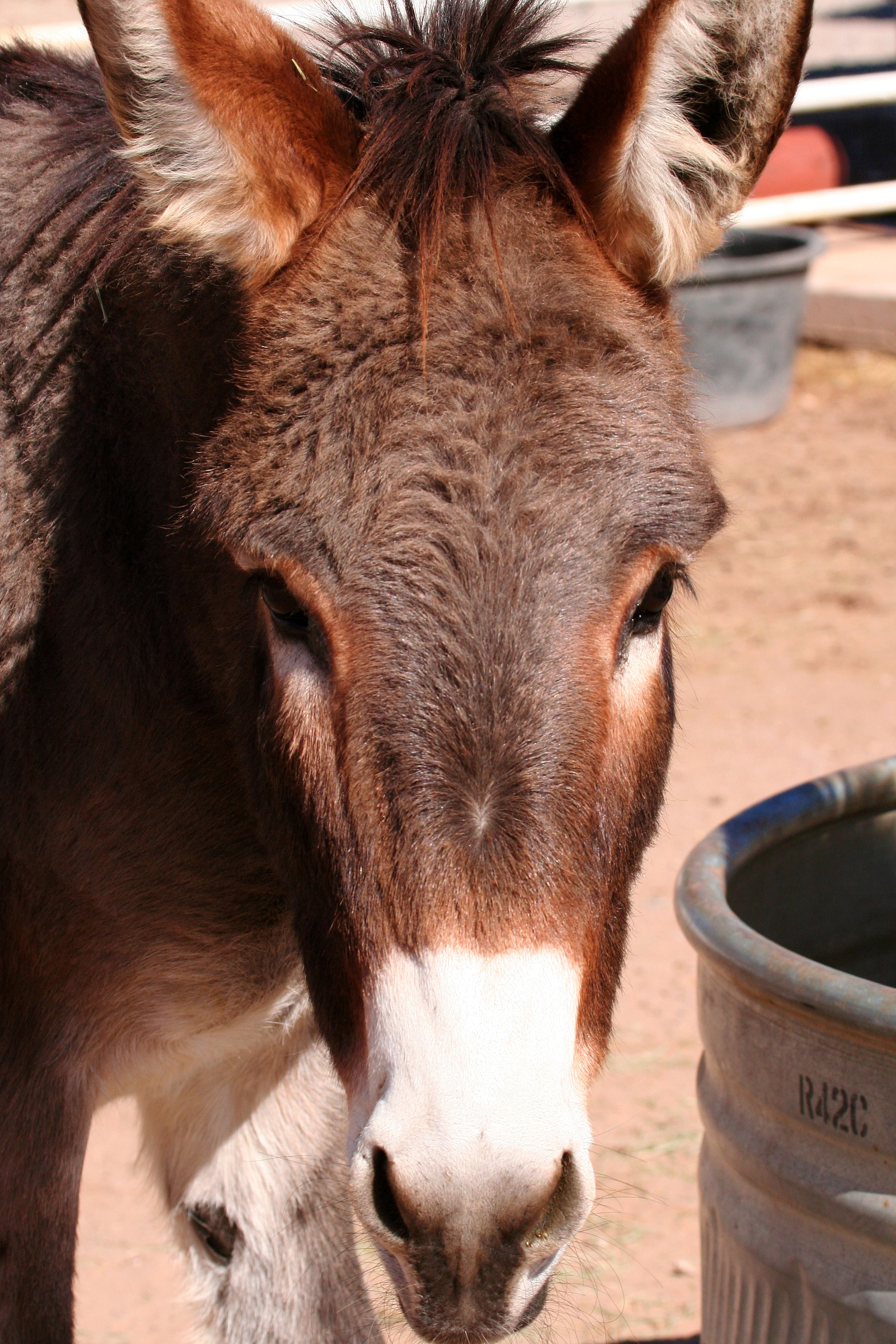
Fergus isn’t talking and inquiring minds want to know.
February 4, 2011

After being cooped up for three days, Bernard was in a very playful mood yesterday.

And Don had himself a 400-pound dance partner. ♥ ♥ ♥
January 27, 2011

This is a message for the newspaper delivery man.

Hi. Um, we love that you always deliver the newspaper on time, but because we have donkeys, we have a huge favor to ask.
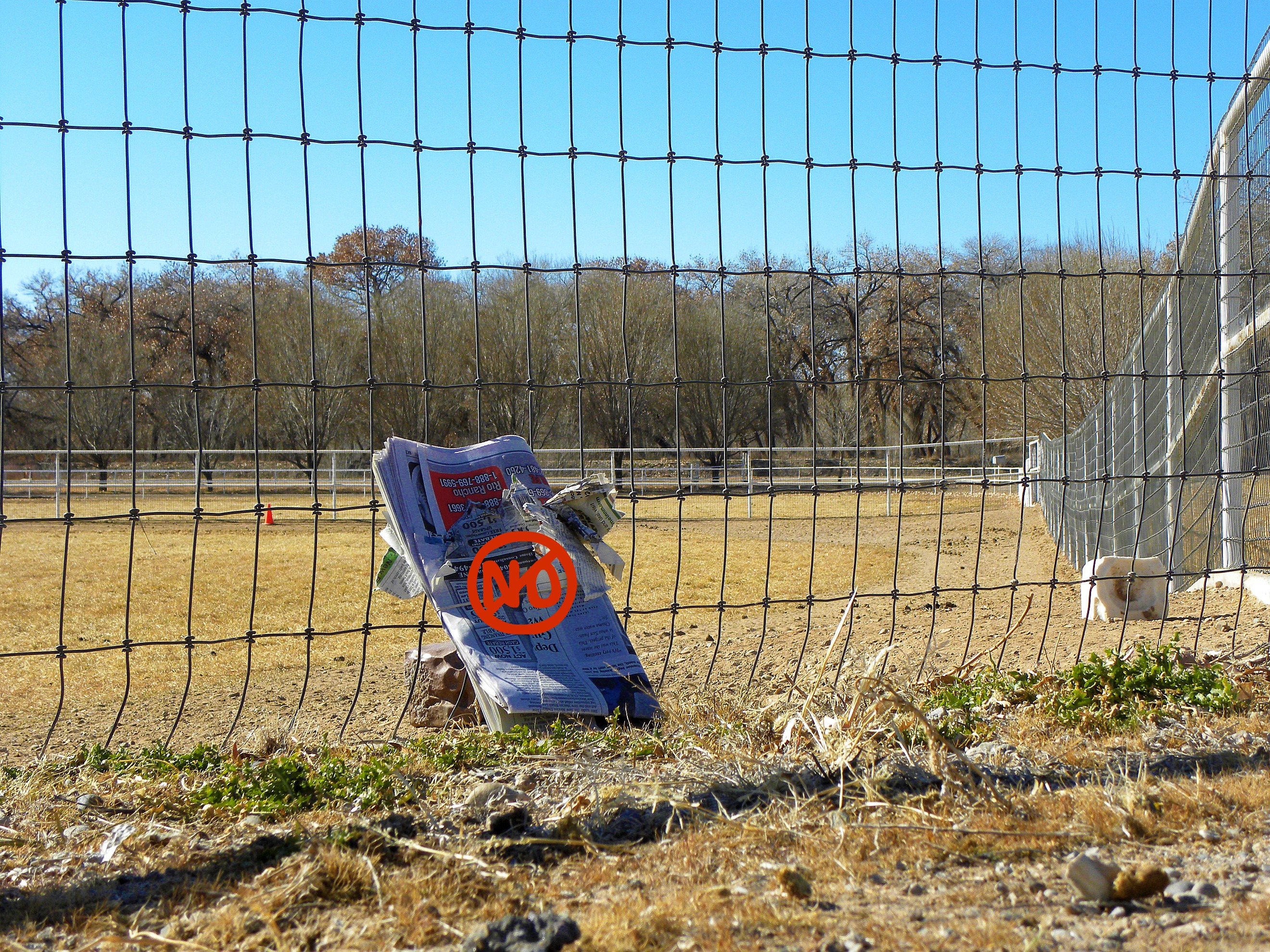
Could you please not throw the paper so that it lands leaning up against the fence? Thank yew sew much.
If we had checked donkey teeth for newsprint…
Congratulations to the winner of our first anniversary contest; Pam from Life on a Southern Farm, who left comment #5. Pam’s name was chosen using Random.org. She’ll be seeing a Morning Bray Farm t-shirt in her mailbox soon. Hugs to Jack! ♥ ♥
January 15, 2011
January 14, 2011
In the days before the average churchgoer could read, medieval churches held theatrical spectacles based on scriptural history to impress religious truths upon their congregations. One of these pageants, originally known as the Festum Asinorum (Latin) or Fête de l’âne (French) and now as the Feast of the Ass, commemorates the Holy Family’s flight into Egypt. It was (and is occasionally even now) celebrated on January 14.
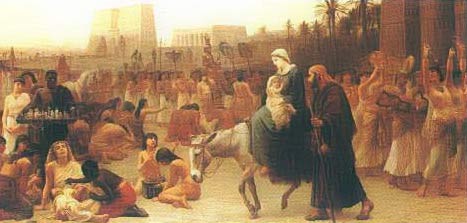
Charles du Fresne, sieur Du Cange (1610 – 1688), French philologist and historian, describes the French Medieval Feast of the Ass in his Glossary of Medieval and Late Latin (Paris, 1678). The pageant begins, Du Cange tells us, with a solemn procession through the streets of the city. The principal players are a beautiful girl cradling an infant in her arms and the splendidly decorated donkey on which she rides. The donkey and his burden are escorted to the city’s principal church and placed near the high altar. Then follows a special mass in which, in place of the usual responses (“amen”), the congregation brays like an ass.
At the conclusion of the Mass, the officiating priest brays three times instead of reciting the usual “Ite, Missa est”; in turn, instead of replying “Deo Gratias,” the congregation cries, “Hinham, hinham, hinham” (hee-haw, hee-haw, hee-haw).
Excerpted from Sue Weaver, The Donkey Companion (Storey Publishing, 2008).
January 13, 2011
January 10, 2011




















 Morning Bray Farm