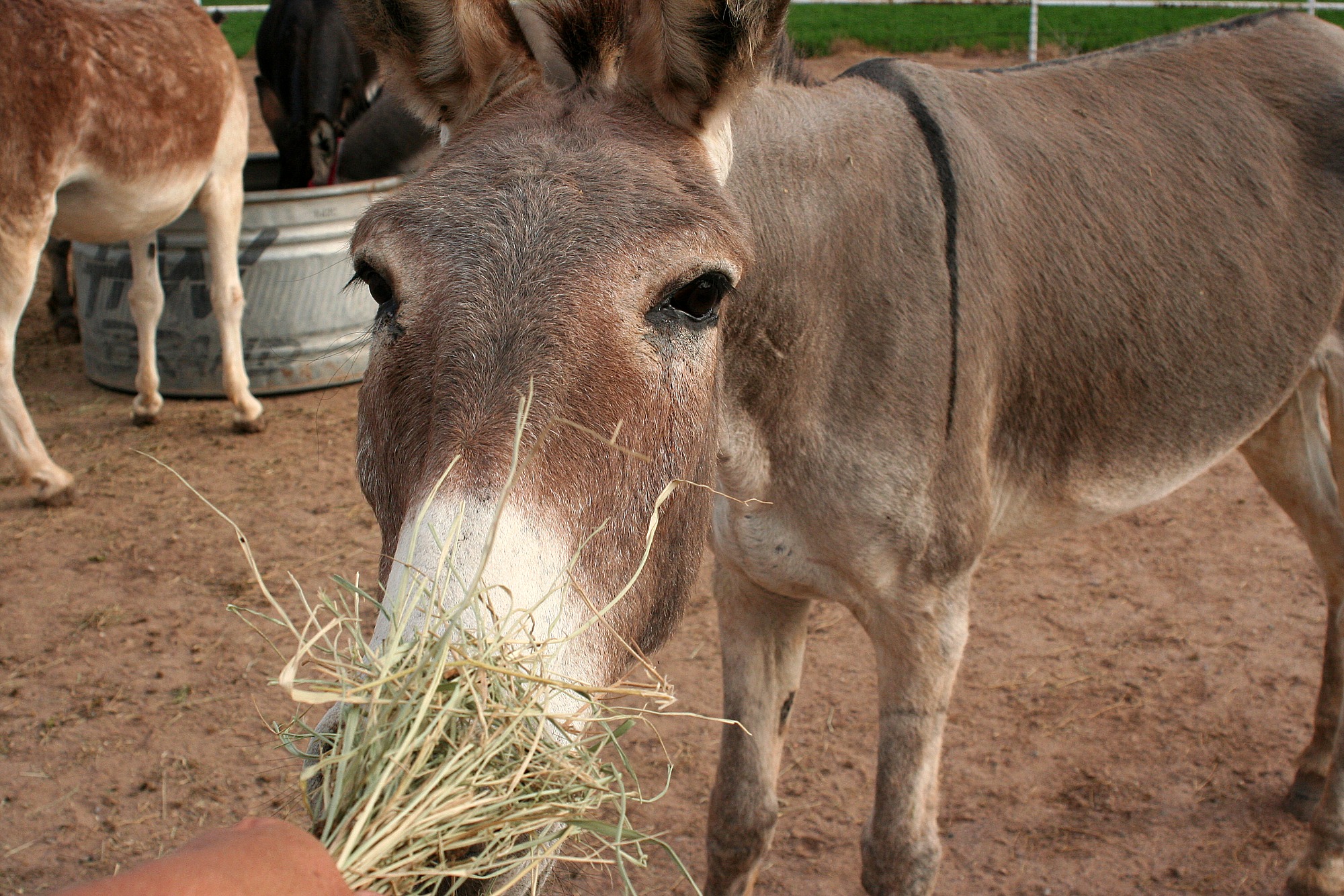
Looks like Gracie Belle’s no wallflower.
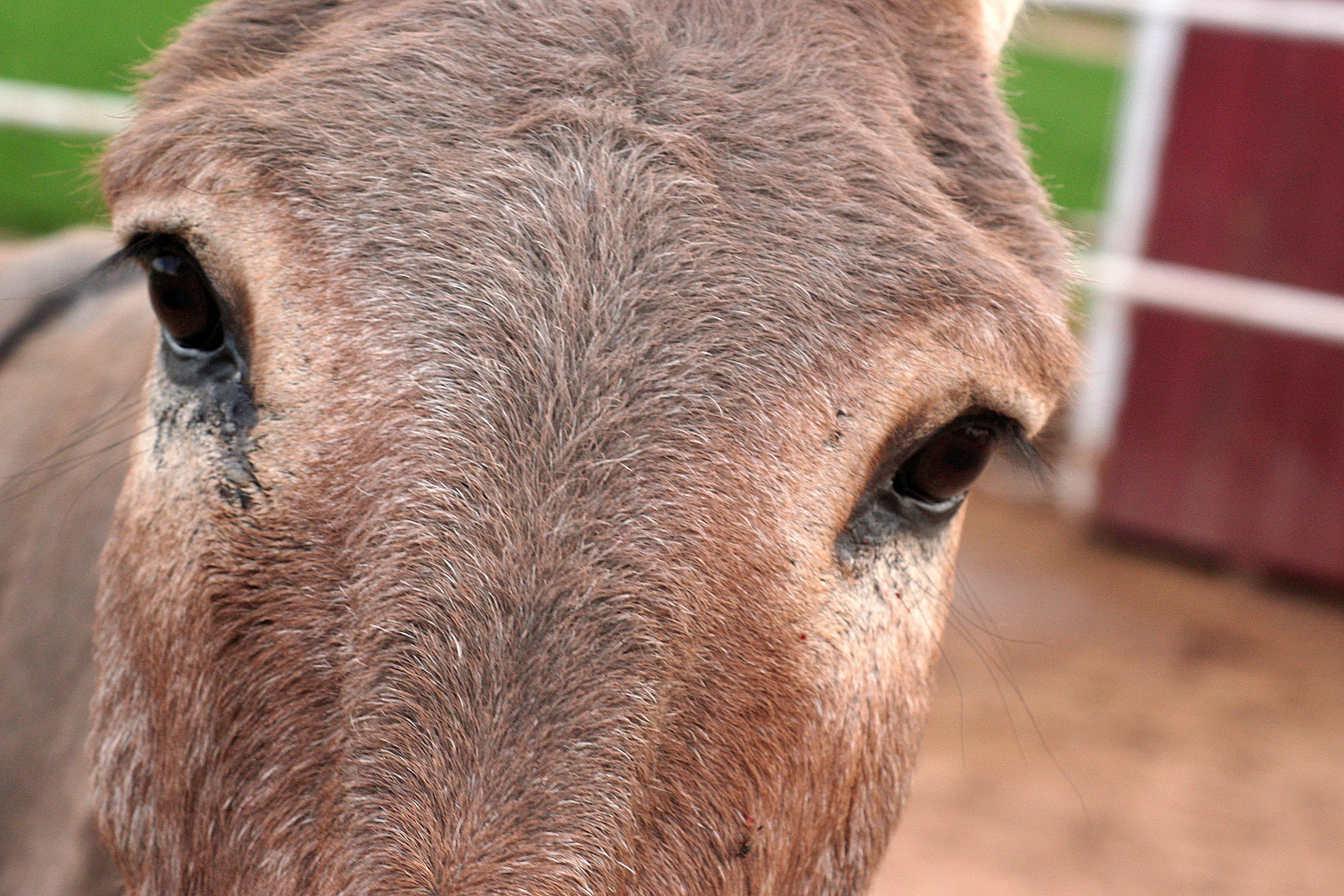
If yesterday was any indication, she might be a pocket burro before we can say blueberry pie.
♥
August 23, 2011
Looks like Gracie Belle’s no wallflower.
If yesterday was any indication, she might be a pocket burro before we can say blueberry pie.
♥
August 22, 2011
Each time we’ve brought someone new into the herd, it happens. It happened with Fergus and Nigel, with Patrick, and now with Gracie Belle. The Boyz shun the newcomer away from the feed tub, and sometimes, they can be downright mean about it.
I worry and fret, and Don reminds me they just need time to figure things out.
Gracie came to us on Thursday afternoon. She didn’t have the slightest interest in food on Friday. On Saturday, she finally started eating, and I was so relieved.
Last night, things were different. Instead of being relegated to the feed tub set out separately for her, Gracie managed to turn the tables on the Boyz and had four big, strong manly men eating out of a teensy, weensy tub.

Look who’s large and in charge now, Boyz.
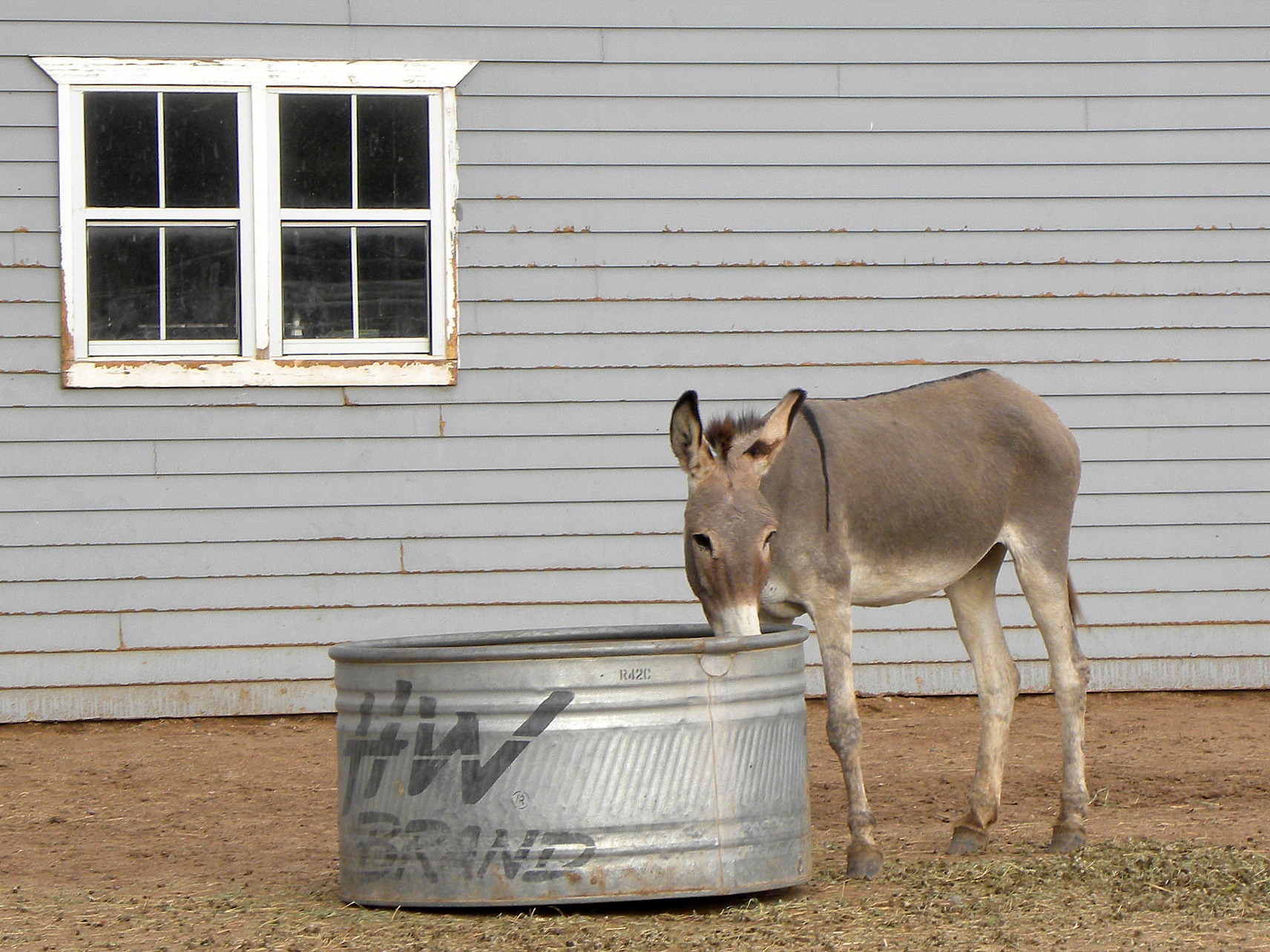
Little Miss Gracie Belle. Yee-haw.

♥
August 21, 2011
I’m sure you’re not surprised.
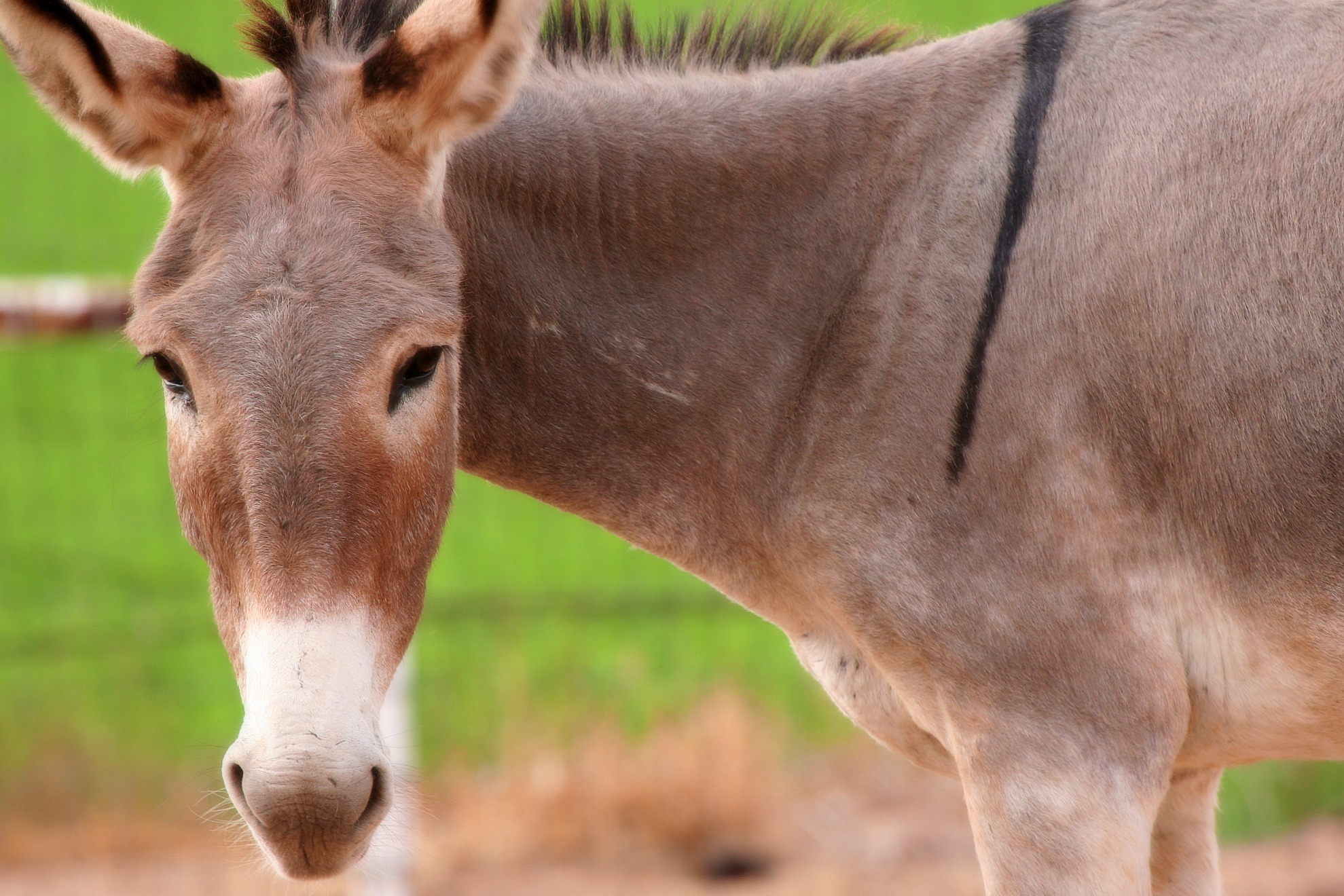
Little Miss Gracie is already the apple of our eye.
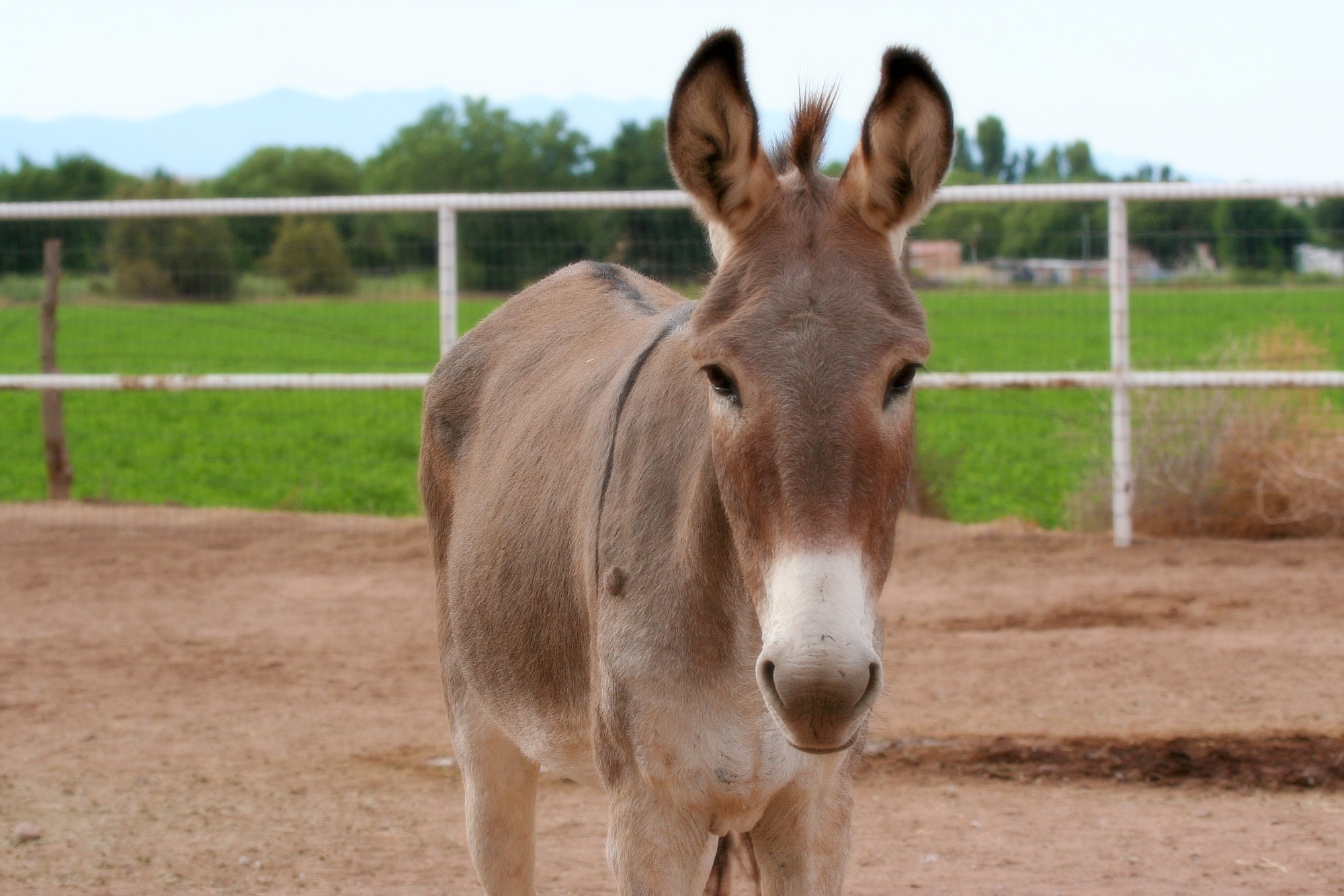
Just as she was the matriarch to her BLM herd…

… she’s already becoming the matriarch to her Morning Bray Farm herd.
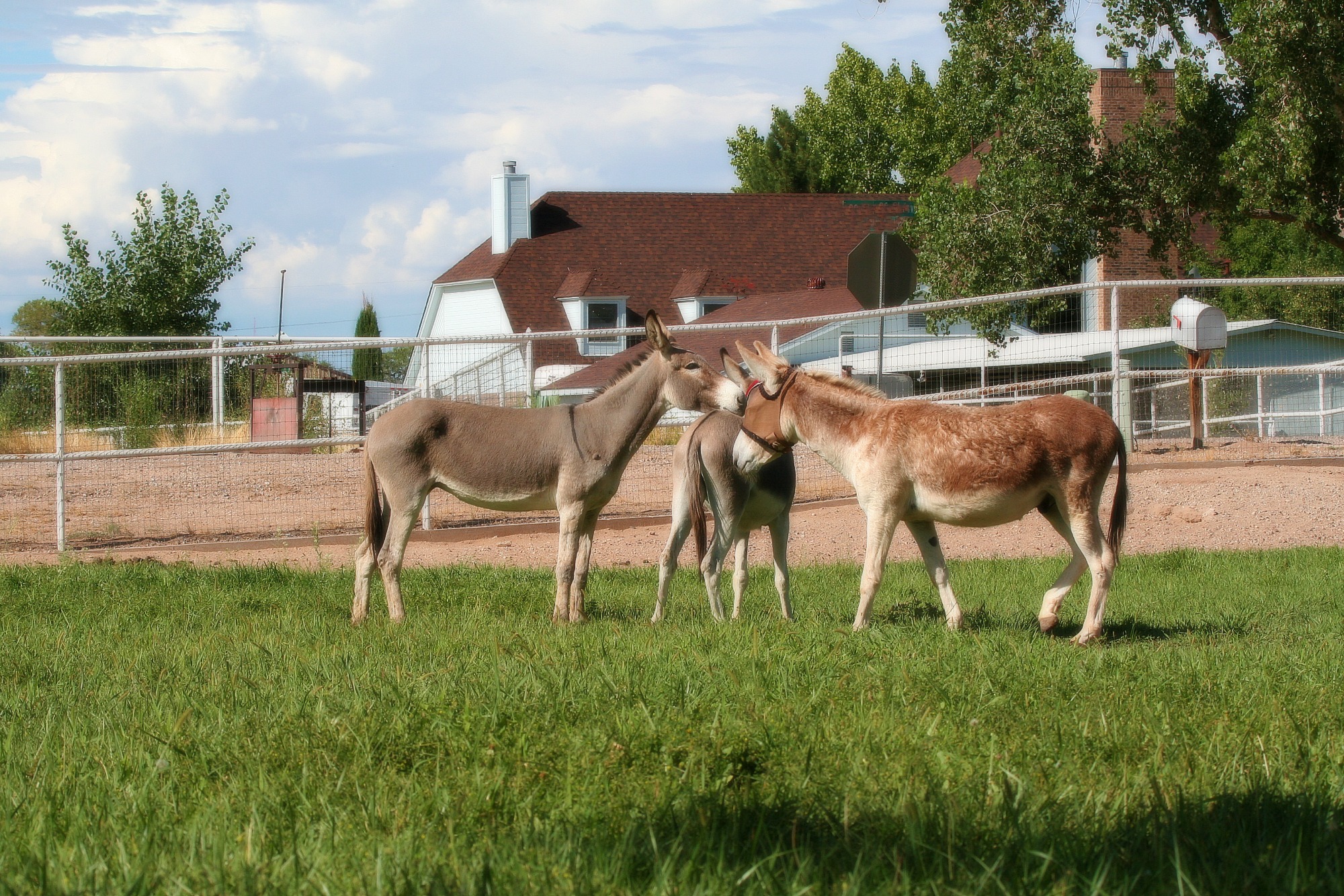
For now, we’re simply giving her time to settle in.

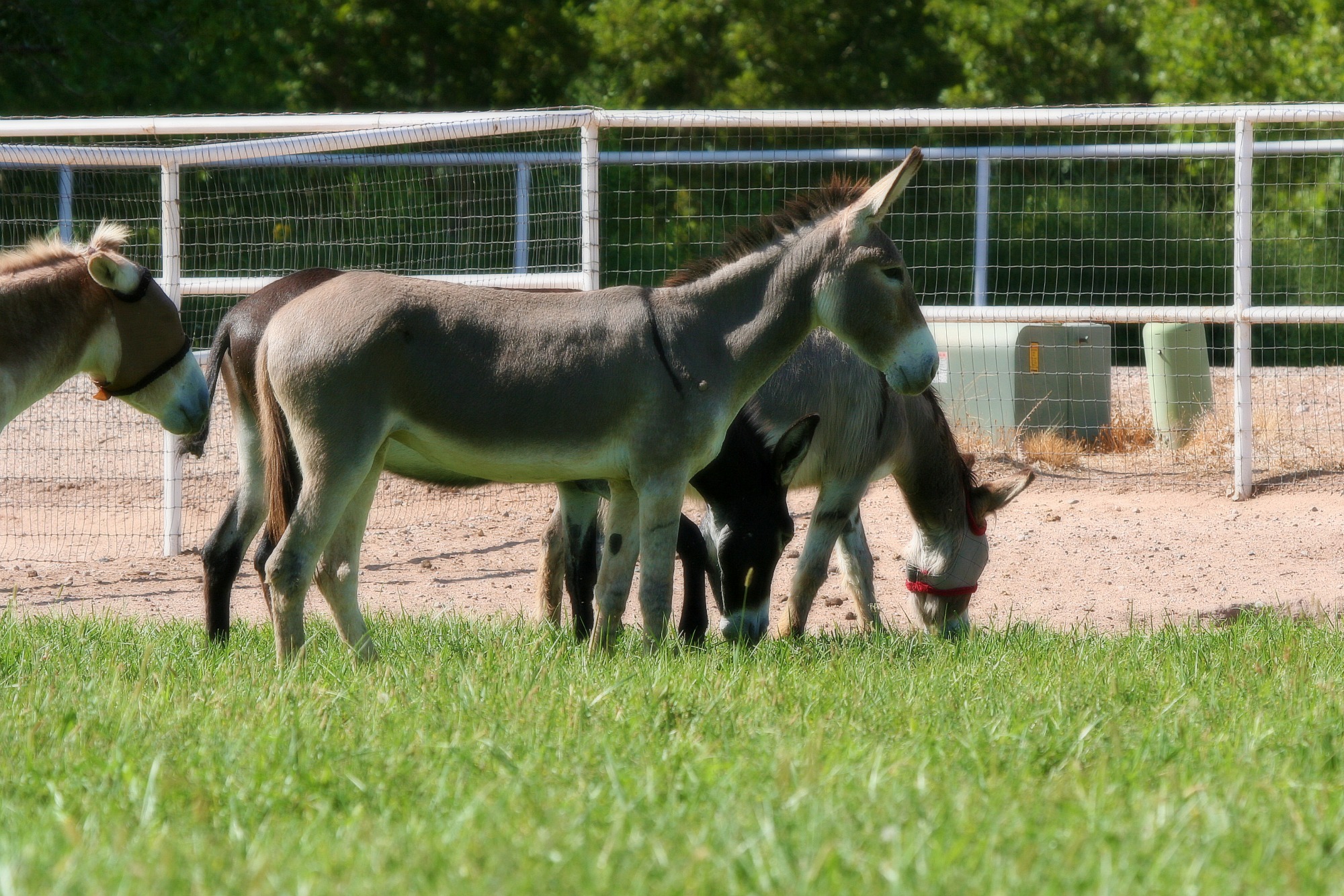
I can’t help but wonder if at the age of 10, all of this change is really hard on her. She must have a lot of family to miss.
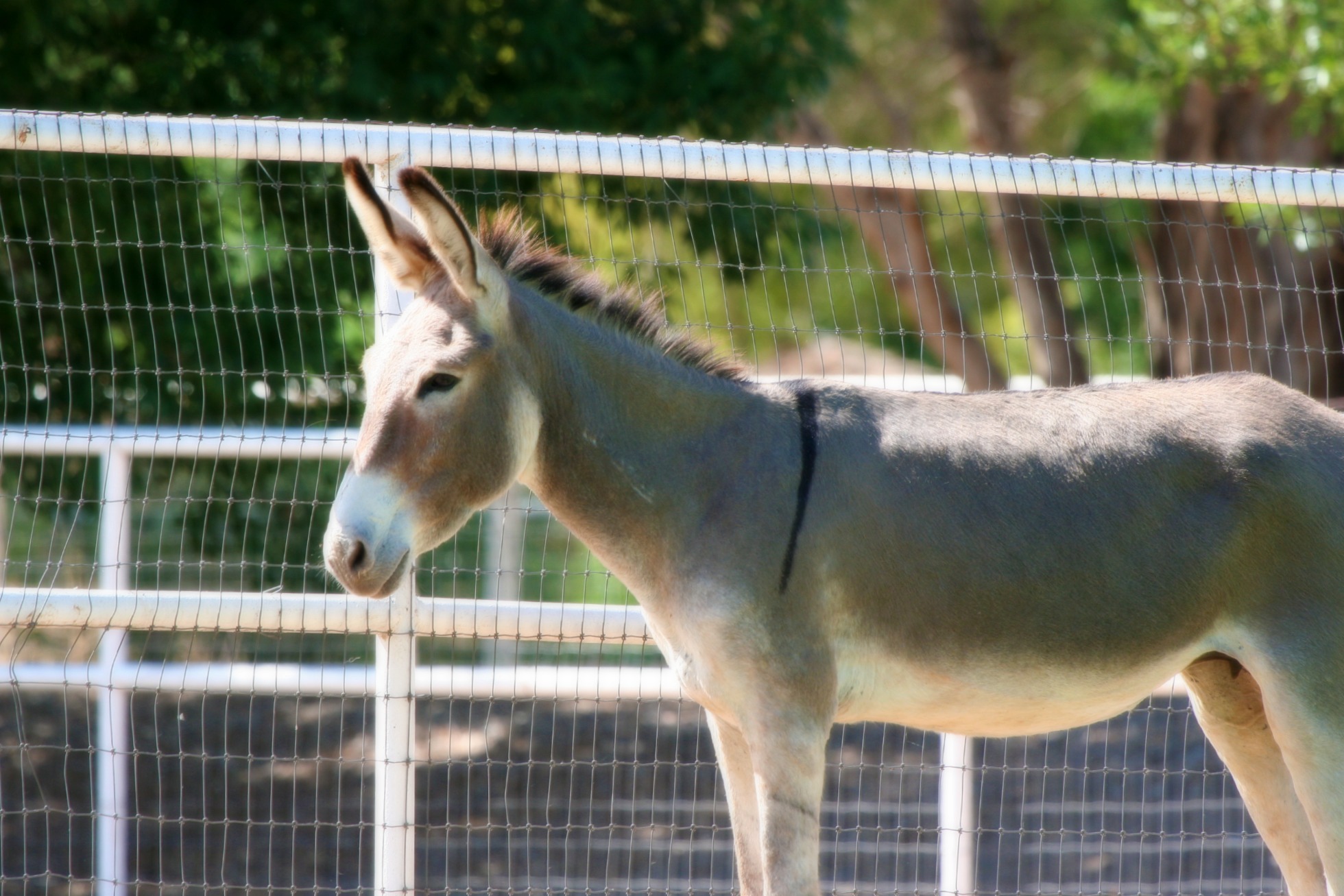
Just know that we already love you…
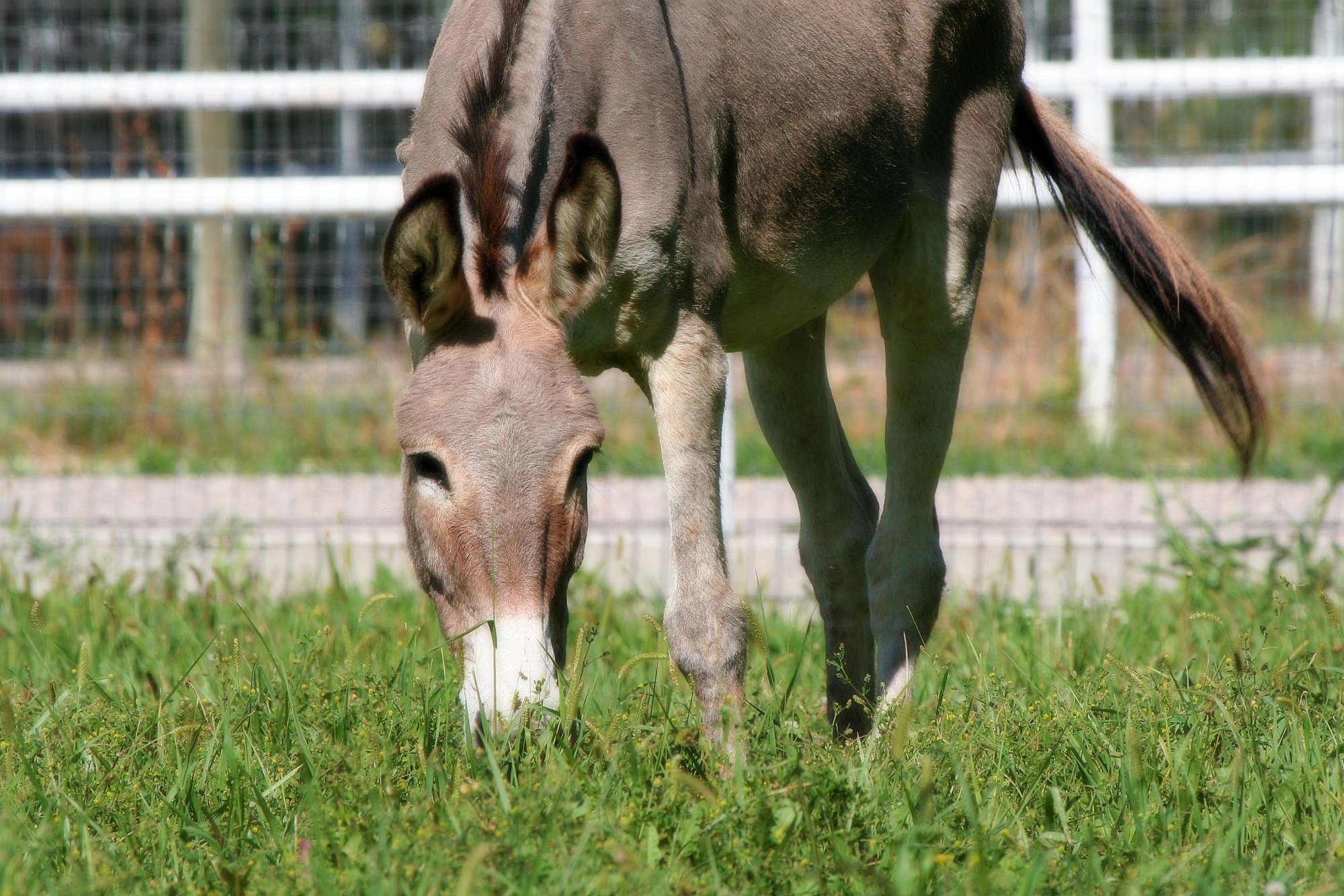
… Little Miss Gracie Belle. ♥
August 19, 2011
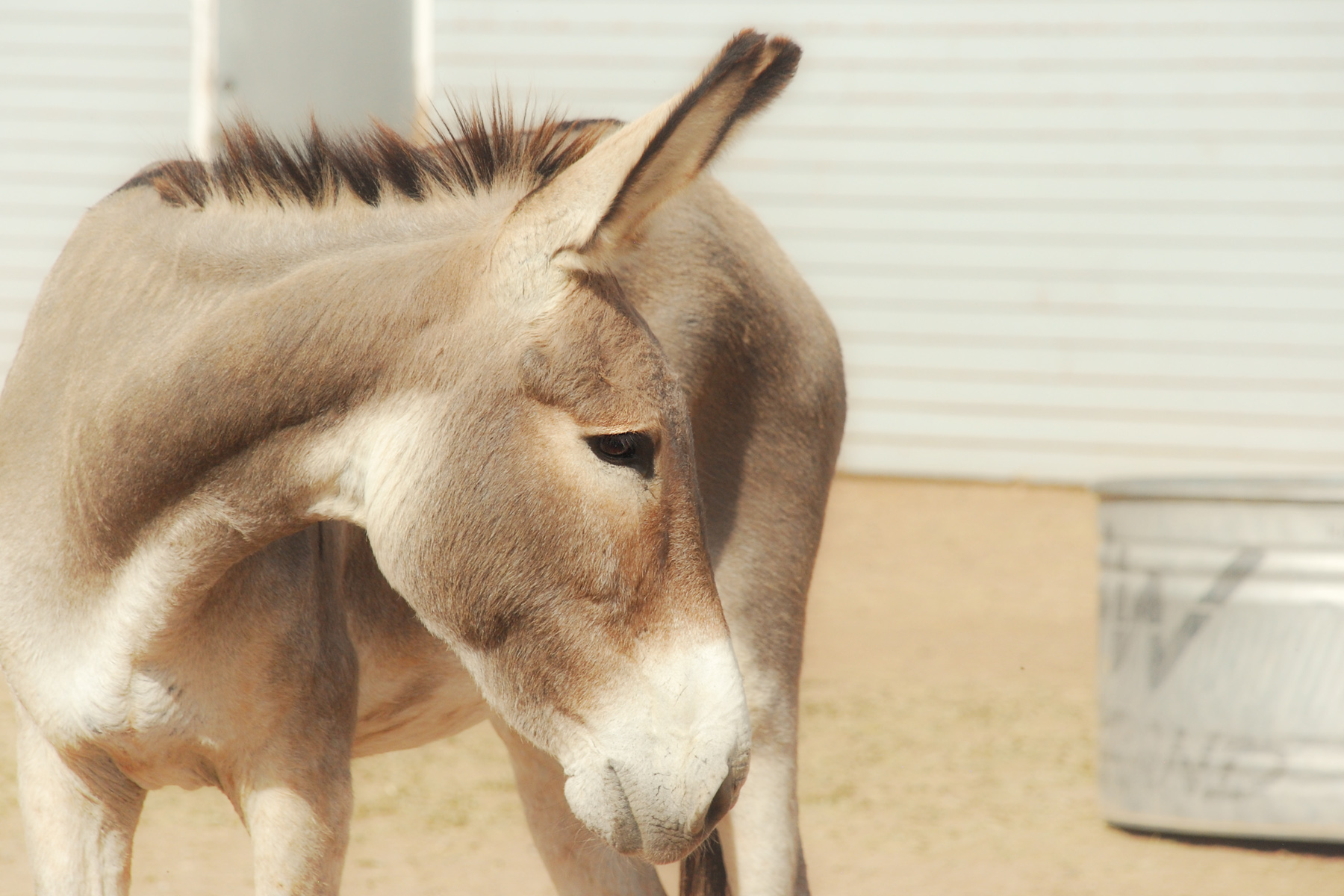
Yesterday was a wonderful day. The Boyz have a new sister. She’s a BLM beauty and we’ve named her Gracie. ♥
Because I’m still weirdly emotional over Fergus’s death and 7MSN’s Carson was there with us, I asked her to tell the story. I hope you don’t mind.
August 18, 2011
August 16, 2011
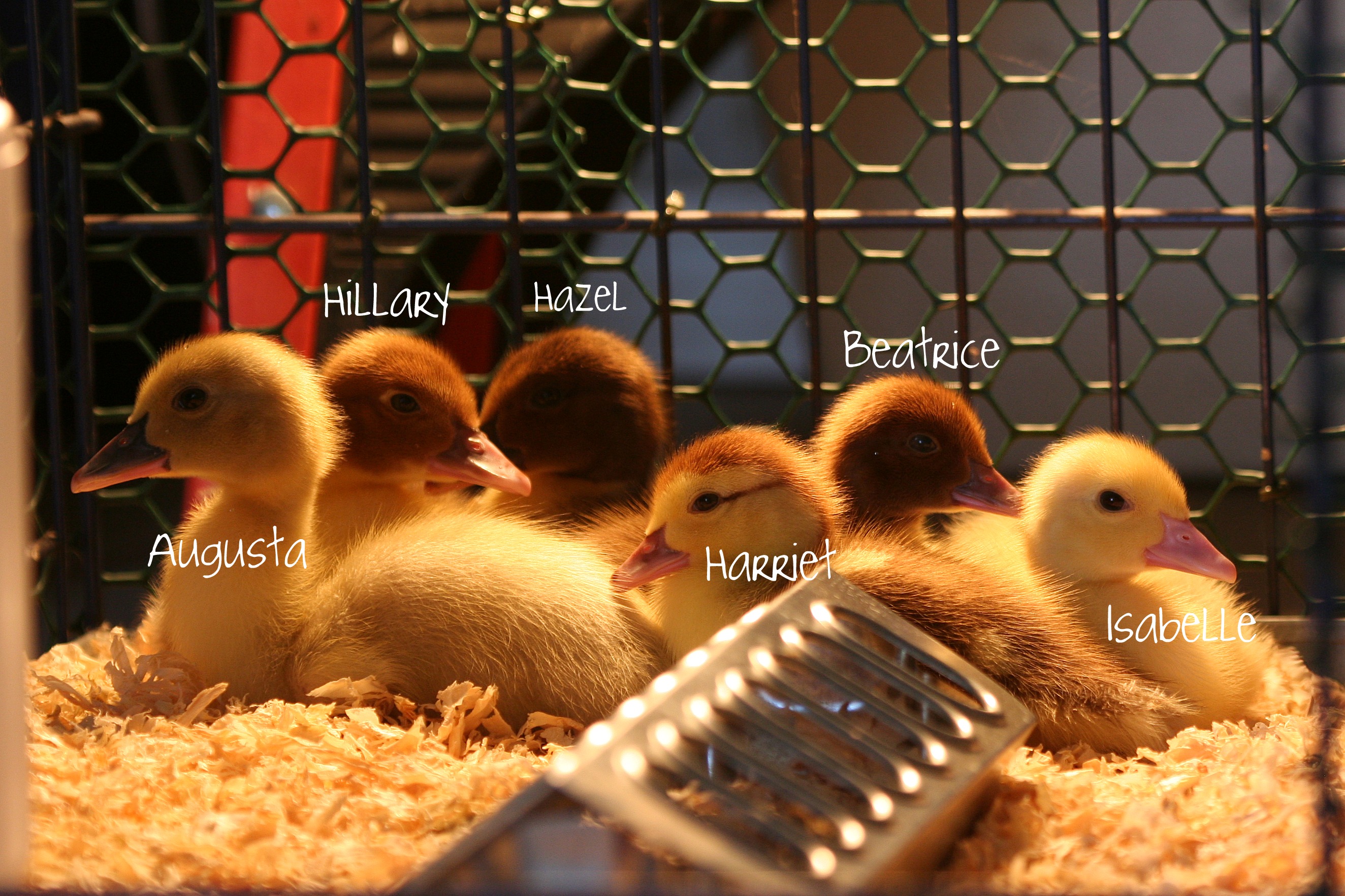
They grow so fast. Here’s Gus (on the left, then known as Augusta) with his posse on April 28 when they first came to Morning Bray Farm.
Here’s Gus on May 4.
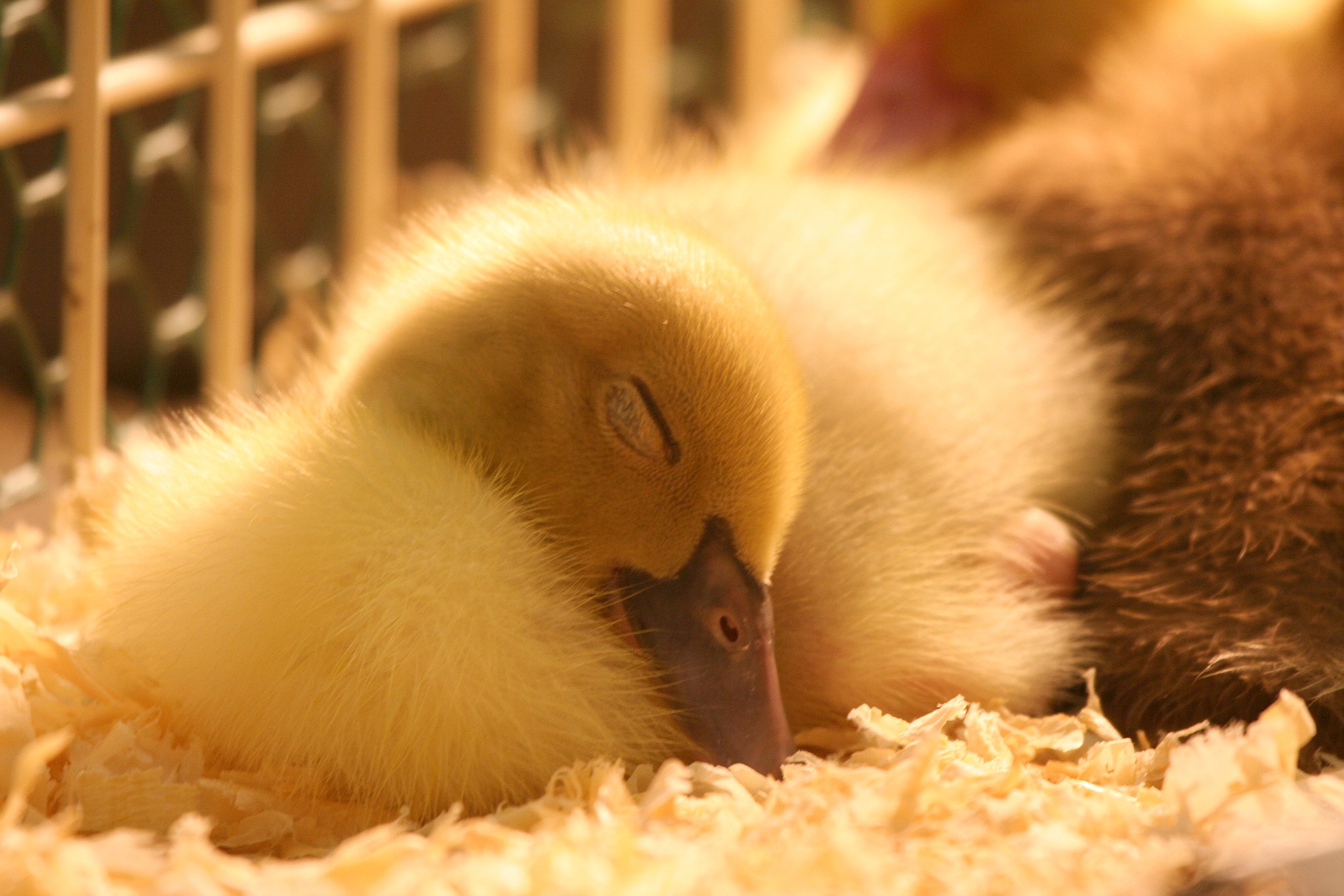
May 11.
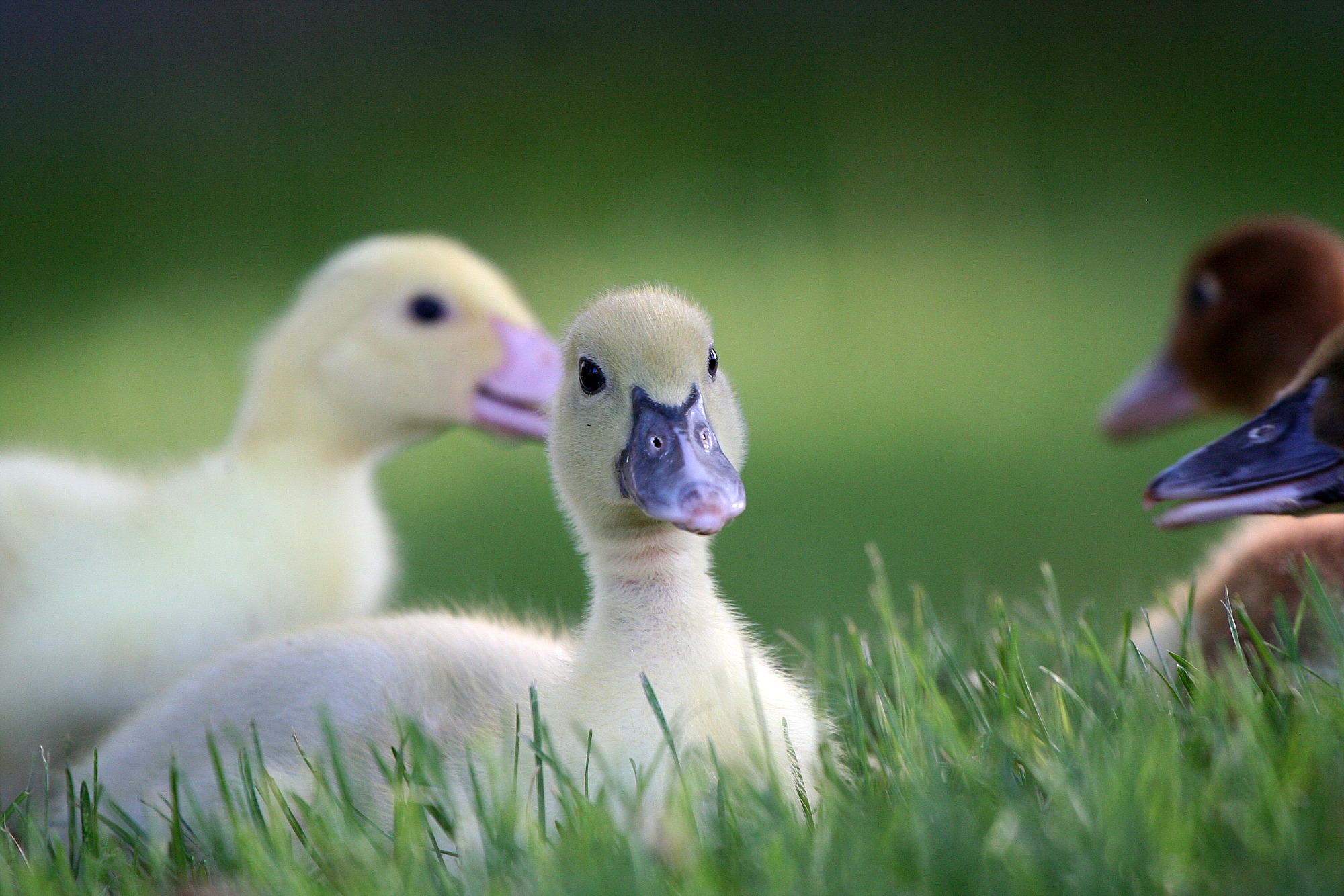
May 18.
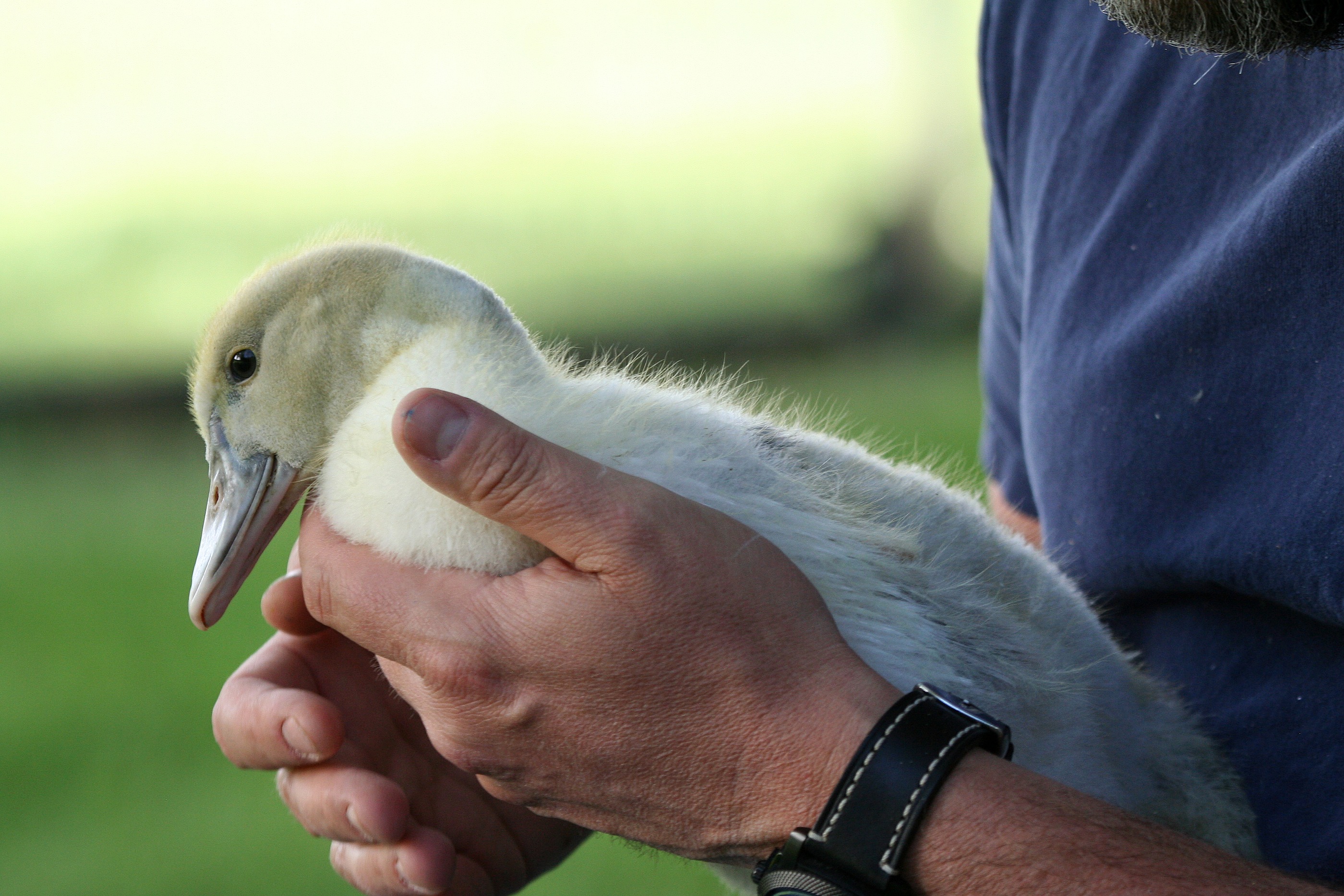
June 30.

July 22.
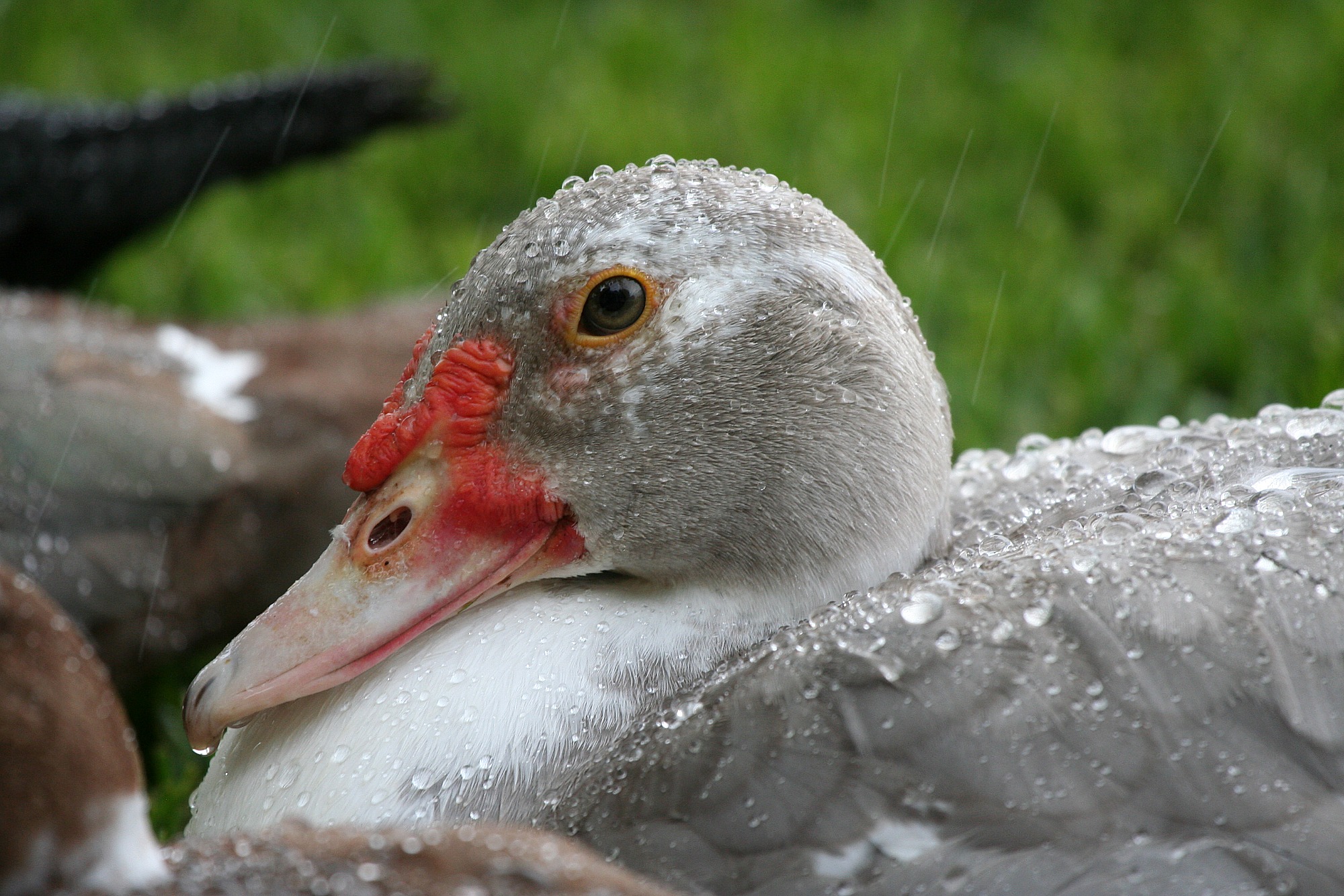
Don’t blink. August 13.

Most of what I’ll share with you is adapted from Storey’s Guide to Raising Ducks. Being a tree duck, Muscovies roost in trees at night and spend hours preening on elevated perches after their daily bath. They’re classified as a heavy breed of duck; males (drakes) average 12 pounds, while females (ducks) average 7. In case you’re wondering, the average weight of a Mallard drake is 2.5 pounds; ducks 2.2 pounds.
The head of the mature Muscovy drake is massive, and its face is covered with red skin, called caruncling. Remember, Gussie hasn’t stopped growing yet.
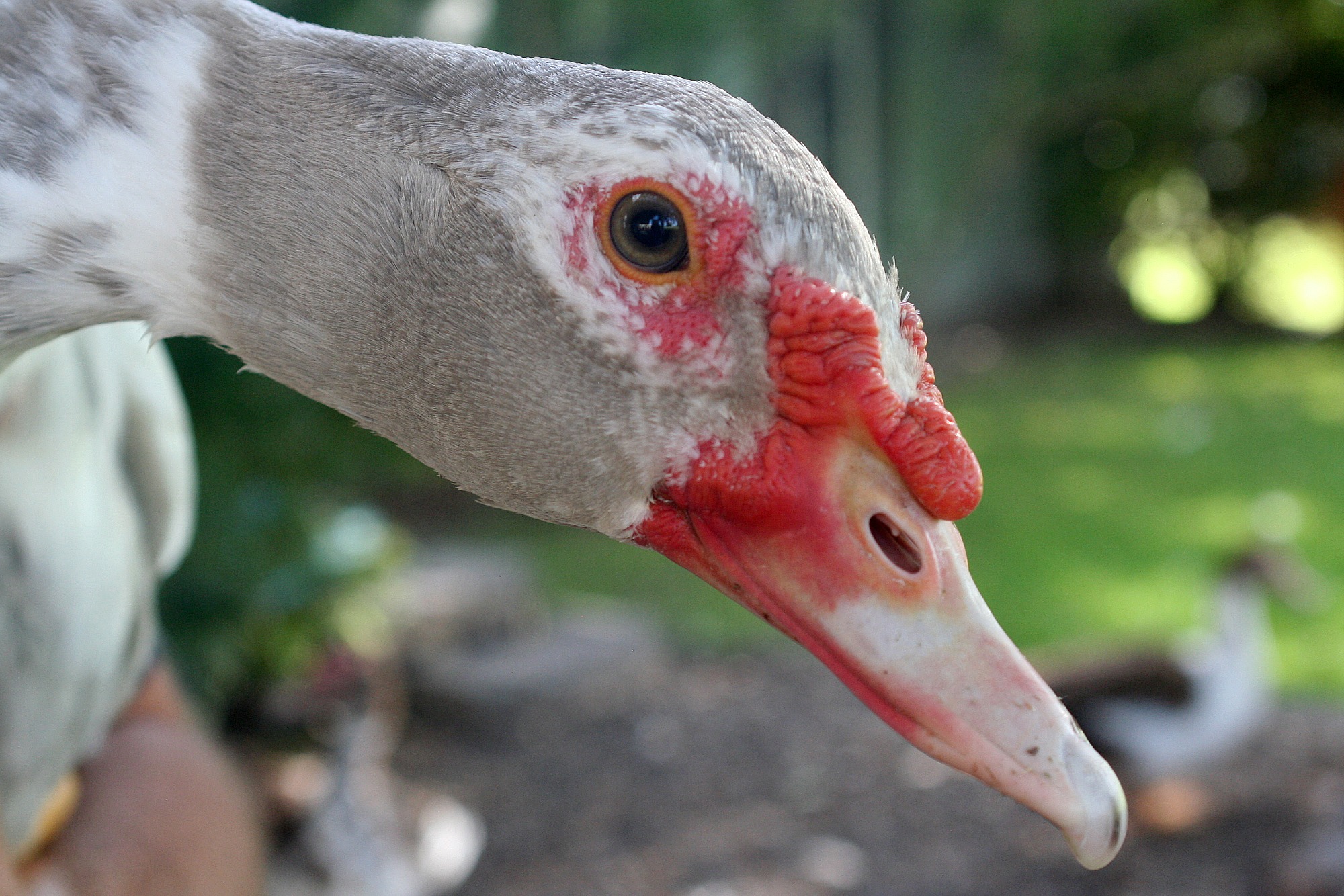
Their long toes are webbed, amazingly strong and tipped with talon-like claws.
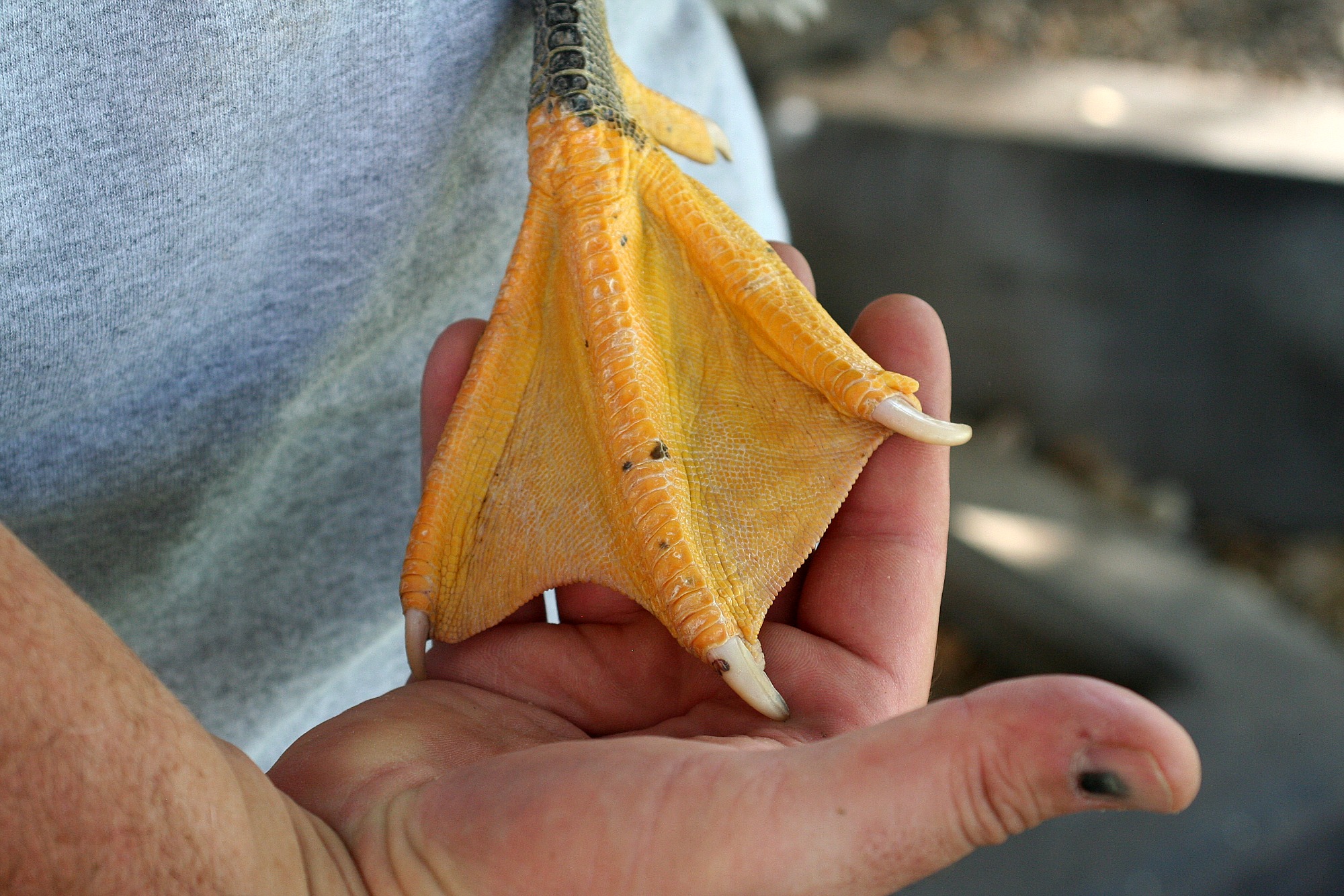
Compared with other domestic ducks, their bodies are flattened, heavily muscled and extra wide across the shoulders. Their wings are very wide and moderately long, with the tips being more rounded than in other breeds. The tail is long and broad.
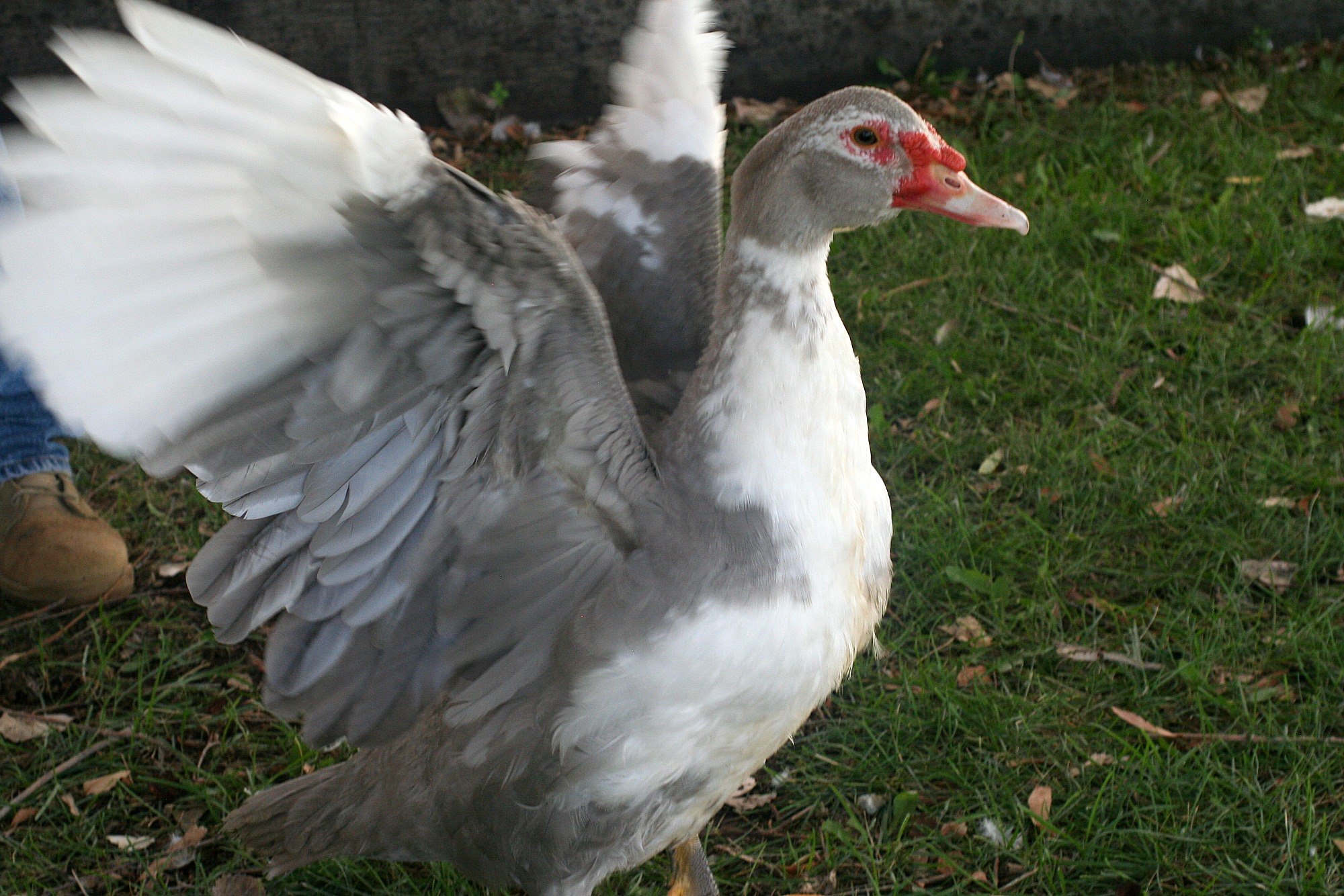

As I mentioned above, the size difference between drakes and ducks is remarkable. By adulthood, females weigh 45 to 50 percent as much as the males. For comparison, in other domestic breeds and wild species that nest on the ground, ducks typically weigh only 8 to 12 percent less than drakes at maturity. (Muscovies prefer to nest on large branches and cavities in tree trunks.)
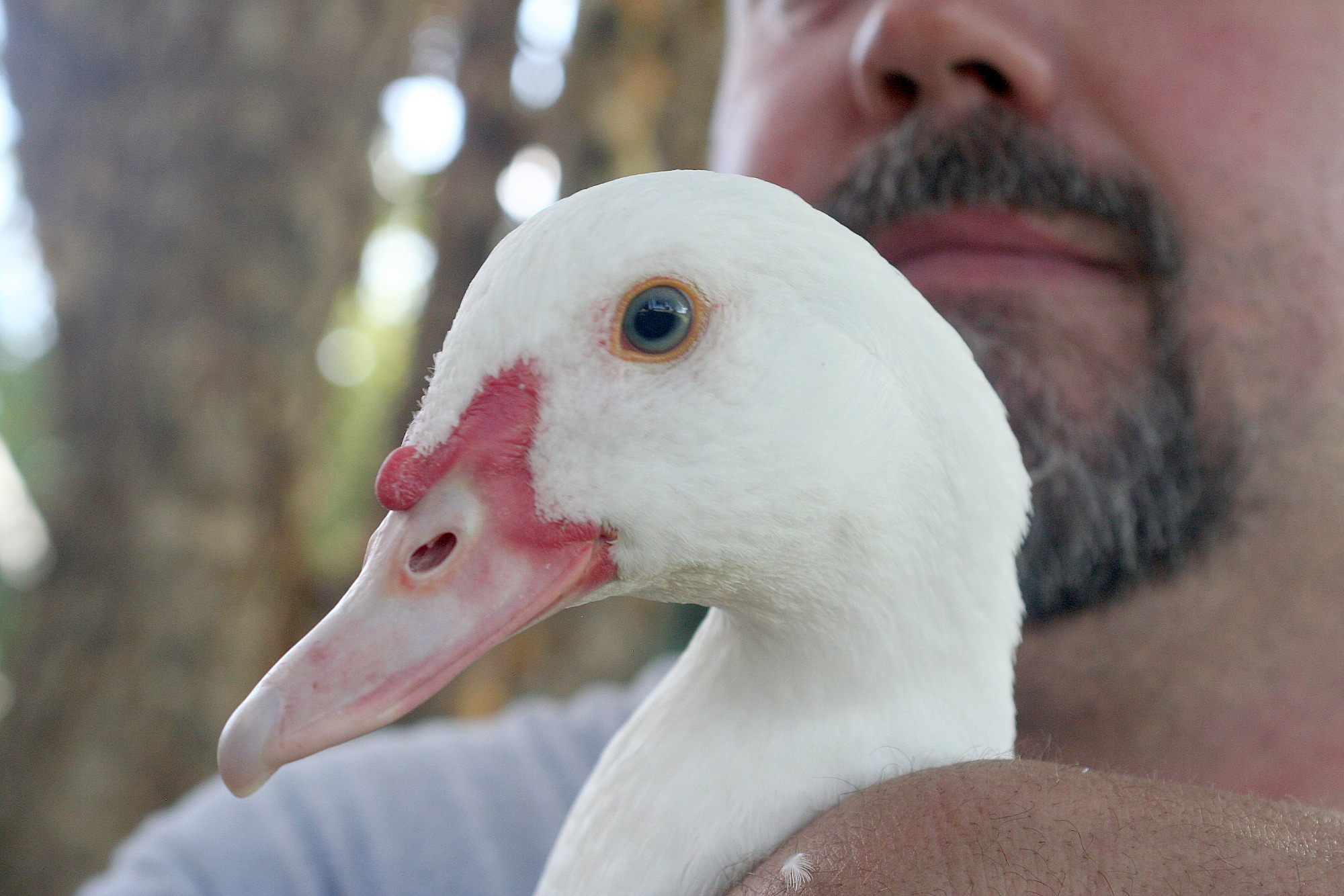
Here’s Isabelle on August 13. Much smaller than Gussie.

Look at her beautiful blue eyes. By the way, Isabelle would like to let the world know that she adores tomatoes.
While we gave everyone female names at the start, and not long ago we were certain we had an even mix of drakes and ducks, we’re positive now that we have four boys and two girls.
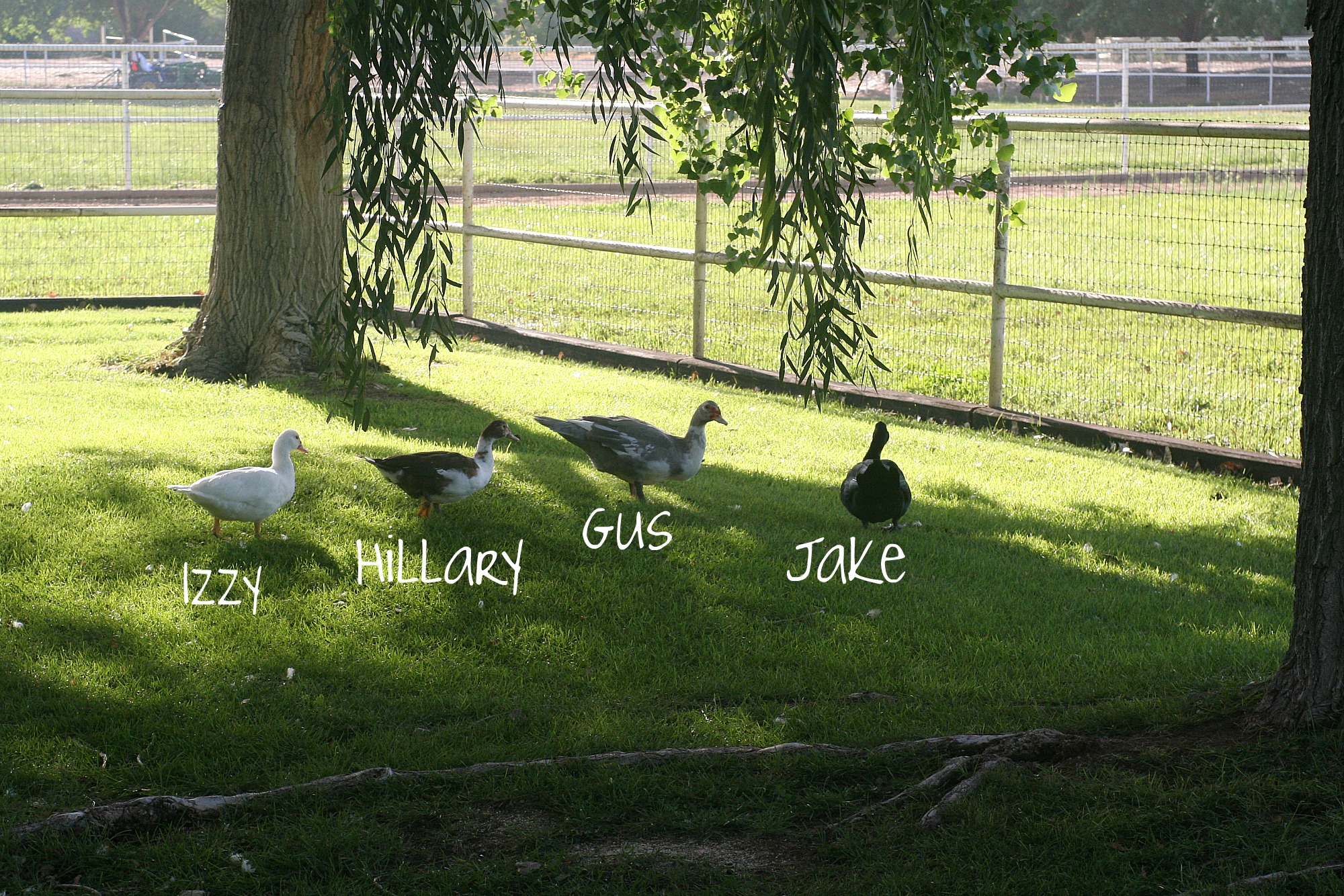
1. Augusta is Gussie – drake
2. Isabelle is Isabelle – duck
3. Hillary is Hillary – duck
4. Hazel is Jake – the drake
5. Beatrice is Oliver – drake
6. Harriet is Alfie – drake
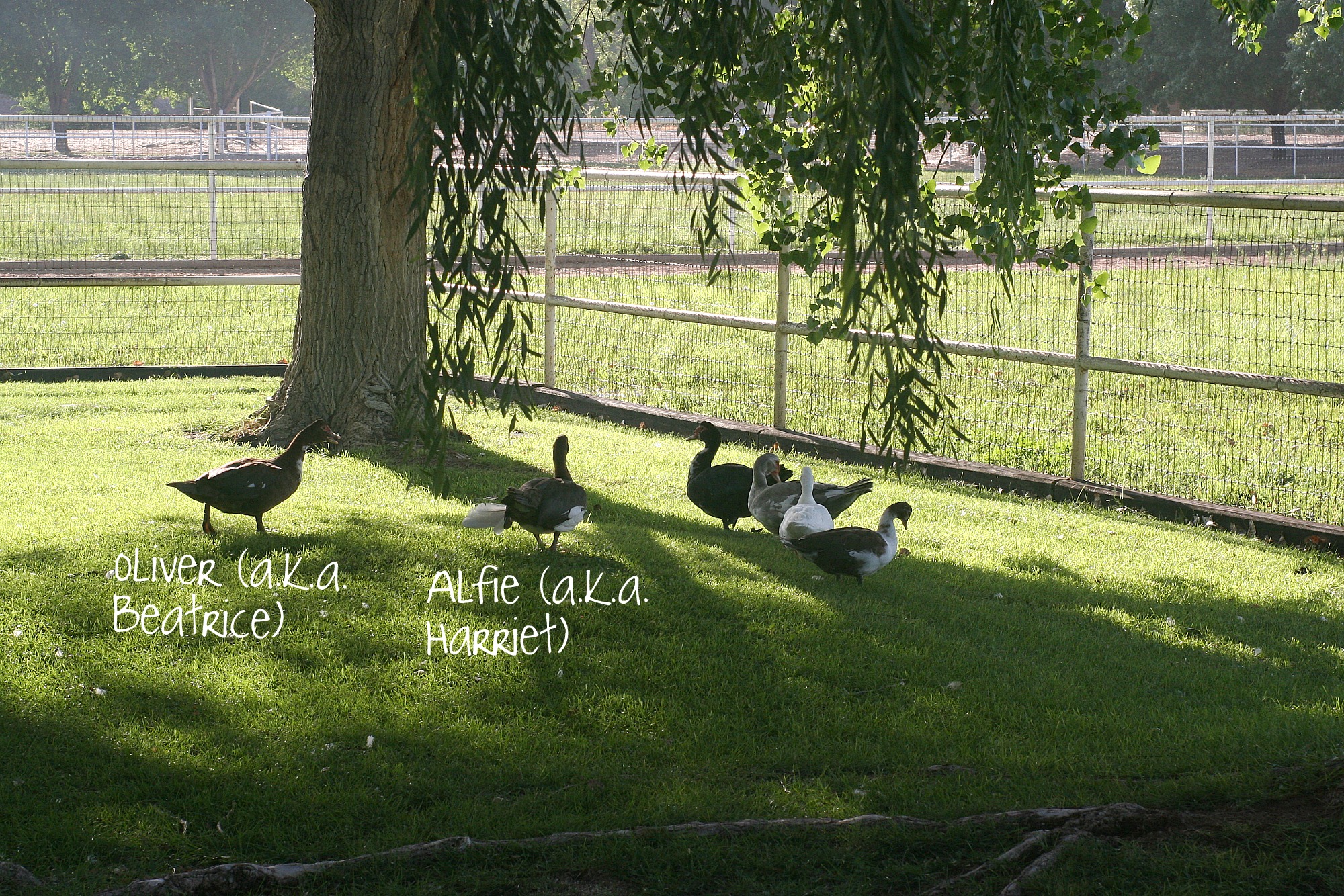
And we love them all.
Muscovies are the quietest of all breeds. Females occasionally quack weakly but mostly use a variety of soft chirps to communicate. The drake’s primary vocalizations are hoarse, breathy exhales (hisses) of varying lengths.
Most females are fair to good flyers and will perch on fences and buildings. Here’s Hillary up on the front porch.

It’s always a madhouse here, but we wouldn’t have it any other way.

♥
August 12, 2011
Last week, Lynette mentioned in a comment on this post that she’d like to look out through a fly mask to see what it’s like. She also asked if I’ve tried.
I don’t remember seeing fly masks on horses before moving to New Mexico. I’ll admit again that when I moved here, I was thoroughly confused about why people would put blindfolds on their horses to prevent them from seeing where they were going. After all, I figured if I couldn’t see the faces of horses who were wearing masks, they surely couldn’t see me.

That, Lynette, is why last summer, I had to look out through a fly mask to see what it’s like. After all, I had to balance the potential of blindfolding the Boyz versus protecting their eyes from biting flies before I put fly masks on them.
Turns out, fly masks aren’t blindfolds like I thought they were. Silly me.
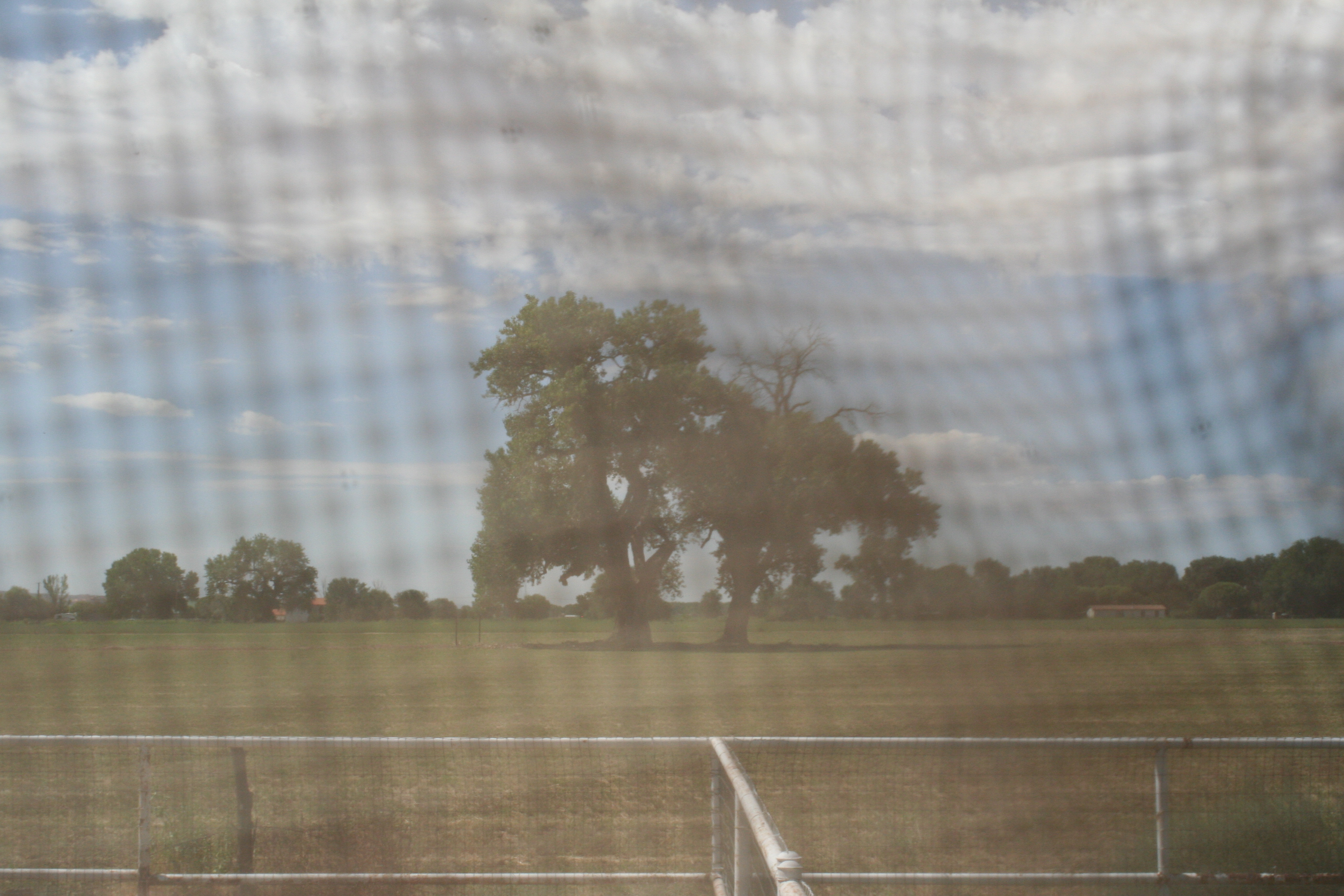
If you haven’t had the opportunity to see what it looks like to peer out through a fly mask, this might help.
Here’s me looking at Ellsworth.
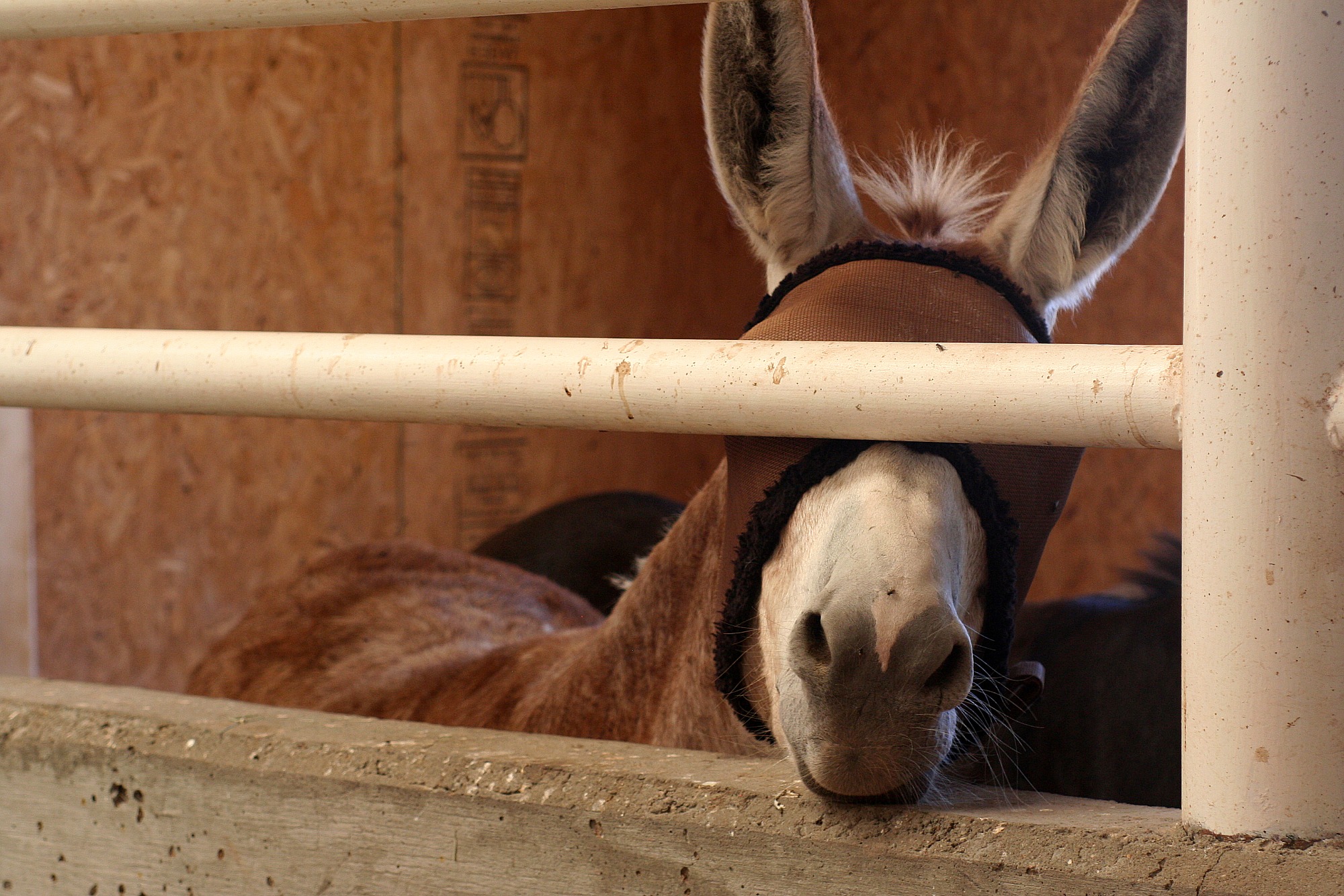
And here’s Ellsworth (and Nigel) through the “lens” of a fly mask.
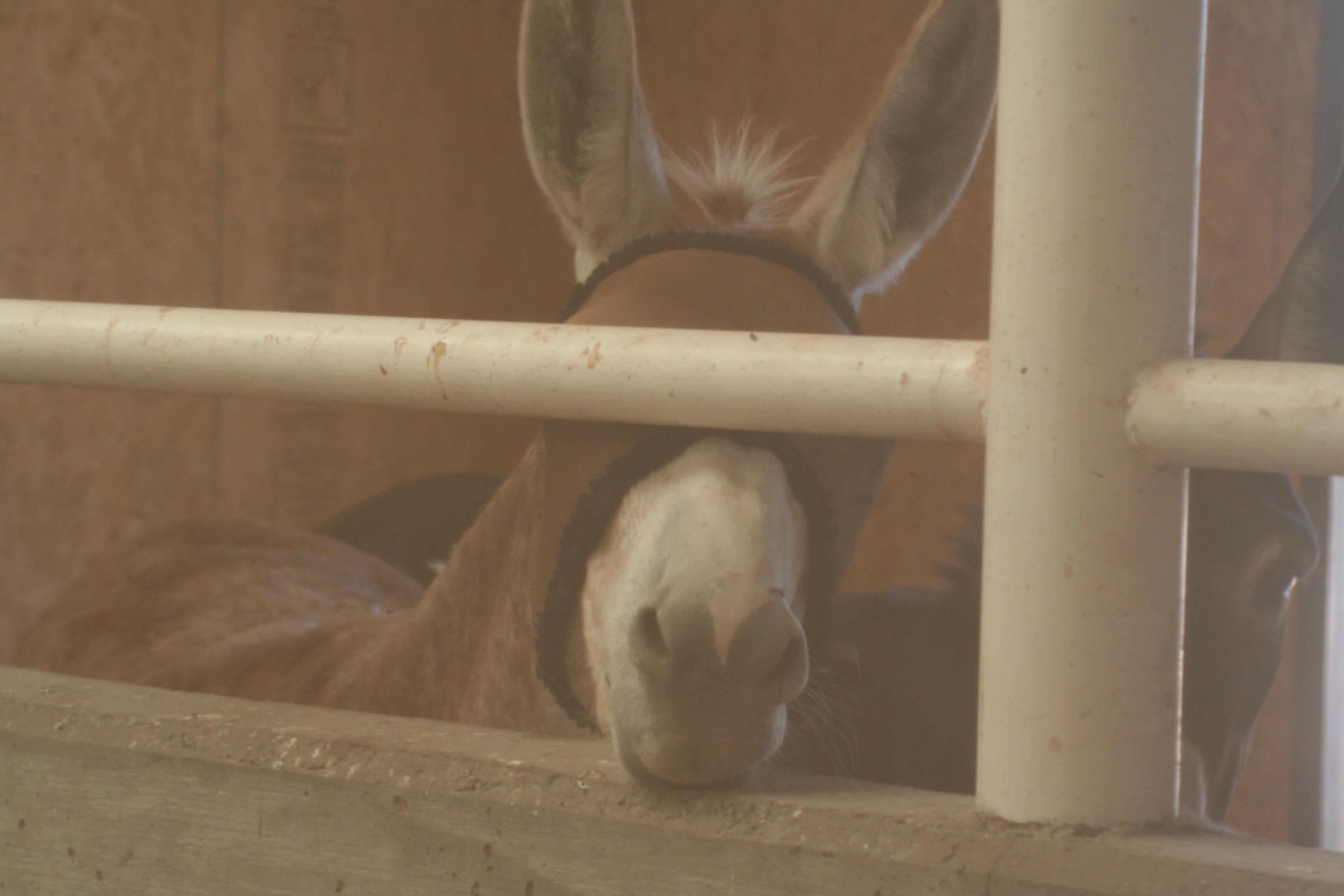
Because fly masks are a tightly woven netting (keeps the flies out while allowing air to flow), wearing one is kind of like putting on a pair of sunglasses. Not bad at all.
Here’s Abigail the goat.

And here’s what Abigail looks like looking through a fly mask.
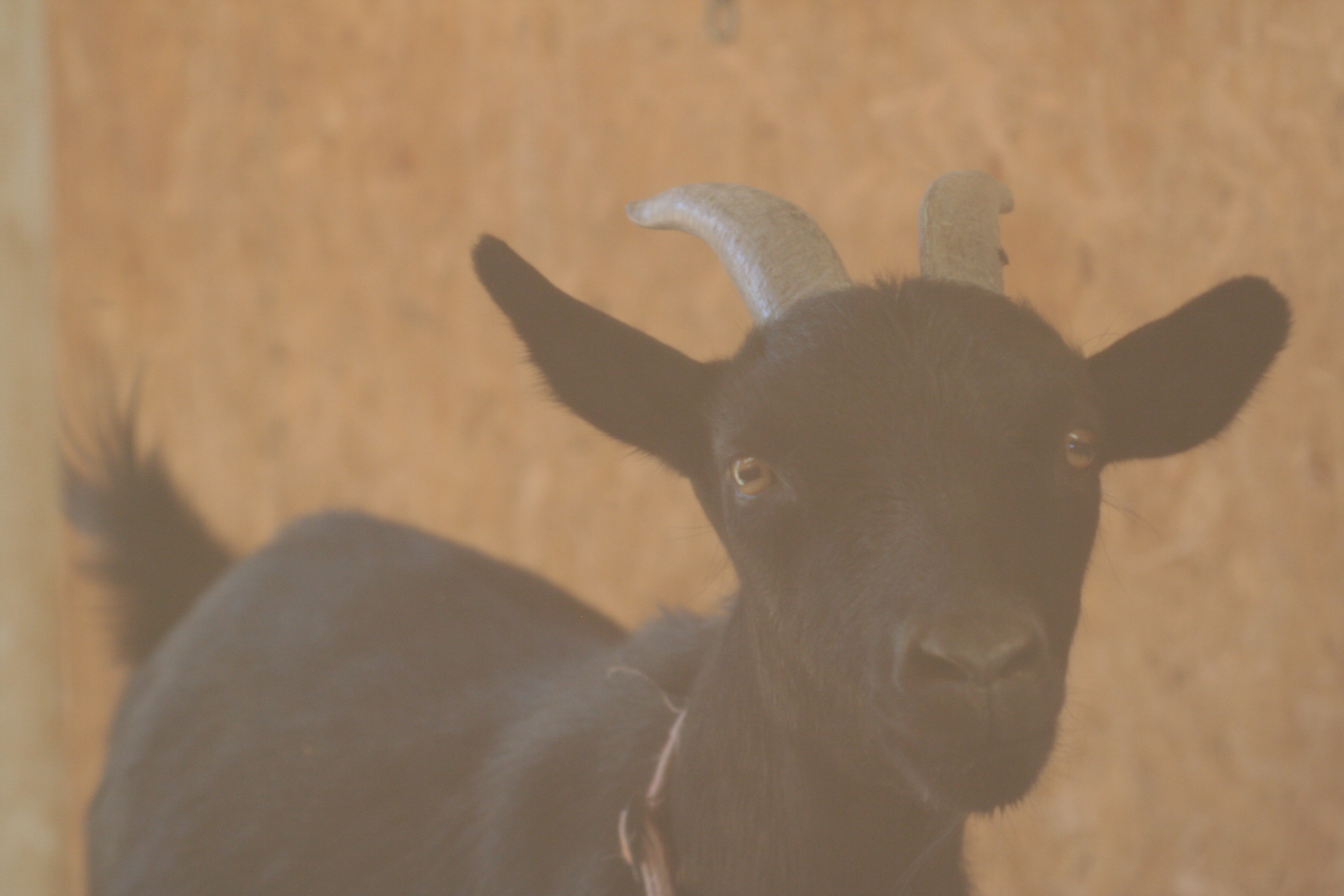
The cottonwoods out back.

And the cottonwoods through a fly mask. You can see in this picture that the fly mask was farther away from the camera lens than in the first two pictures (the farther away the mask, the more you can distinguish the netting).
The Boyz.
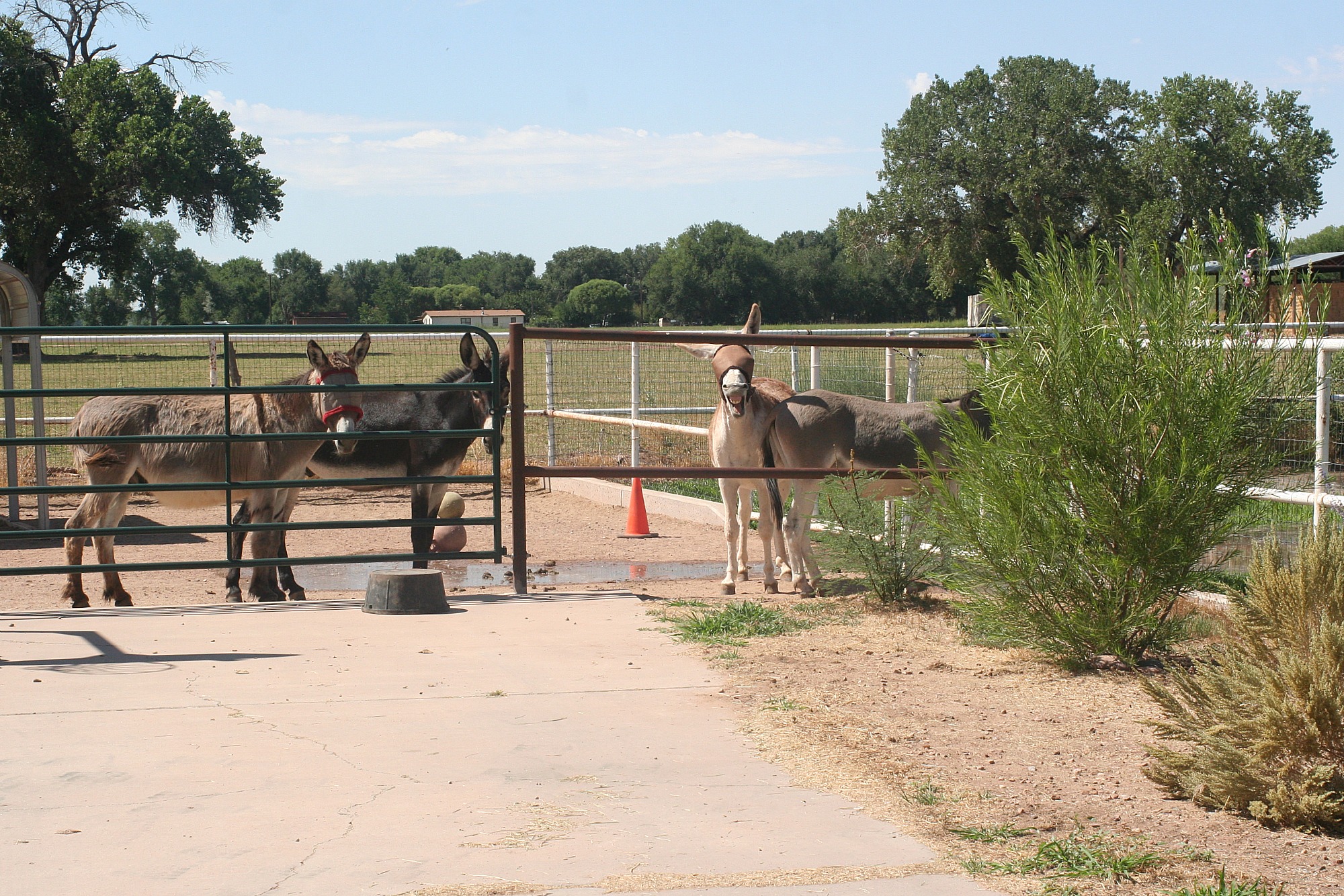
And the Boyz through a fly mask.

Thank goodness they can see. ♥
August 10, 2011
August 7, 2011
August 5, 2011
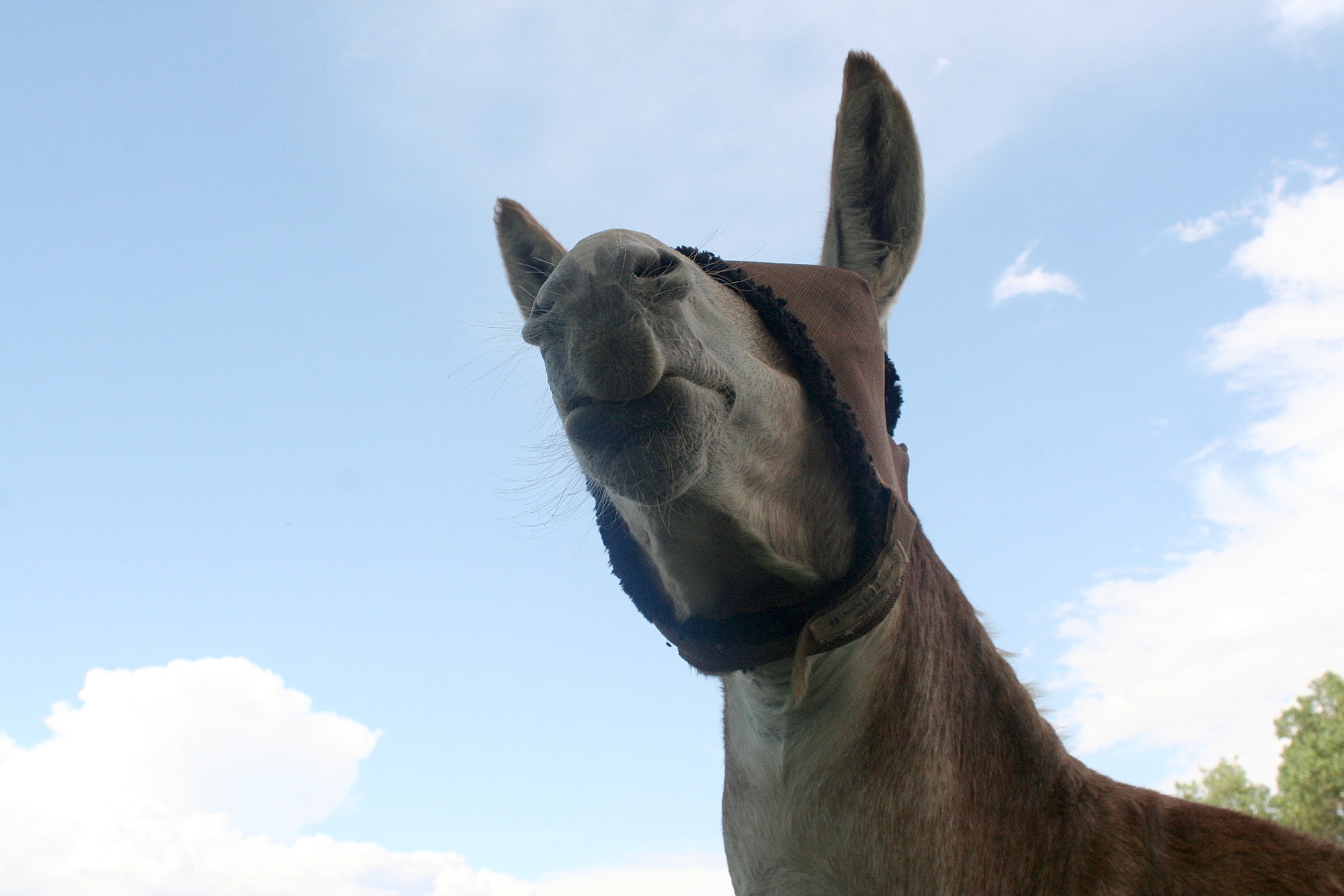
Ellsworth has a fairly accurate feelgoodometer.
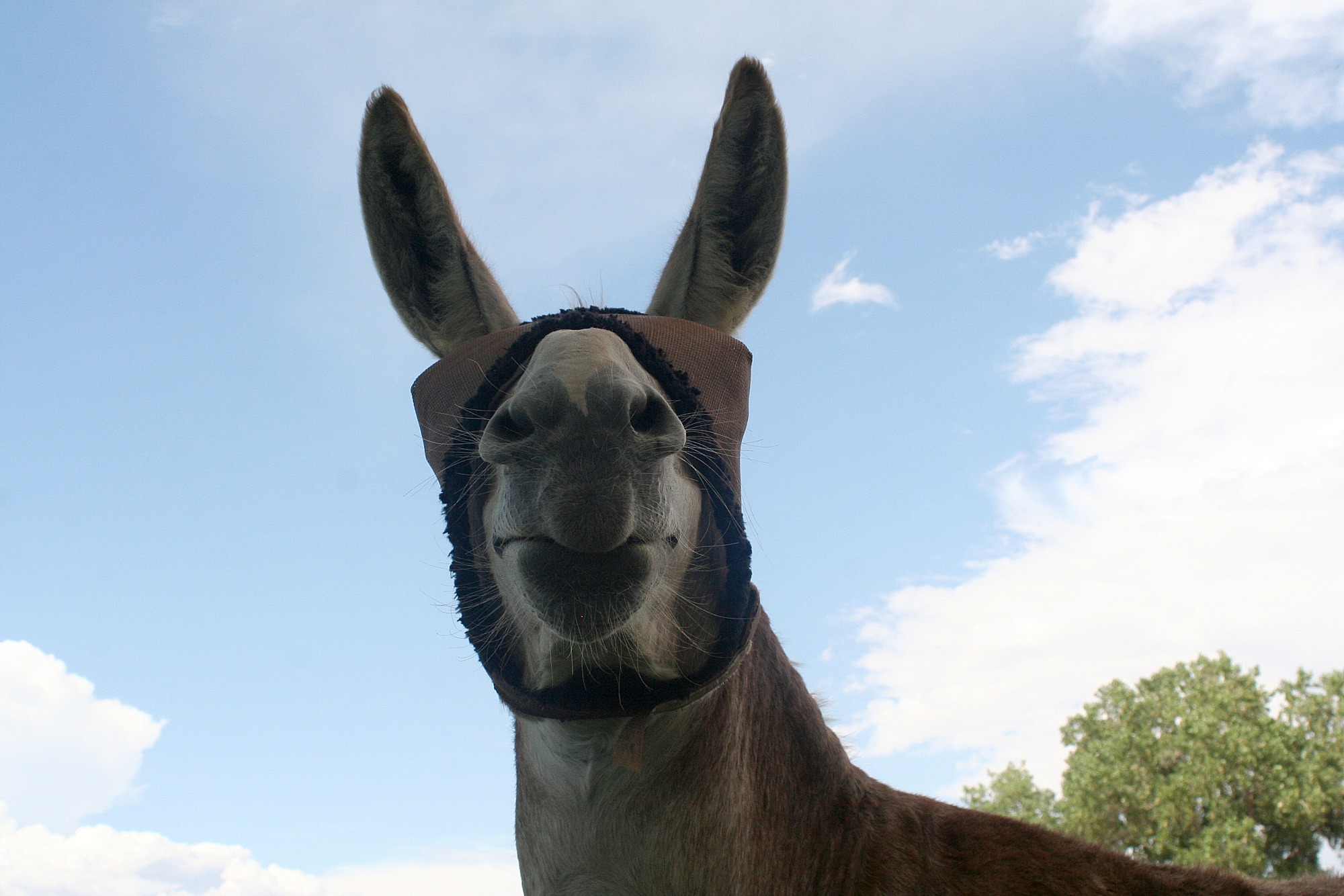
His feelgoodometer is his upper lip.
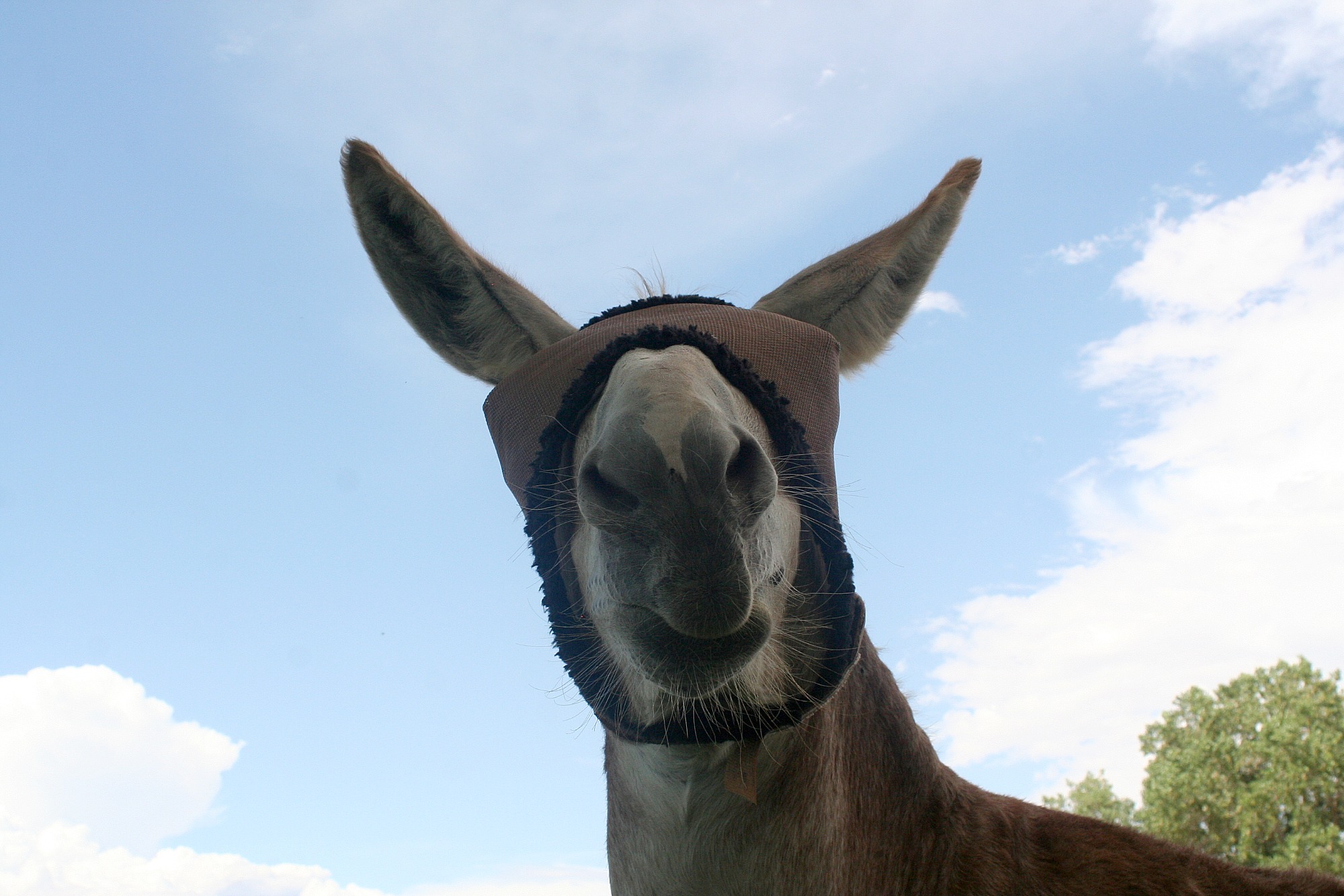
The better the scritch…
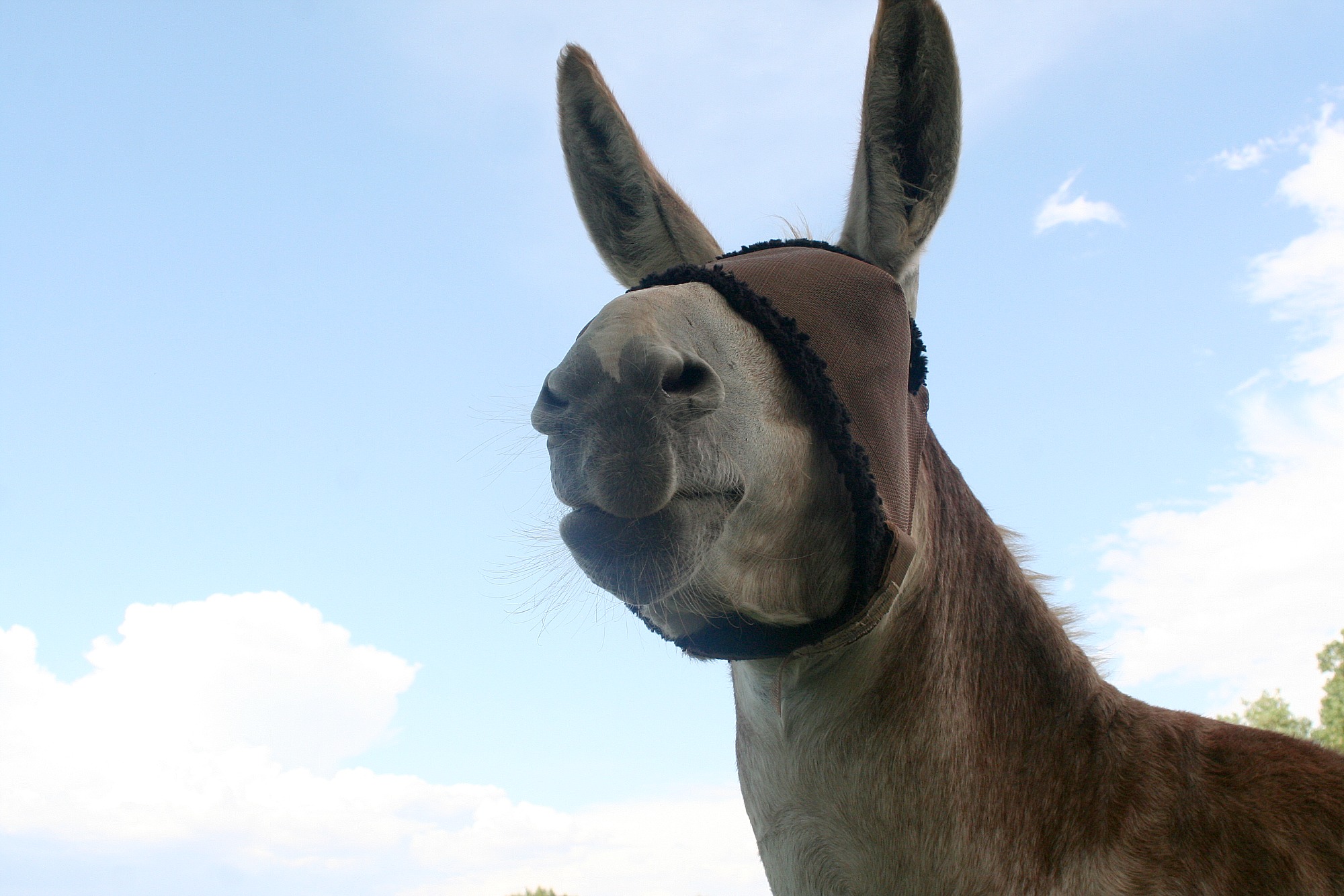
… the more contorted his lip gets.
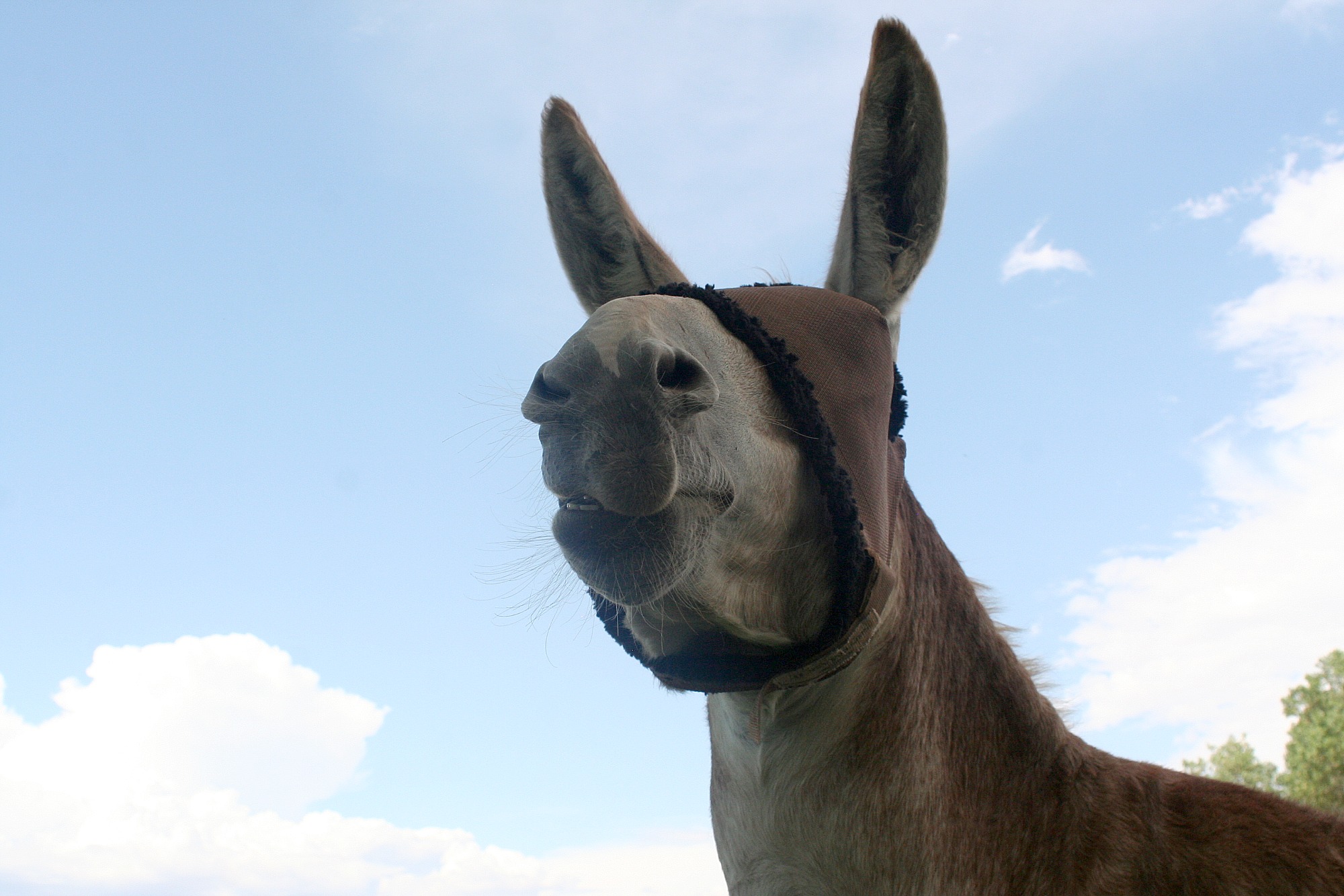
Ellsworth: Ah, that feels so good.
♥ ♥ ♥














 Morning Bray Farm