Birds
Archived Posts from this Category
December 3, 2010

November 25, 2010
Turkey sunrise
Posted by Morning Bray under Birds, Farm | Tags: bird, sunrise, Thanksgiving, turkey |[20] Comments



November 17, 2010
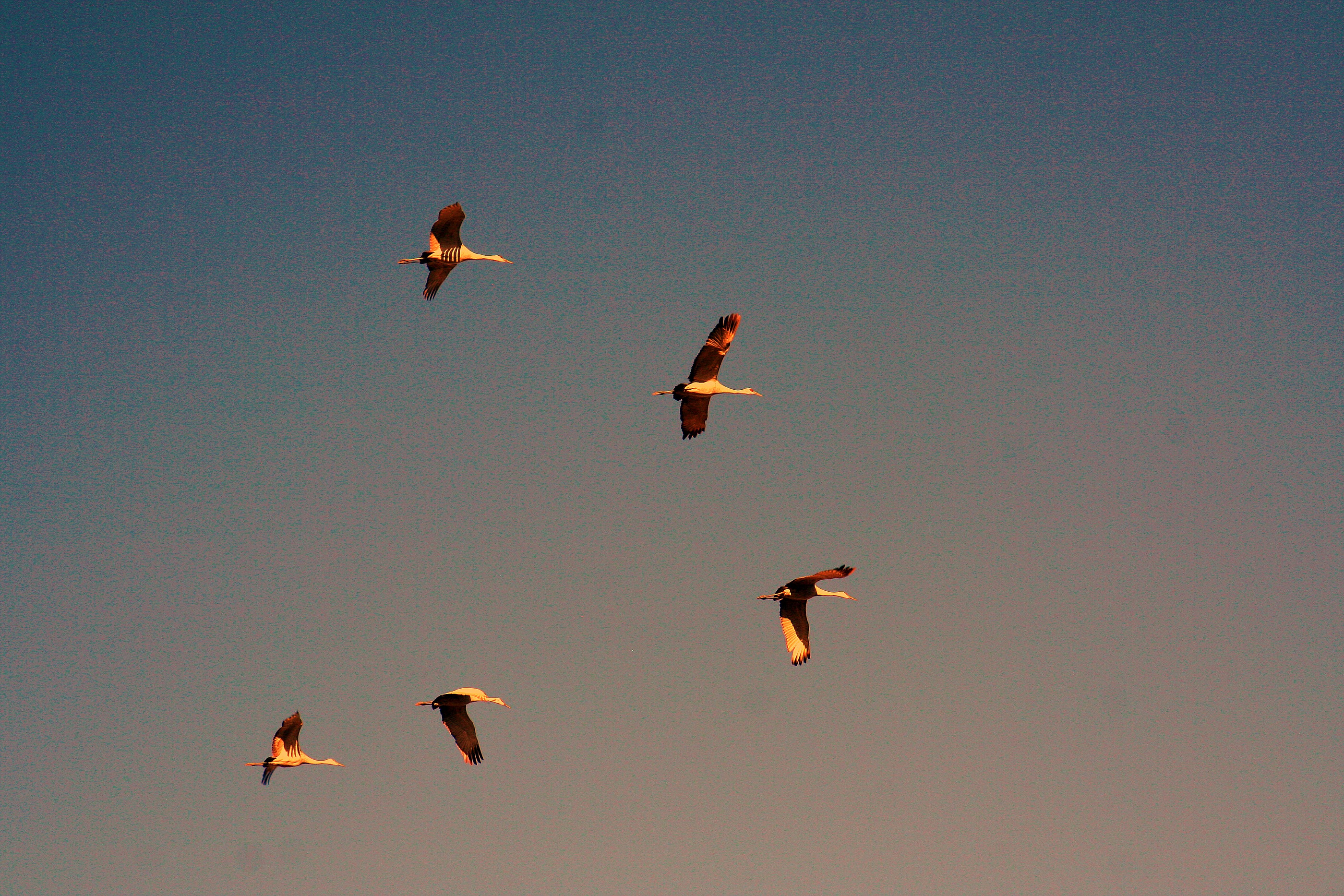
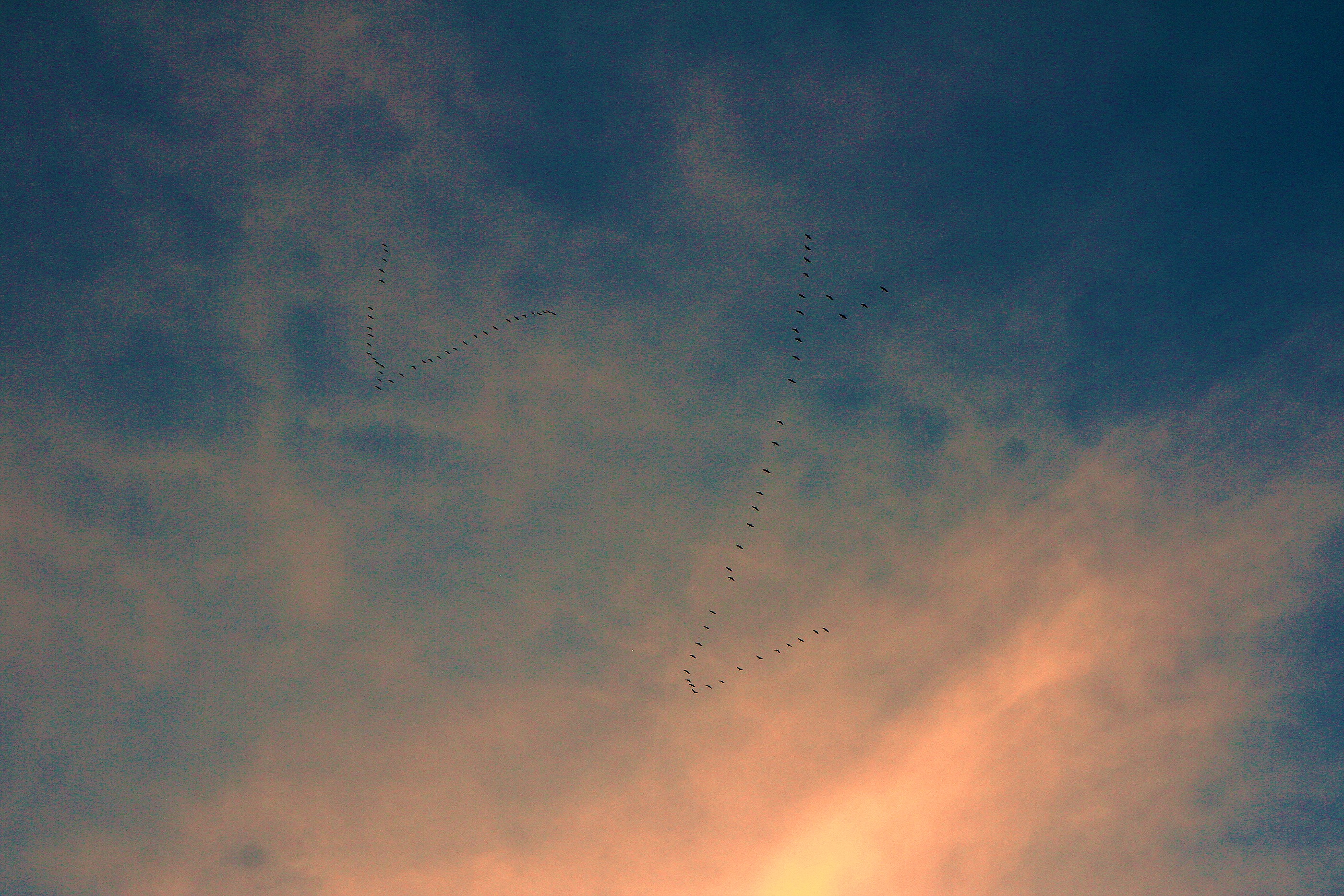
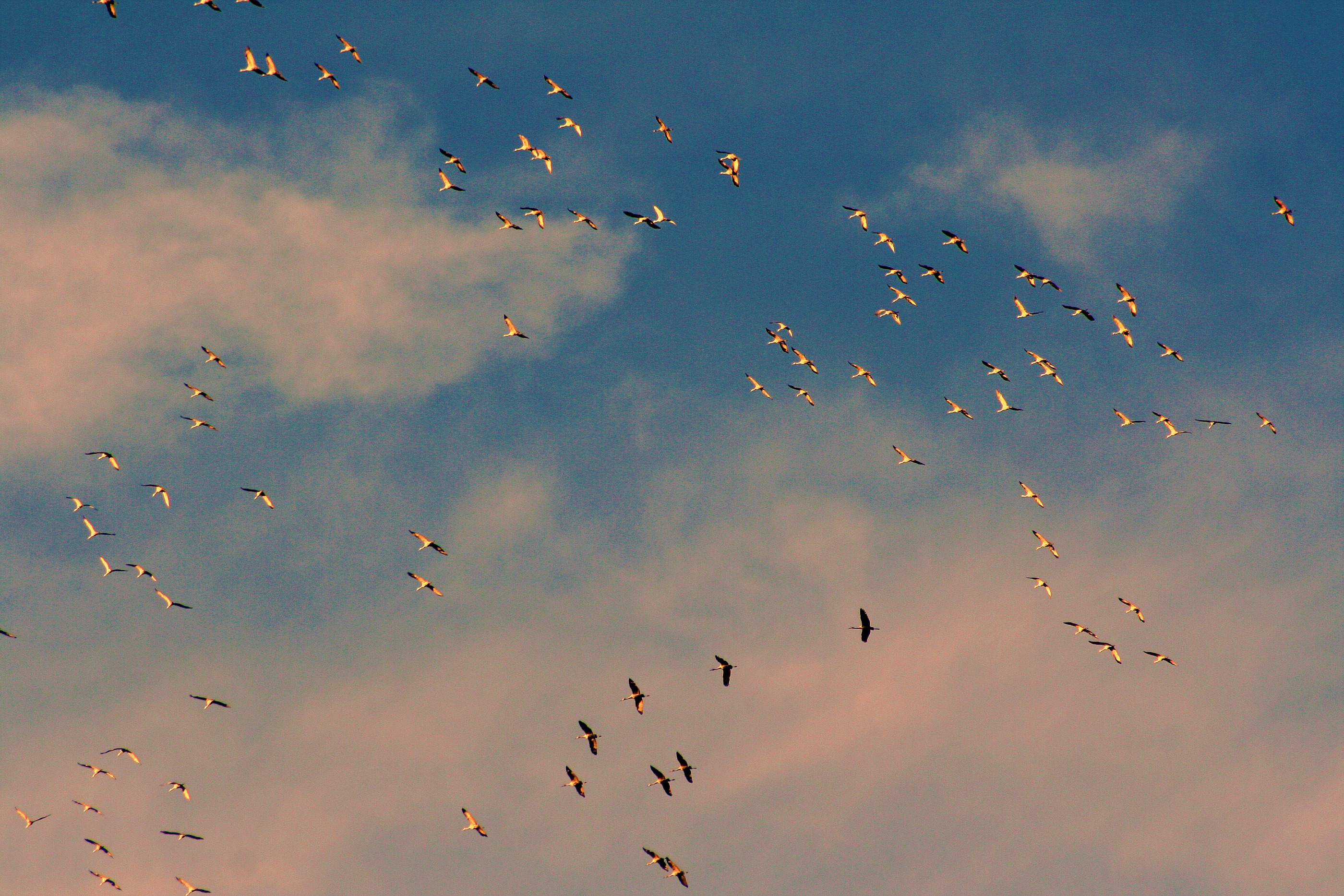
Bosque del Morning Bray Farm
Posted by Morning Bray under Birds | Tags: bird migration, cranes, sandhill cranes |[32] Comments

November 12, 2010
30 days and confused
Posted by Morning Bray under Birds | Tags: guinea, guinea eggs, guinea hen |[14] Comments
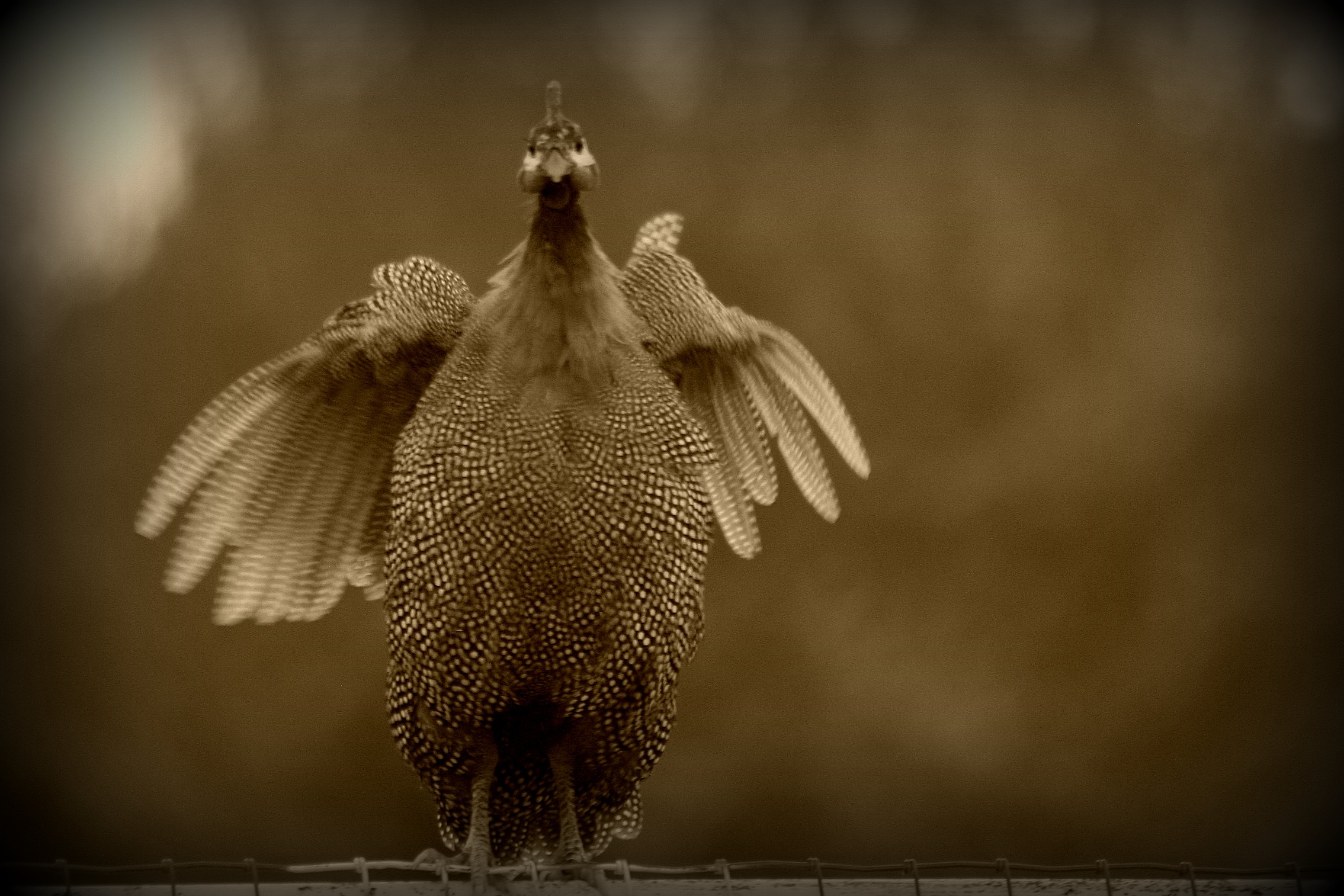
By my calculation, Gladys has been sitting on her X marks the spot eggs in the goat stall since October 11.
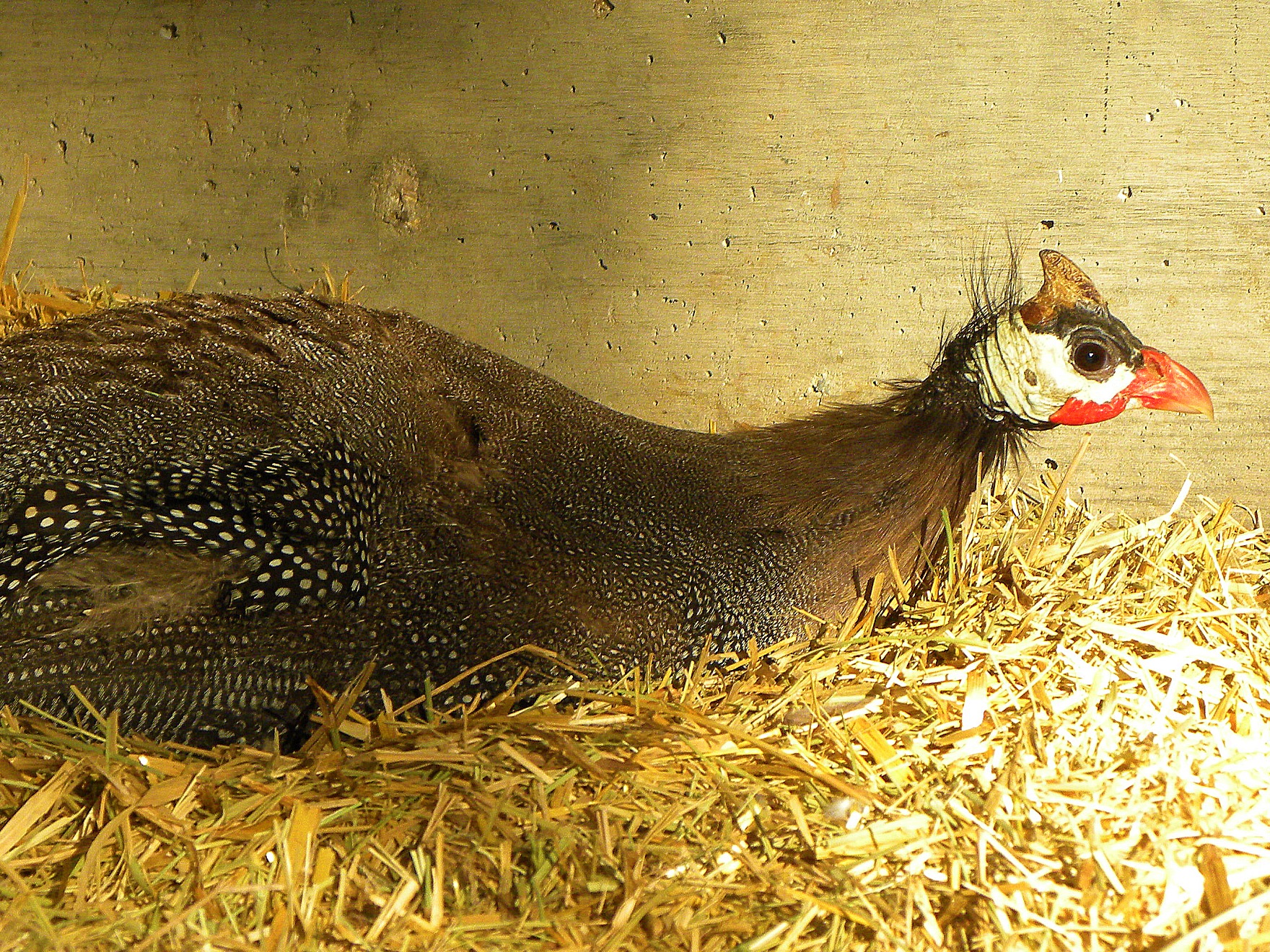
Despite the fact she appears completely content, because it’s 30 days later, I’m starting to get worried about her.

From what I’ve learned, the incubation time for guinea eggs is from 26 to 28 days. Does she even know if her eggs are viable? What if her eggs never hatch? Will she sit there forever?
If, by some small miracle her eggs do hatch, it’s too cold for the chicks to survive now. Does she know this?
Is she hungry? Is she thirsty? Is she cold? Does she miss her friends and family?
Share this:

October 13, 2010
Magical moments
Posted by Morning Bray under Birds, Farm, Sheep | Tags: Baby Boy, guinea hen, Lenny, Limpy, sandhill cranes, sheep |[13] Comments
Don and I often talk about the magical and unexpected moments we experience at Morning Bray Farm. They seem to happen a whole lot here.
Take Baby Boy, for instance. He’s gotten to the point now where he follows me around the corral and pasture… his nose to my rear. Momma is frequently not far behind these days. That’s magical, considering they were feral when they came to us a year and a half ago. I love them and they make me smile.

Check out Gladys. After laying a dozen or so eggs and being inattentive to her nest the last couple of weeks, she’s been faithfully sitting on her X marks the spot eggs in the goat stall for the last two days and nights. Isn’t she pretty?

She doesn’t seem to mind our comings and goings. That’s magical too. I can’t help but coo at her and smile every time I walk past.

Unexpected surprises can also be magical. For example, finding one of Lenny’s winter stashes in the hose storage container by the barn. How does he know he needs to save for the upcoming months? Whether it’s magic or instinct, made me smile.
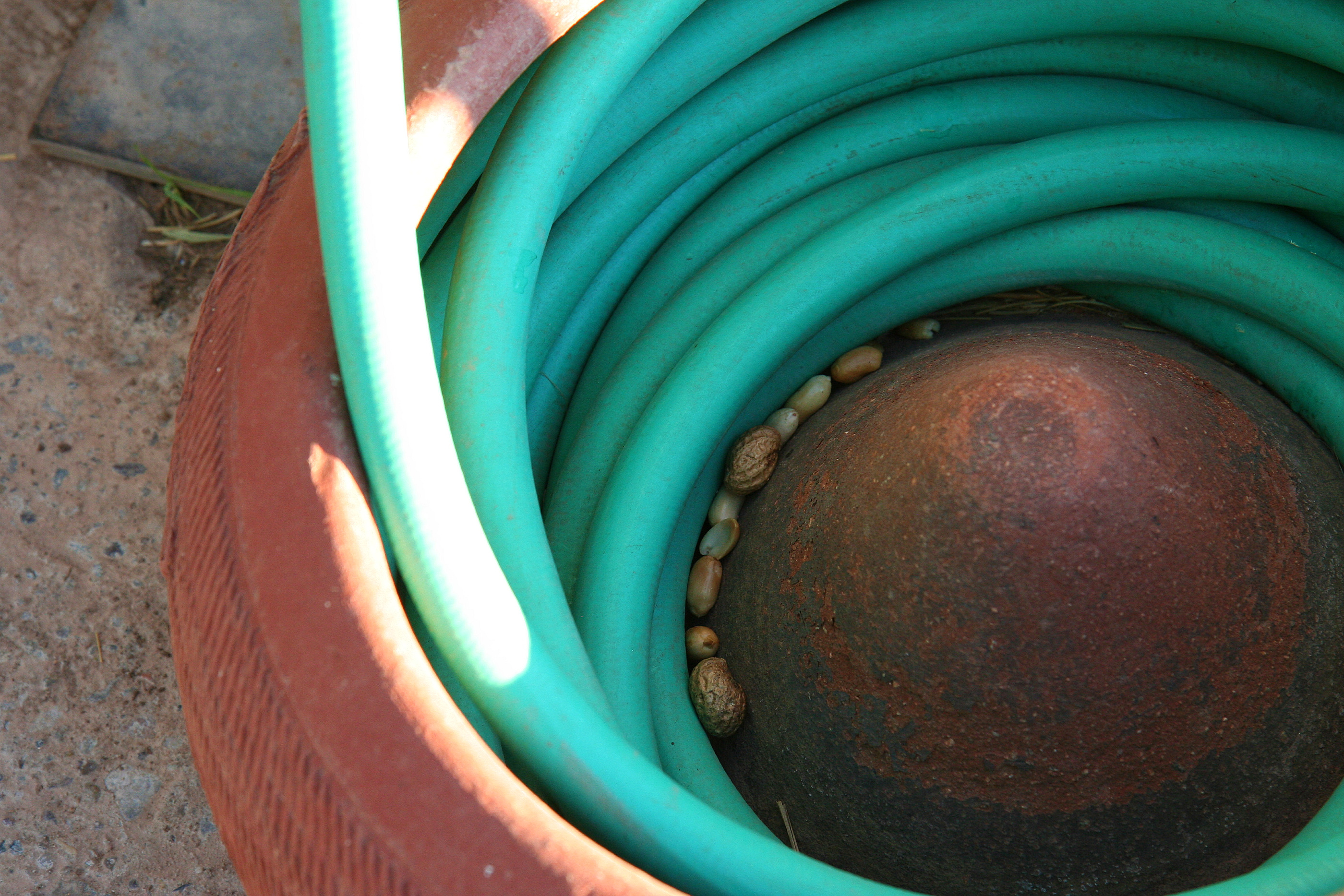
Yesterday, this one made me say, “Well, I’ll be.”
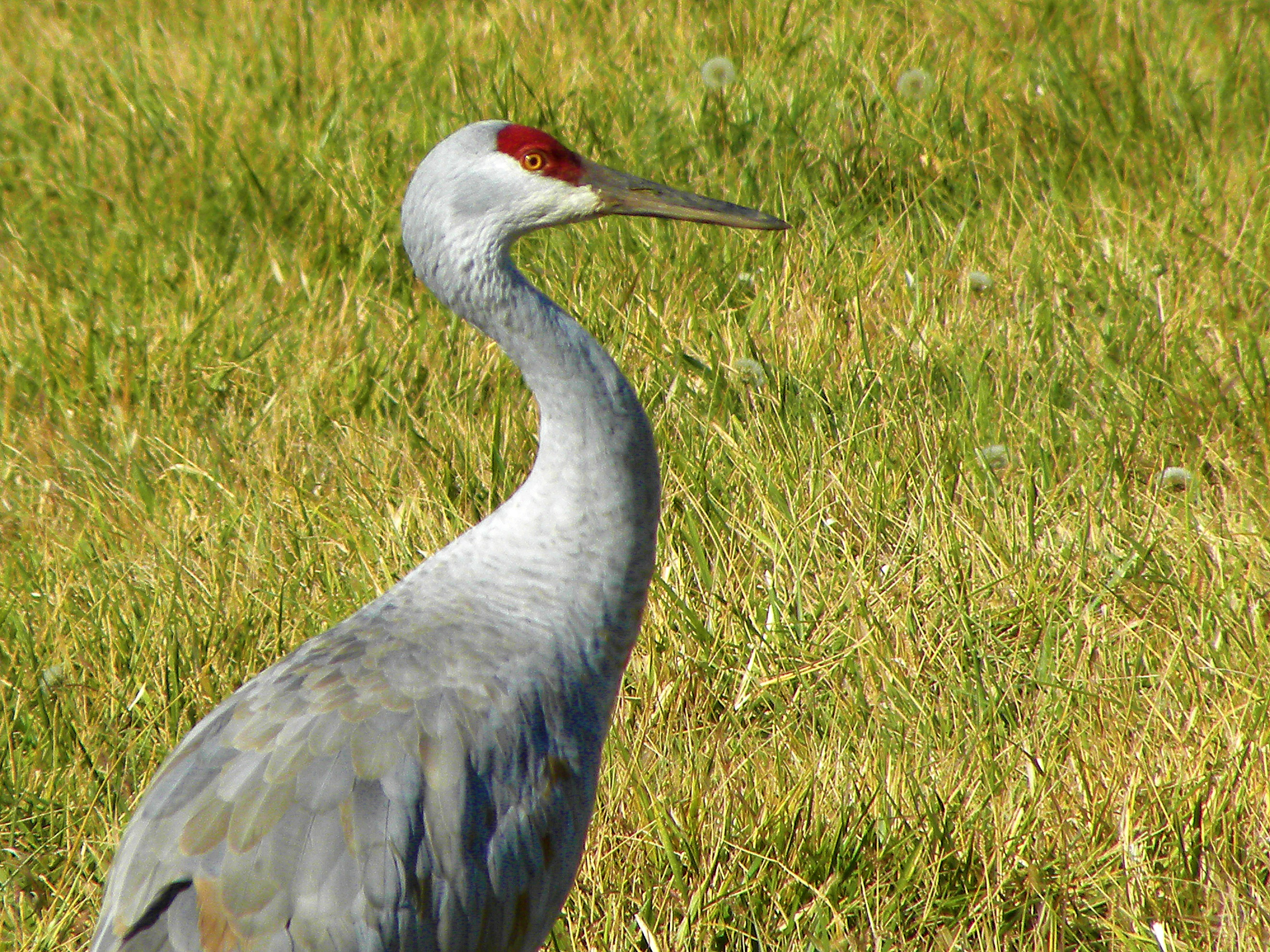
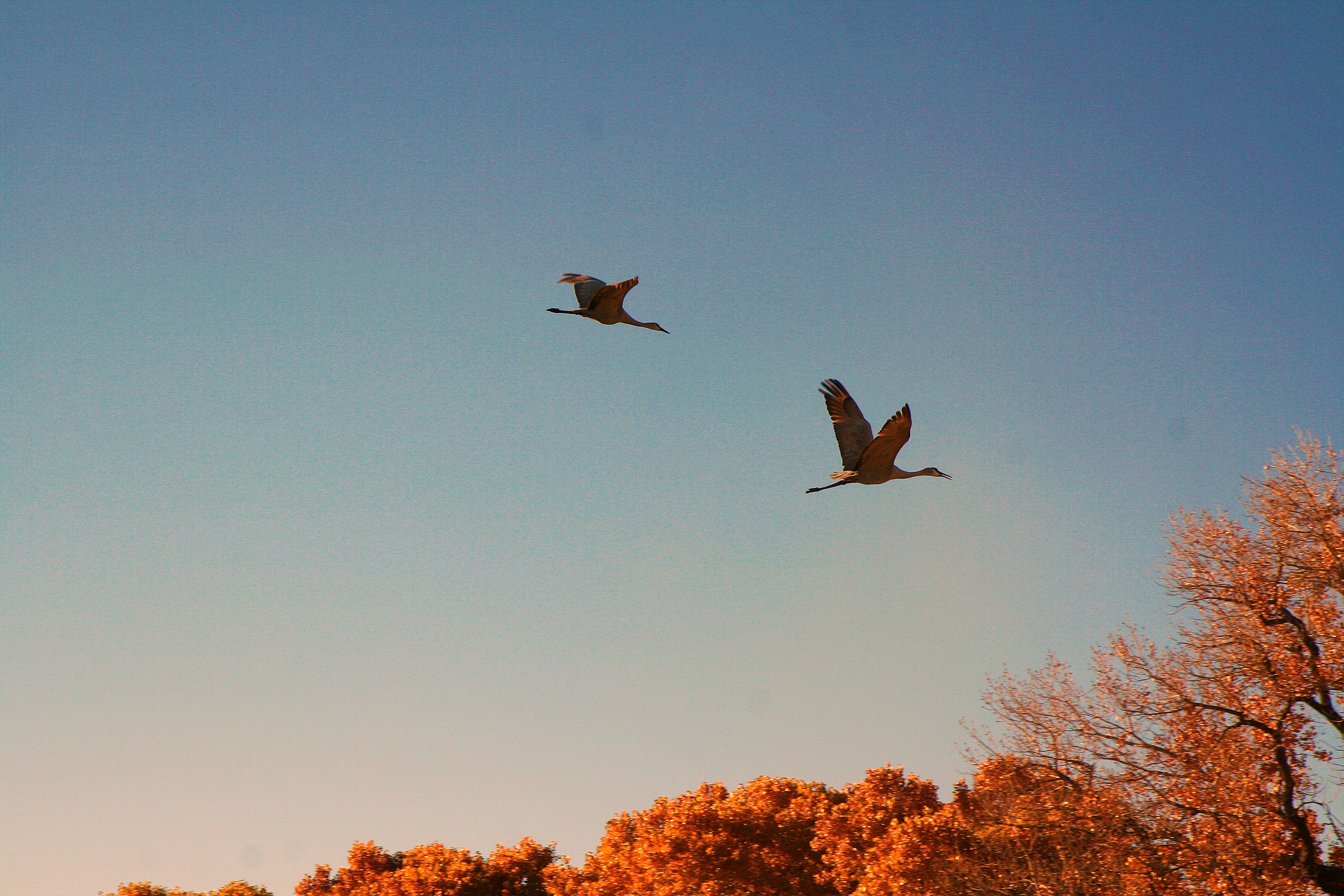
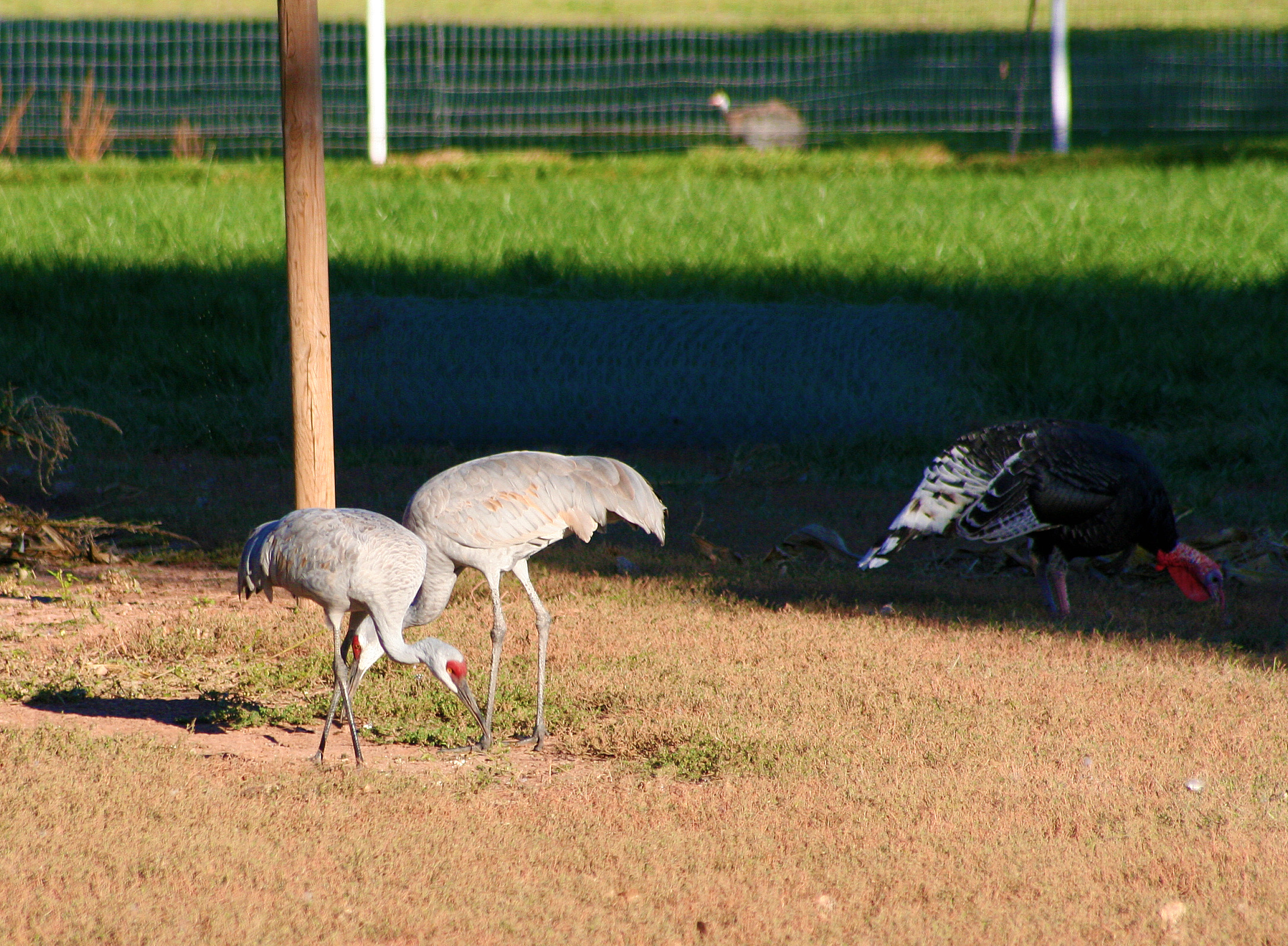
The sandhill cranes are back in town. This was our first official sighting of the year from Morning Bray Farm. The magic in this… Limpy (in the foreground) is back for her third straight year in a row. In case you’re wondering, Limpy limps. That’s how we know it’s her.
She brought a big old smile to my face. Simply magical. ♥
Share this:

October 2, 2010
A week of eggceptional surprises
Posted by Morning Bray under Birds, Farm | Tags: eggs, fresh eggs, guinea eggs, guineas |[9] Comments
With Tuesday being the eggception, our guest guineas have surprised us with an egg gift every day this week.
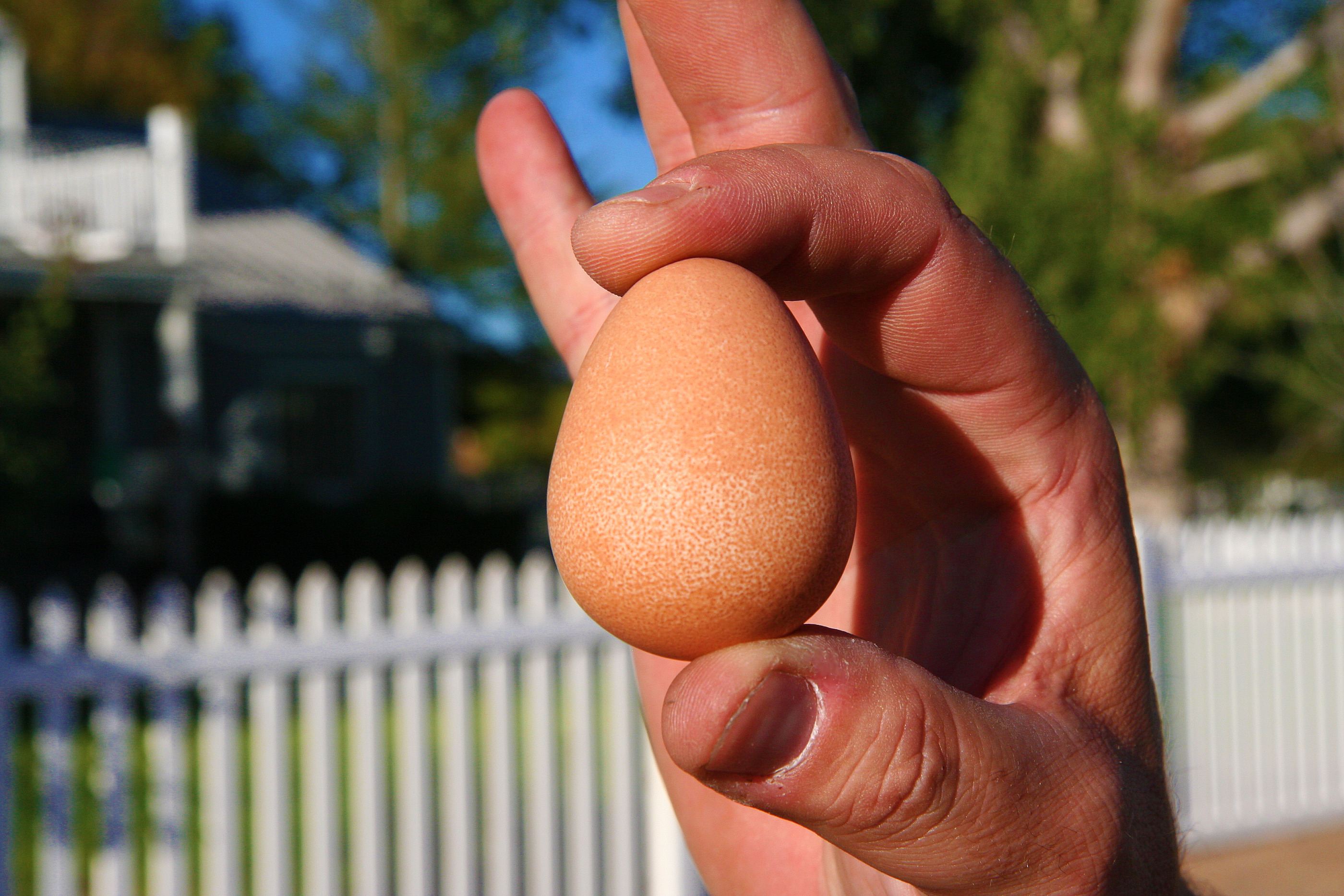
To be sure we’re taking only freshly laid eggs, Don had the great idea of marking the “old” ones with a Sharpie.

As of last night, we had four fresh guinea eggs in the fridge. Can you tell we’re eggcited?

10/2 Morning Update: Fresh and delicious! We fried up the eggs for breakfast and agreed they were some of the best we’ve ever had. The egg shells were extremely thick – Morning Bray’s resident egg chef (Don) was quite surprised. I heard the first egg bounce off the frying pan as he tried to crack it open!
Share this:

September 30, 2010
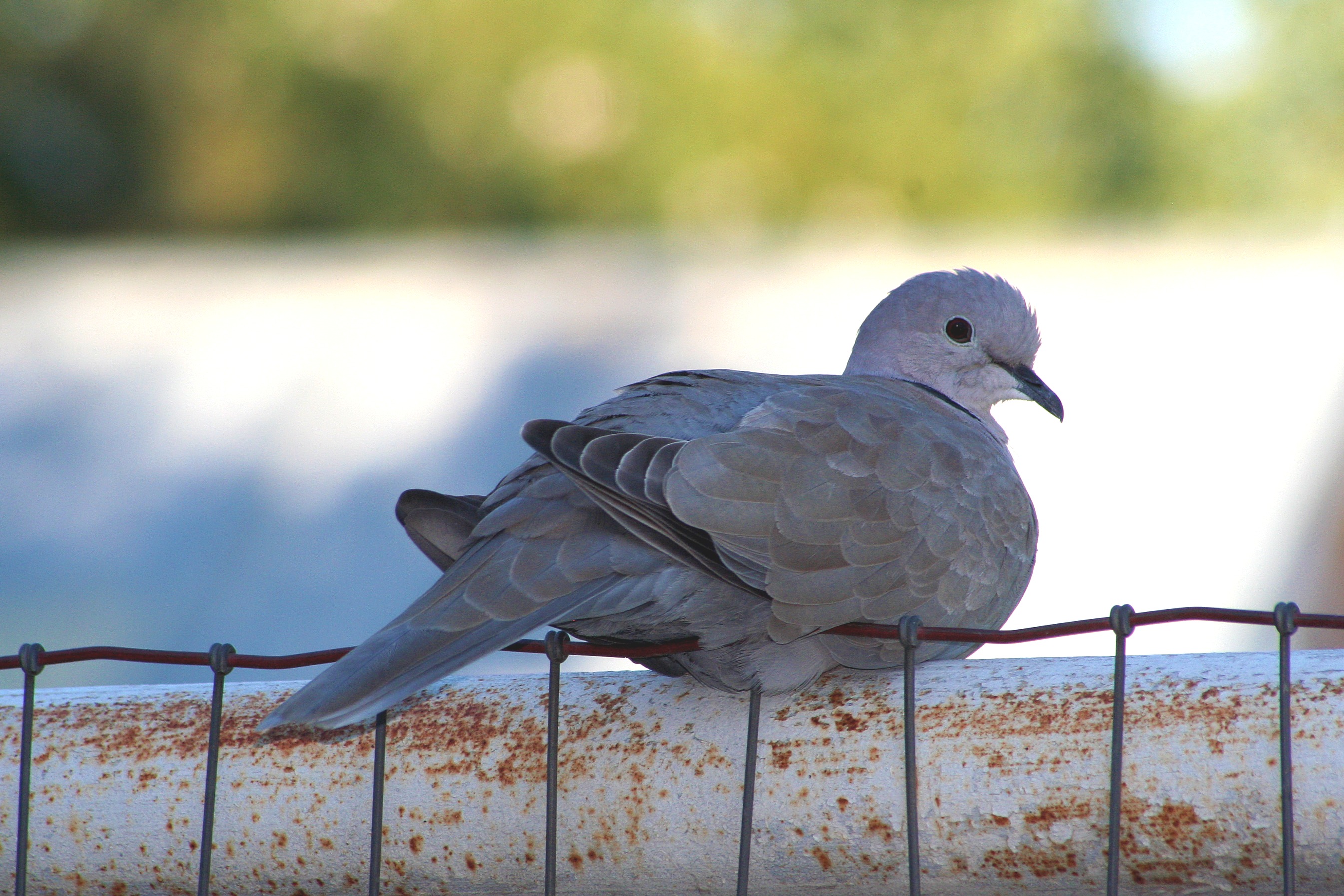
To this day, I still think Lonesome Dove is my best part.
–Robert Duvall
—————————————————————————————————————
Two doves meeting in the sky
Two loves hand in hand, eye to eye
Two parts of a loving whole
Two hearts and a single soul
Two stars shining big and bright
Two fires bringing warmth and light
Two songs played in perfect tune
Two flowers growing into bloom
Two doves gliding in the air
Two loves free without a care
Two parts of a loving whole
Two hearts and a single soul
– Author unknown

Share this:

September 23, 2010
The silver lining
Posted by Morning Bray under Albuquerque, Birds, Farm, New Mexico | Tags: guineas, rain, rainy day, silver lining |[35] Comments
It rained like hell yesterday. We had two inches between noon and 5 pm, and it was still raining when we went to bed last night. Gads.

As we were rushing around yesterday evening to make sure everyone would be warm and safe and dry for the night (my mantra… everyone MUST be warm and safe and dry), look at what we discovered in the goat stall.
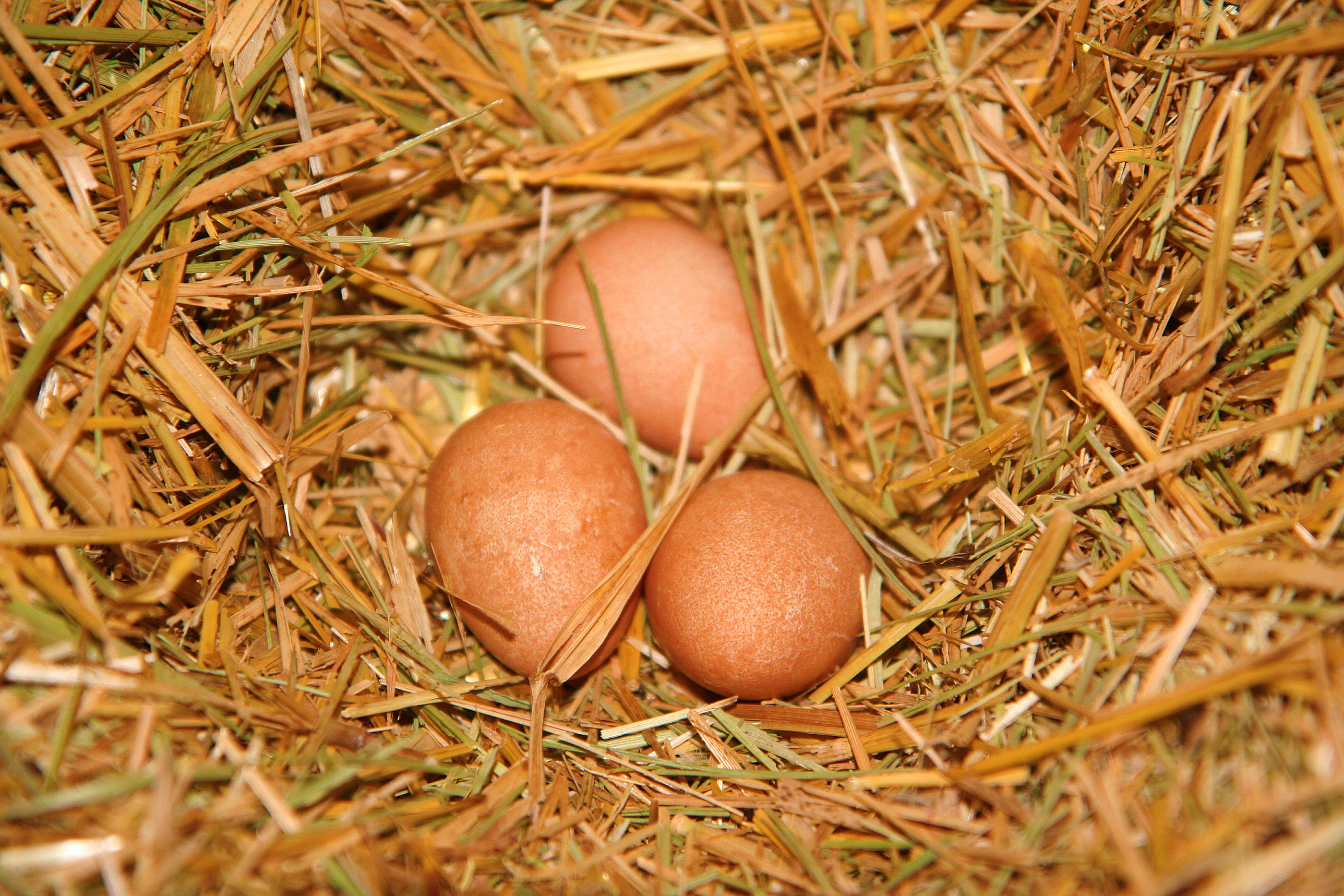
Three beautiful, perfect guinea eggs. A couple of guineas from next door seem to have moved in over the last week or so.
We’re totally okay with that and figure their eggs were the silver lining in yesterday’s clouds. ♥
9/23 Note for Posterity: Meteorologists recorded 1.74 inches of rainfall at the Albuquerque International Sunport – the greatest amount in one day Since October 22, 1969.
Share this:

August 24, 2010
Flying jewels
Posted by Morning Bray under Birds | Tags: bird, hummingbird, hummingbird facts, hummingbirds |[12] Comments
If you couldn’t already tell, there’s a lot of interest in hummingbirds at Morning Bray Farm this summer.
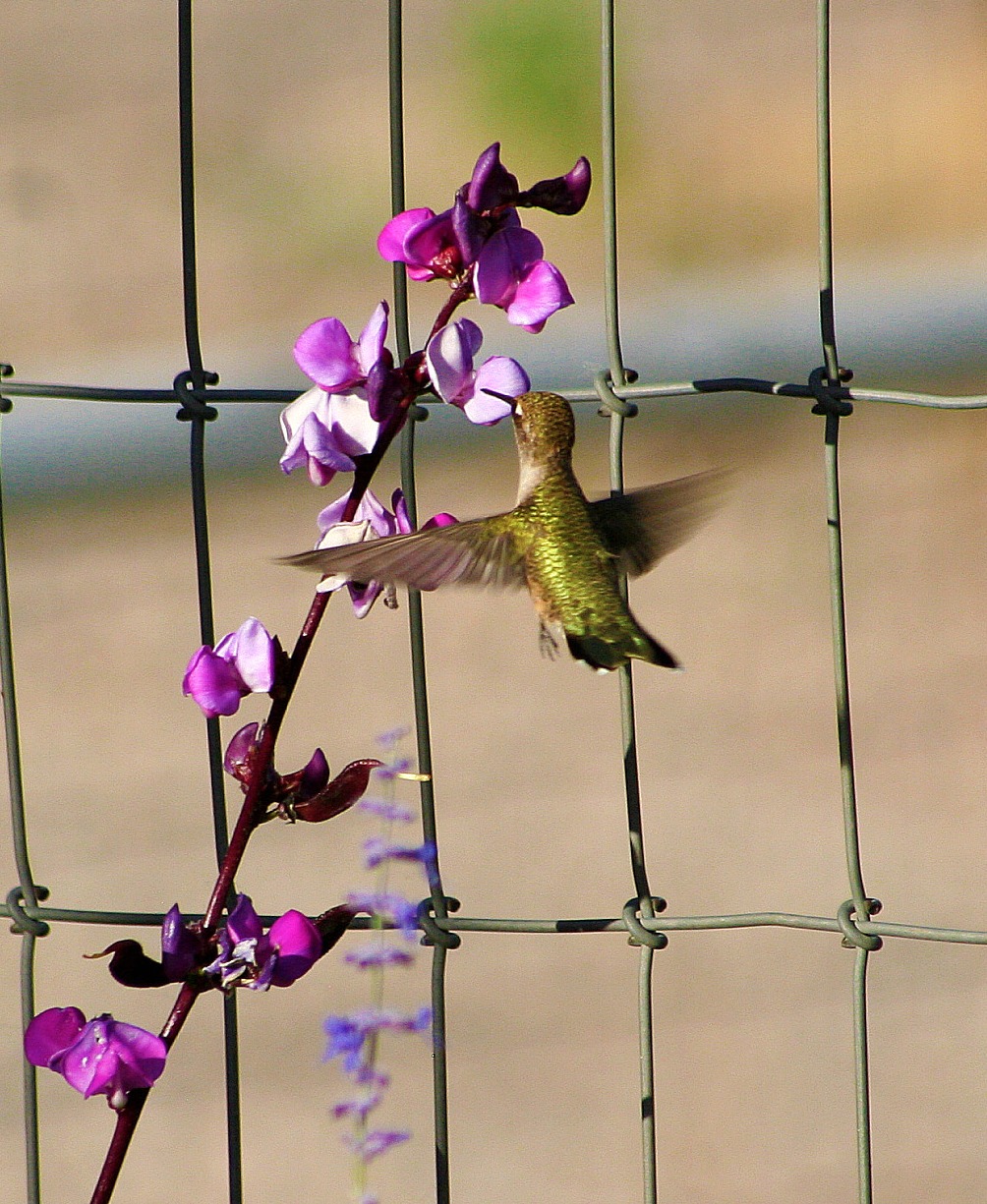
We realized we really didn’t know anything about them, so we went in search of facts. The following is from worldofhummingbirds.com and is absolutely fascinating.
It’s a lot of information, but well worth reading. I’ve bolded what I think are the particularly interesting bits.
- Hummingbirds are the tiniest birds in the world.
- Hummingbirds can flash their bright colors, as well as hide them when needed.
- The bright radiant color on hummingbirds comes from iridescent coloring like on a soap bubble or prism.
- A hummingbird’s brain is 4.2% of its body weight, the largest proportion in the bird kingdom.
- Hummingbirds are very smart and can remember every flower they have been to, and how long it will take a flower to refill.
- Hummingbirds can hear better than humans.
- Hummingbirds can see farther than humans.
- Hummingbirds can see ultraviolet light.
- Hummingbirds have no sense of smell.
- A hummingbird will use its tongue to lap up nectar from flowers and feeders.
- A hummingbird’s tongue is grooved like the shape of a “W”.
- Hummingbirds have tiny hairs on the tip of the tongue to help lap up nectar.
- A hummingbird’s beak is generally shaped like any other bird beak, just longer in proportion to its body.
- A hummingbird’s bottom beak is slightly flexible.
- Hummingbirds do not drink though their beaks like a straw. They lap up nectar with their tongues.
- A hummingbird’s heart beats up to 1,260 times per minute.
- A hummingbird’s heart beats about 250 times per minute at rest.
- A hummingbird’s heart is 2.5% of the total body weight.
- A hummingbird will take about 250 breaths per minute while at rest.
- A hummingbird’s metabolism is roughly 100 times that of an elephant.
- Hummingbirds have very weak feet and can barely walk. They prefer to fly.
- Hummingbirds like to perch.
- Hummingbirds spend most of their life perching.
- The hummingbird’s body temperature is about 107 degrees Fahrenheit (40 degrees Celsius).
- A hummingbird can weigh anywhere between 2 and 20 grams. A penny weighs 2.5 grams.
- 30% of a hummingbird’s weight consists of flight muscles. Human pectoral muscles are about 5% of body weight.
- Female hummingbirds are usually larger than male hummingbirds.
- An average sized hummingbird will have about 940 feathers.
- Females find iridescent feathers attractive.
- Hummingbirds do not mate for life.
- Male hummingbirds do not help raise the young.
- Female hummingbirds do all the nest building.
- A hummingbird baby is about the size of a penny.
- Females will lay a clutch of two eggs.
- Baby hummingbirds cannot fly.
- Baby hummingbirds will remain in a nest for three (3) weeks.
- Most hummingbirds die in the first year of life.
- Hummingbirds have an average life span of about 5 years.
- Hummingbirds can live for more than 10 years.
- Male hummingbirds are very aggressive and will chase another male hummingbird out of its territory.
- A hummingbird’s wings will beat about 70 times per second.
- Hummingbird’s wings will beat up to 200 times per second when diving.
- Hummingbirds are the only birds that can fly both forward and backwards.
- Hummingbirds can also hover in mid-air, fly sideways and even upside-down.
- A hummingbird can fly an average of 25-30 miles per hour.
- A hummingbird can dive up to 60 miles per hour.
- A hummingbird’s wings will rotate in a full circle.
- Ruby-Throated Hummingbirds have been known to travel 500 miles over the Gulf of Mexico to breeding grounds.
- It is estimated that a Ruby-Throated Hummingbird takes about twenty (20) hours to fly across the Gulf of Mexico.
- Some hummingbirds will travel over two-thousand (2,000) miles twice a year during migration times.
- The Rufous Hummingbird travels the farthest north of any other hummingbird to migrate. All the way from Mexico to Alaska.
- A hummingbird can eat anywhere from half (1/2) to eight (8) times its body weight a day.
- A hummingbird will visit an average of 1,000 flowers per day for nectar.
- Hummingbirds eat small soft bugs for protein.
- A hummingbird will lap up nectar at a rate of about 13 licks per second.
- Hummingbirds can double his/her weight before migration.
- There are more than 300 types or species of hummingbirds.
- Hummingbirds don’t really sing, they chirp.
- A hummingbird’s favorite color is red.
- Hummingbirds like tubular type flowers the most.
- Hummingbirds pollinate flowers by rubbing their forehead and face in each flower as they get the nectar.
- Many plants depend on hummingbirds for pollination.
- Hummingbirds get their name from the humming sound produced by their wings when flying.
- Early Spanish explorers called hummingbirds flying jewels. ♥
Share this:

August 17, 2010
Lovely sights on the trail
Posted by Morning Bray under Birds, Donkeys | Tags: blue grosbeak, donkeys, Rio Grande, walking donkeys |[10] Comments
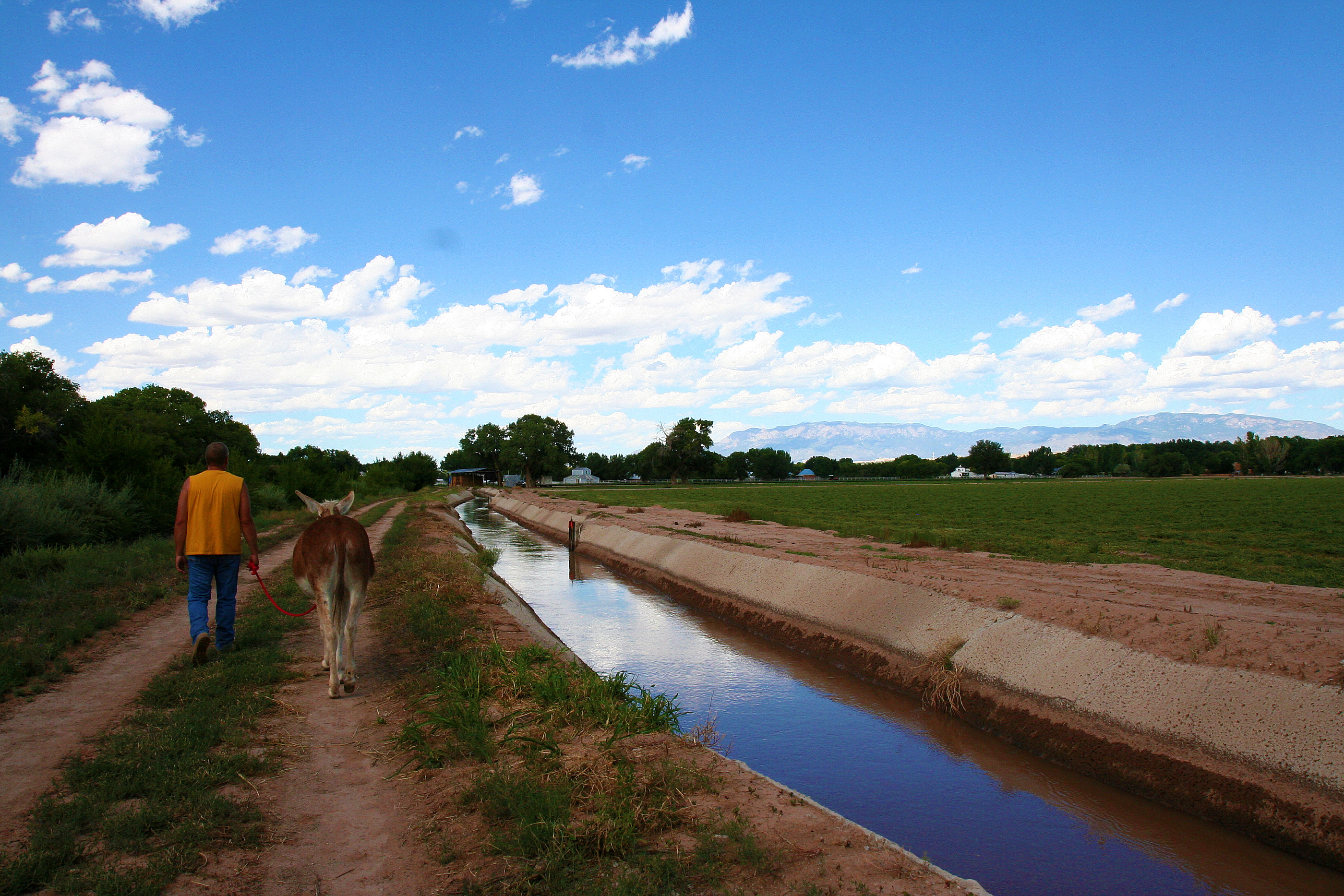
We try to take Bernard and Ellsworth on as many walks as possible to acclimate them to new sights, smells and sounds.
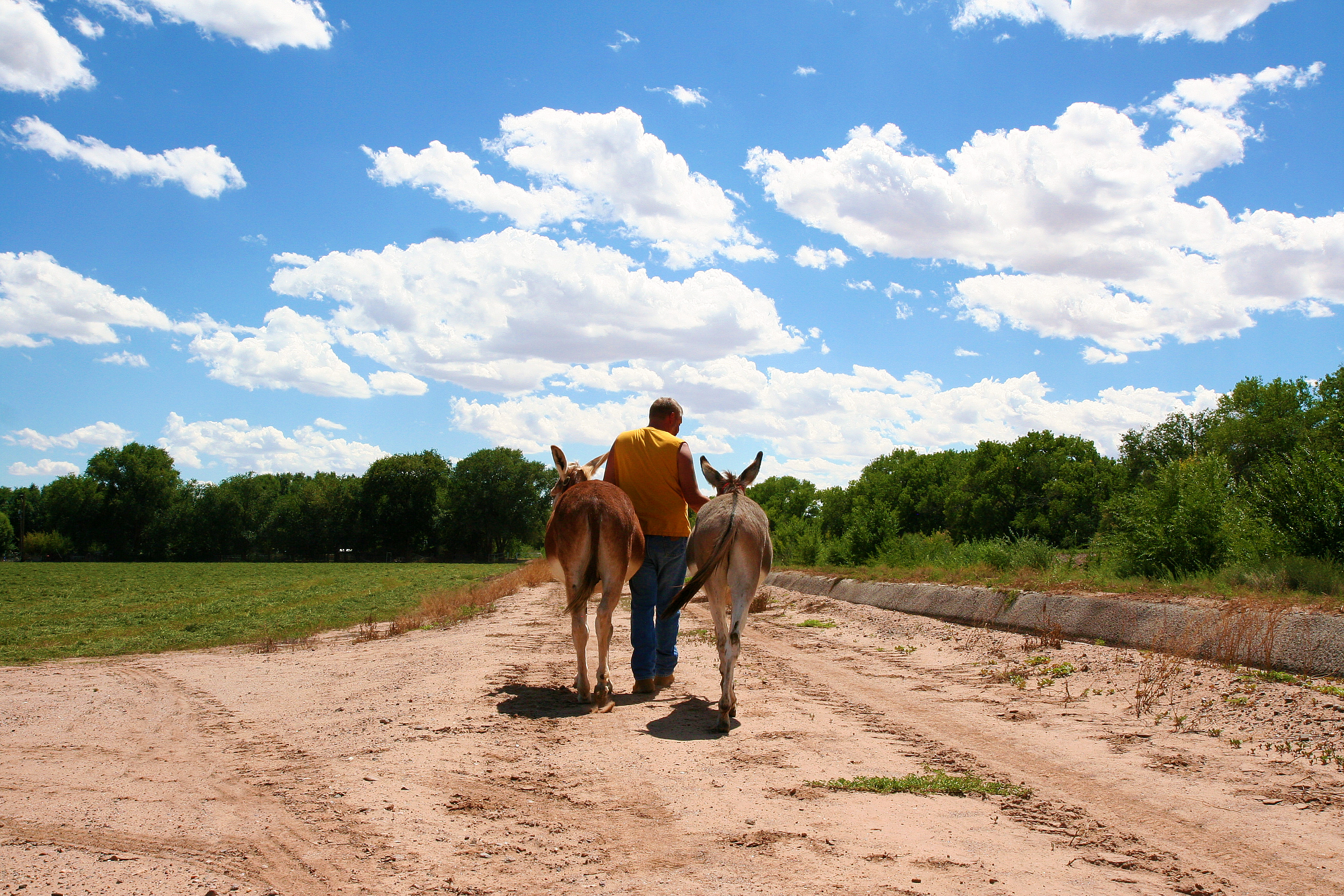
We’re very fortunate to live right next to the Rio Grande and its network of irrigation ditches and paths.
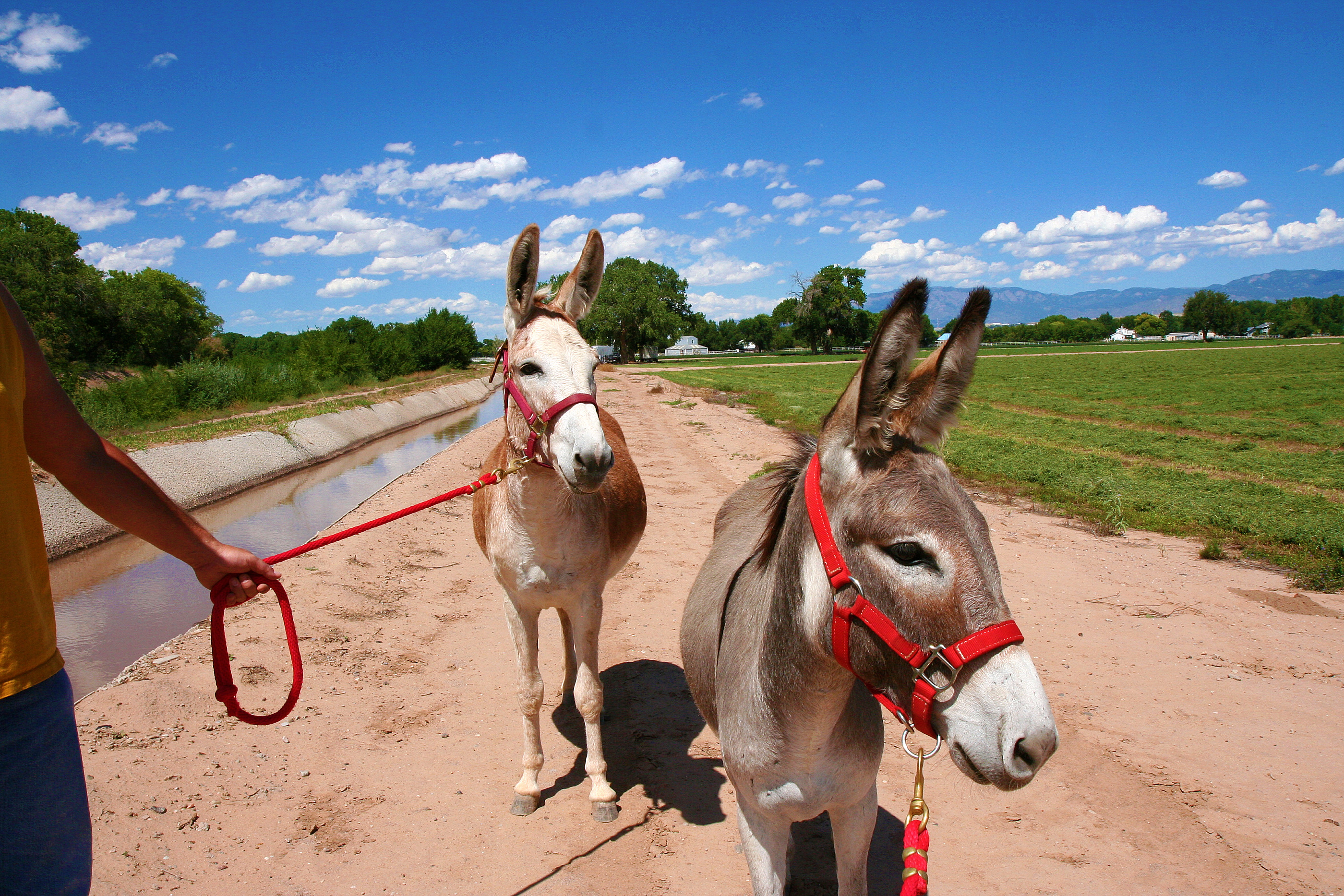
The boys are very observant and rarely miss anything new. Just as he is at home, Ellsworth is a remarkable sentinel out on our walks.
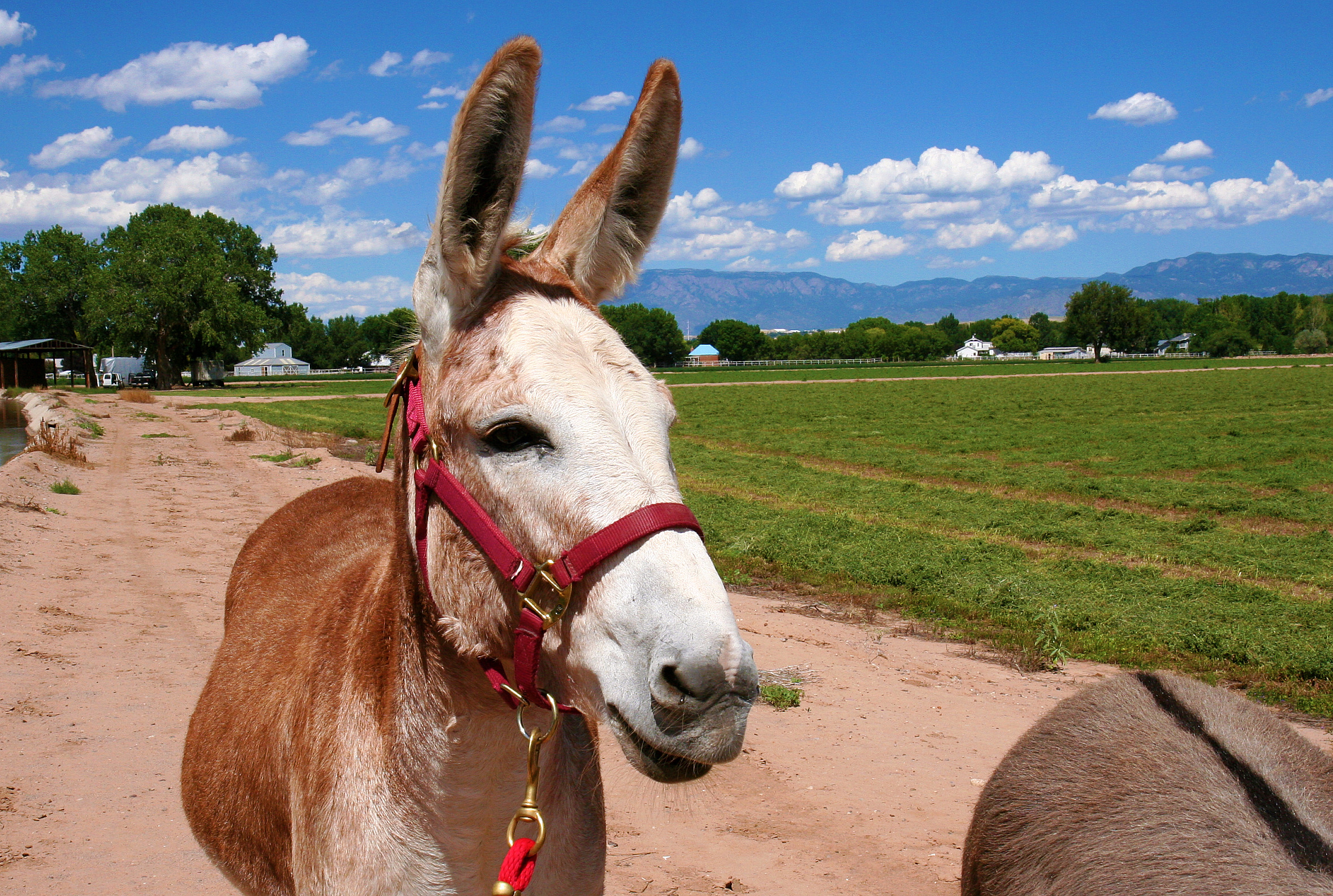
Every now and then, we catch a lovely sight on the trail. Yesterday, it was a new bird. A very blue bird.
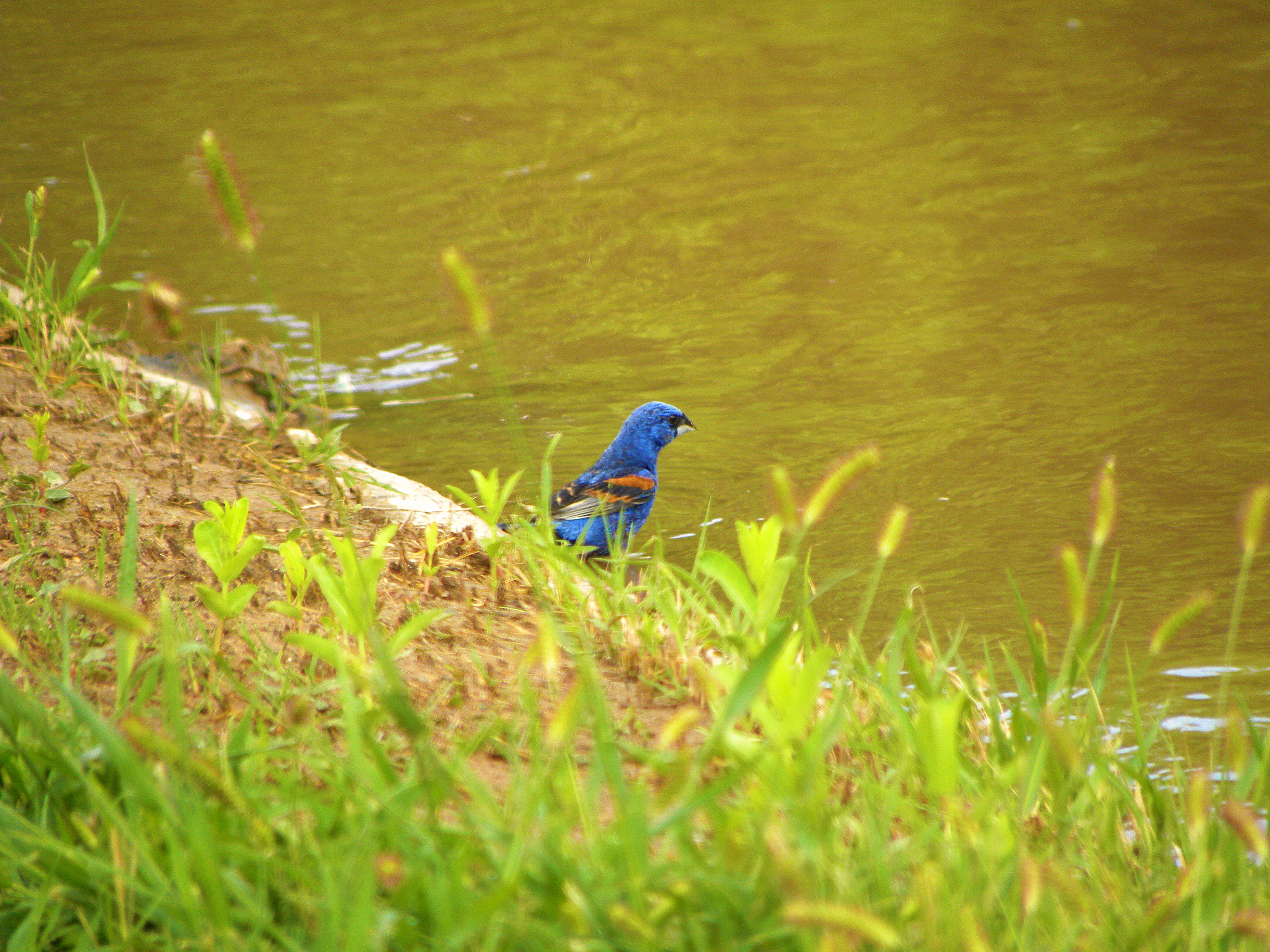
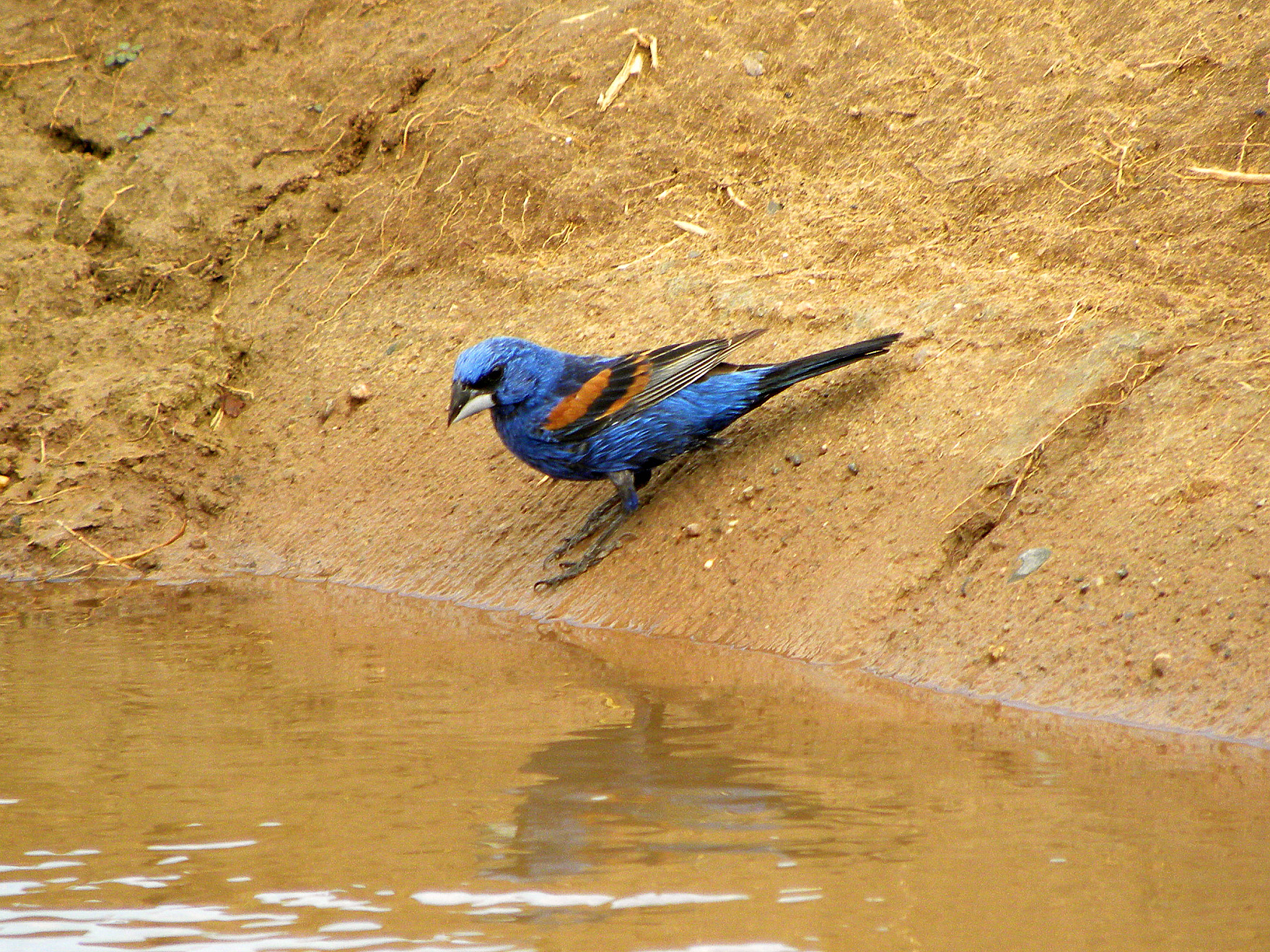
A blue grosbeak. Stunning, isn’t he? He was as blue as the sky.
Like life, the trail is like a box of chocolates. You never know what you’re gonna get. ♥








 Morning Bray Farm