Birds


As we were walking back to the house after mowing the grass yesterday afternoon, something buzzed haphazardly by my head. Turns out it was Harry, the baby hummingbird.

I’m not sure what it is with us and hummingbirds this summer. After watching Harry sputter and land in the hot sun on the ground in the corral, I went over to make sure he was alright. I think Harry was tuckered out from what must have been his maiden flight, because he stepped right onto my finger without a moment’s hesitation.

I handed Harry over to Don and ran into the house to get the camera, and Don took Harry to the feeder. Harry was happy.
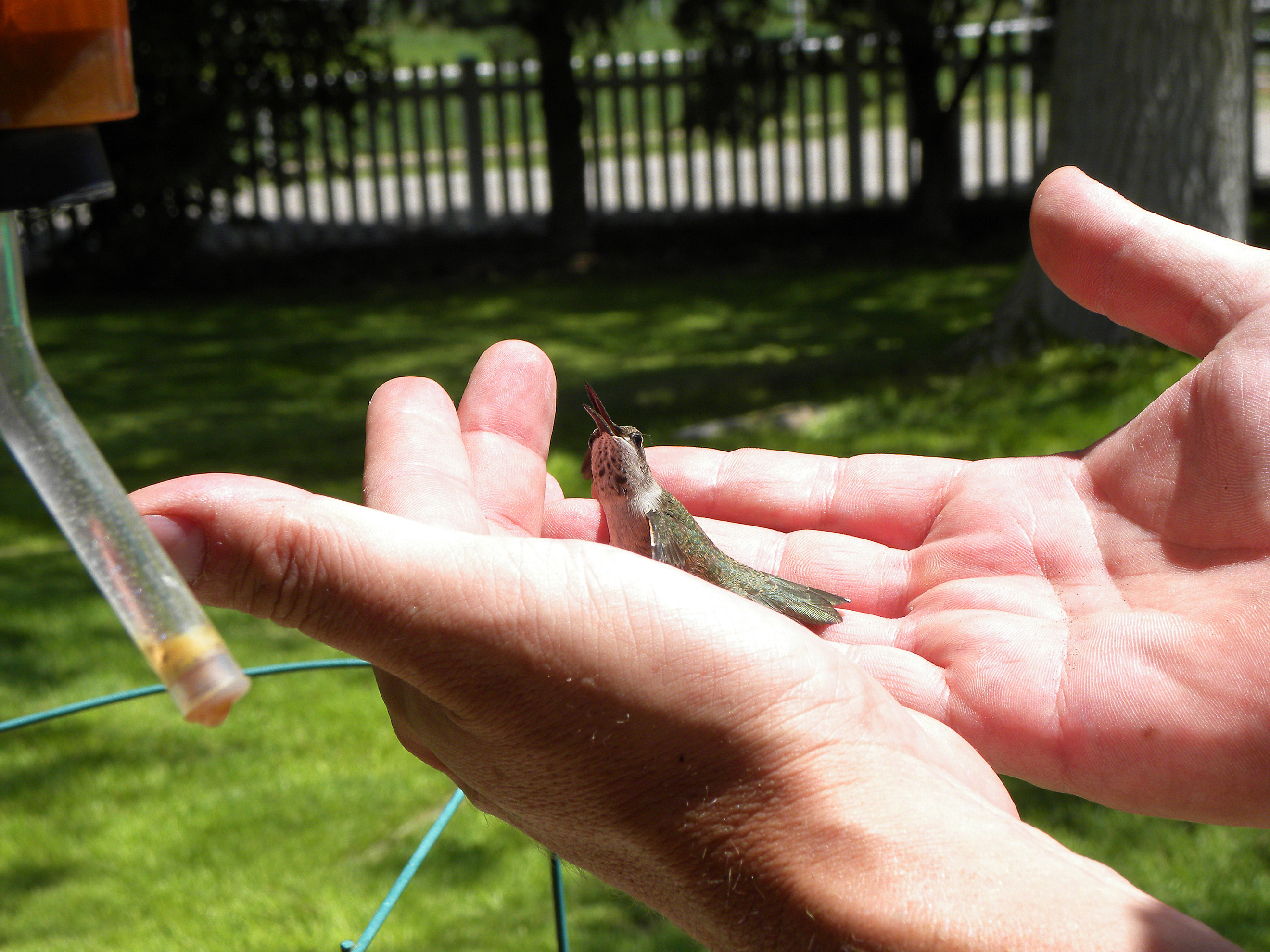
We then took Harry into the shade of one of our cottonwood trees. Look at his teeny, tiny feet.
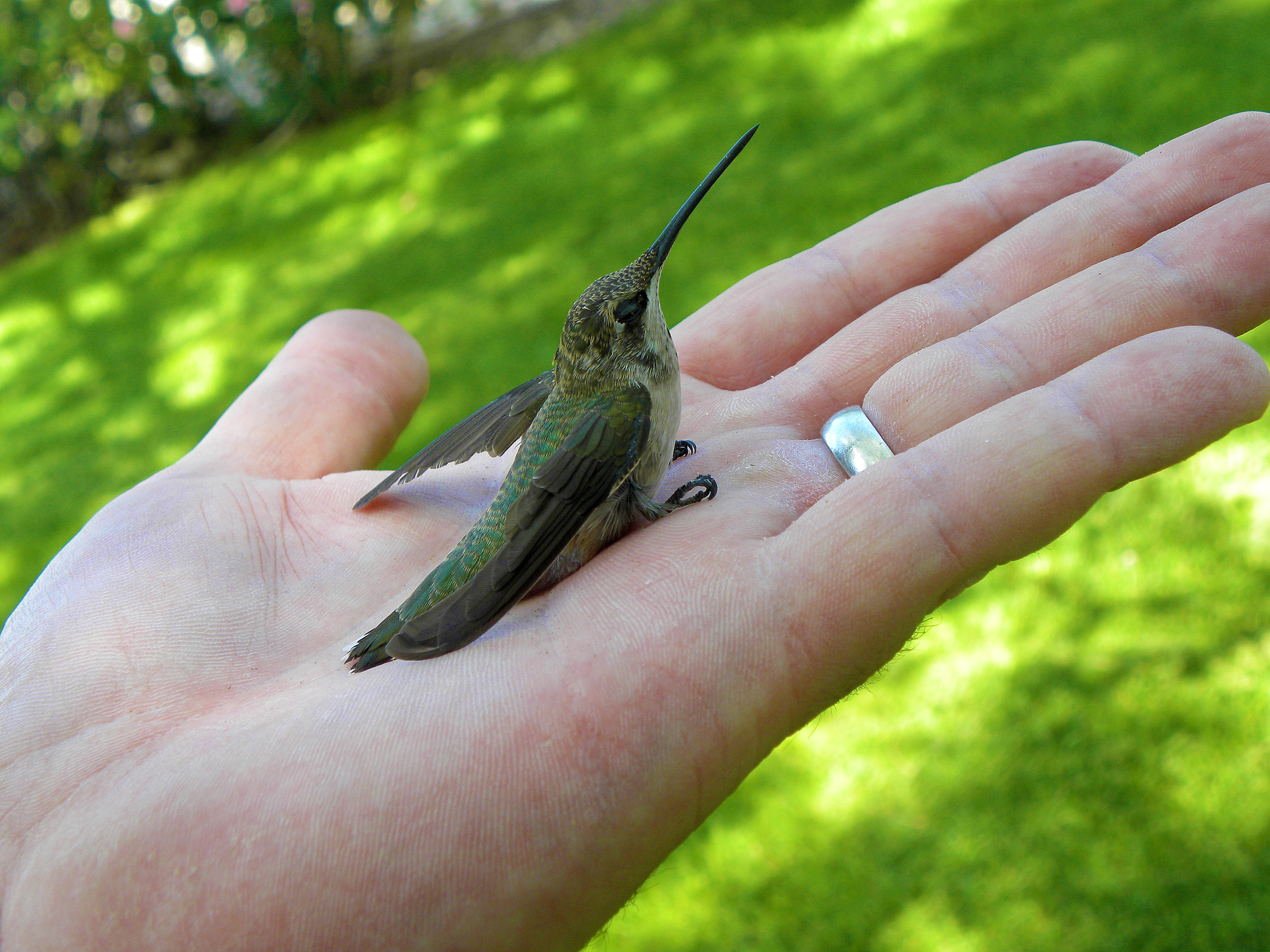
Harry sat cooling off on Don’s palm for quite a while. We stood there quietly with him.
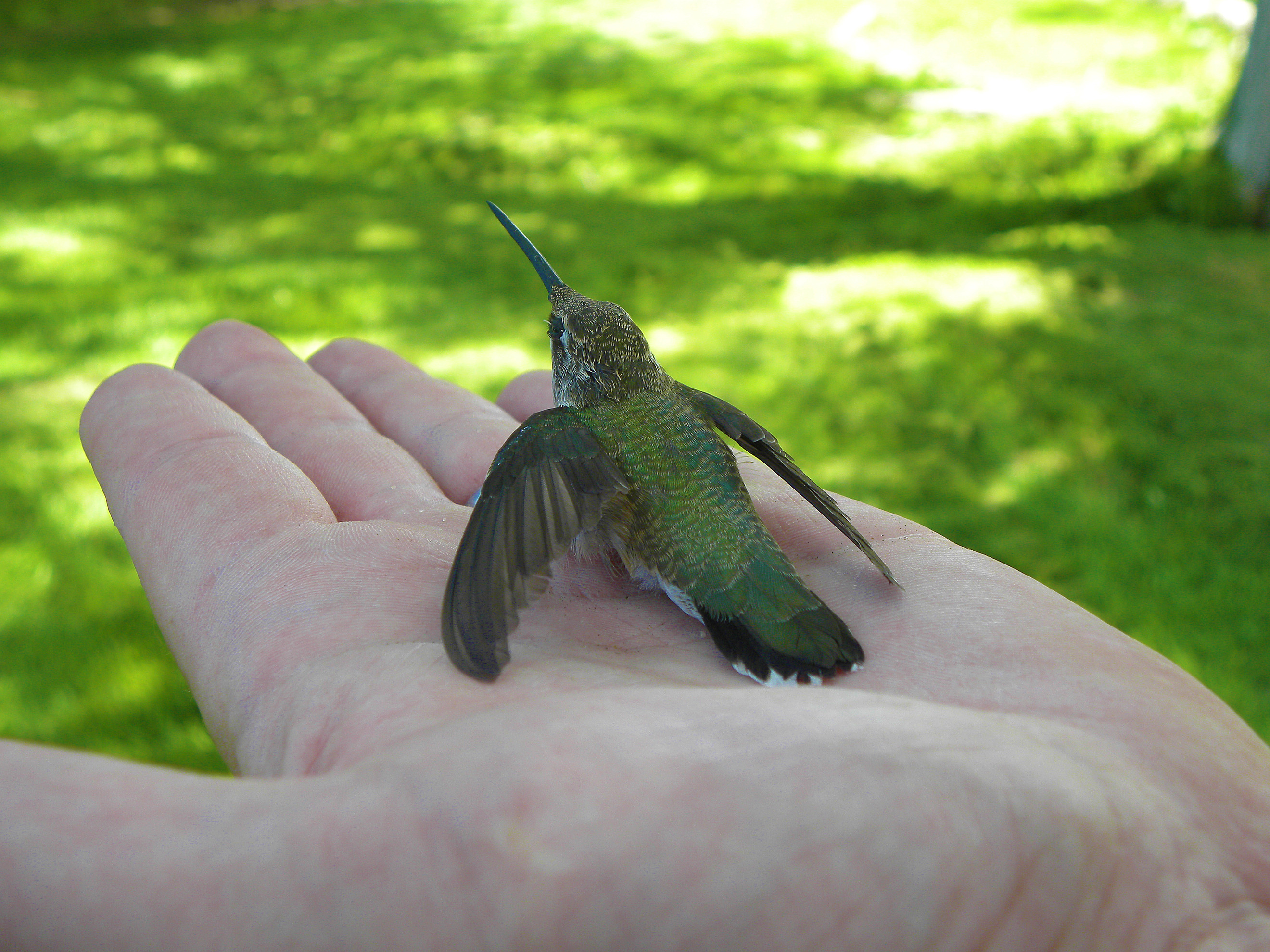
Okay, Harry, it’s time for you to go back to being a hummingbird now.

Don gently moved Harry to one of our crape myrtles. Harry sat there for a few moments, then flew away.
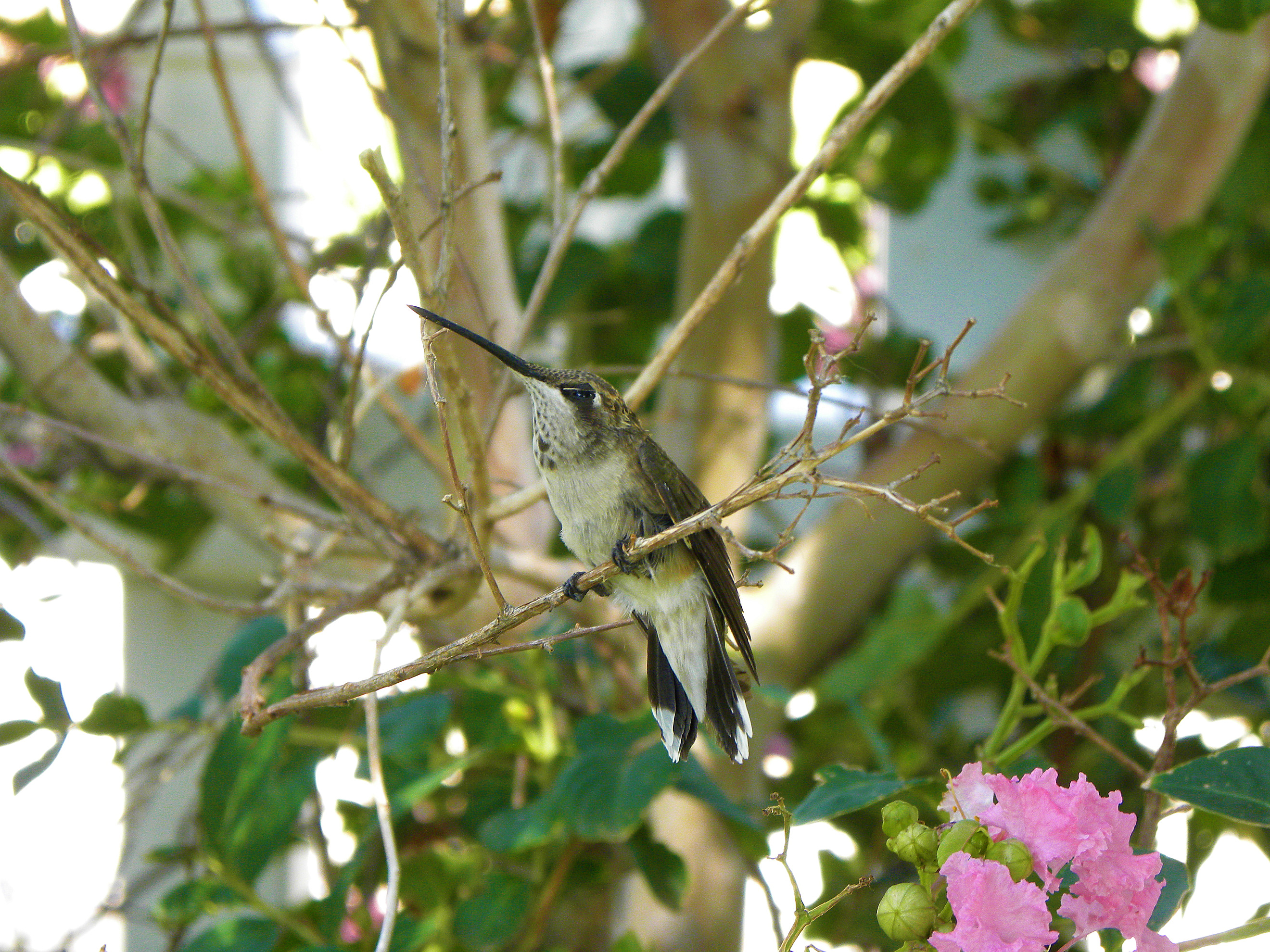
May you live as long as you want and never want as long as you live, Harry.

…but we are talking about them.

After all the talk of fly control lately and some of you suggesting we should have chickens, we’re considering it. Mind you, just considering it.

Some of the things we’ve talked about:

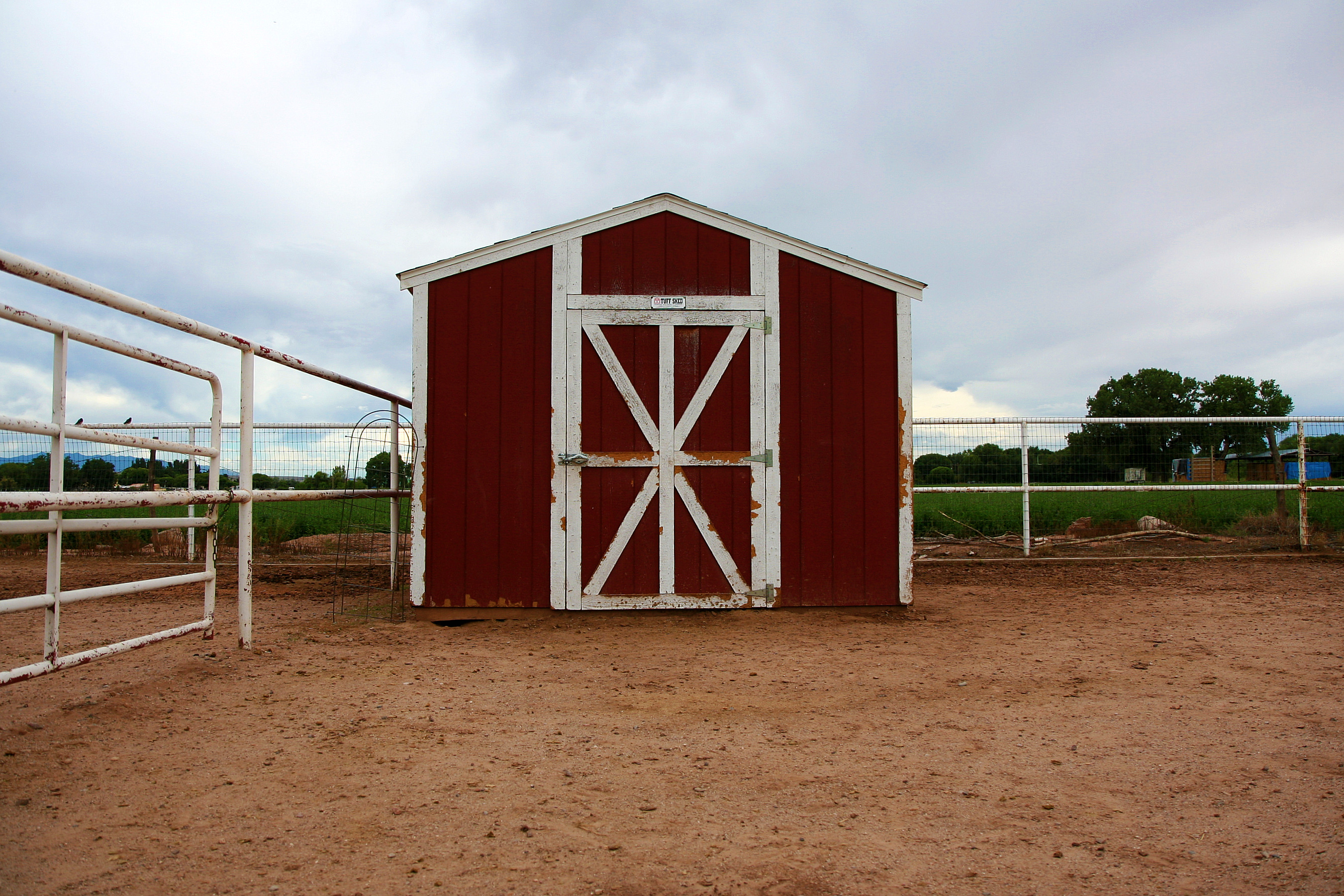
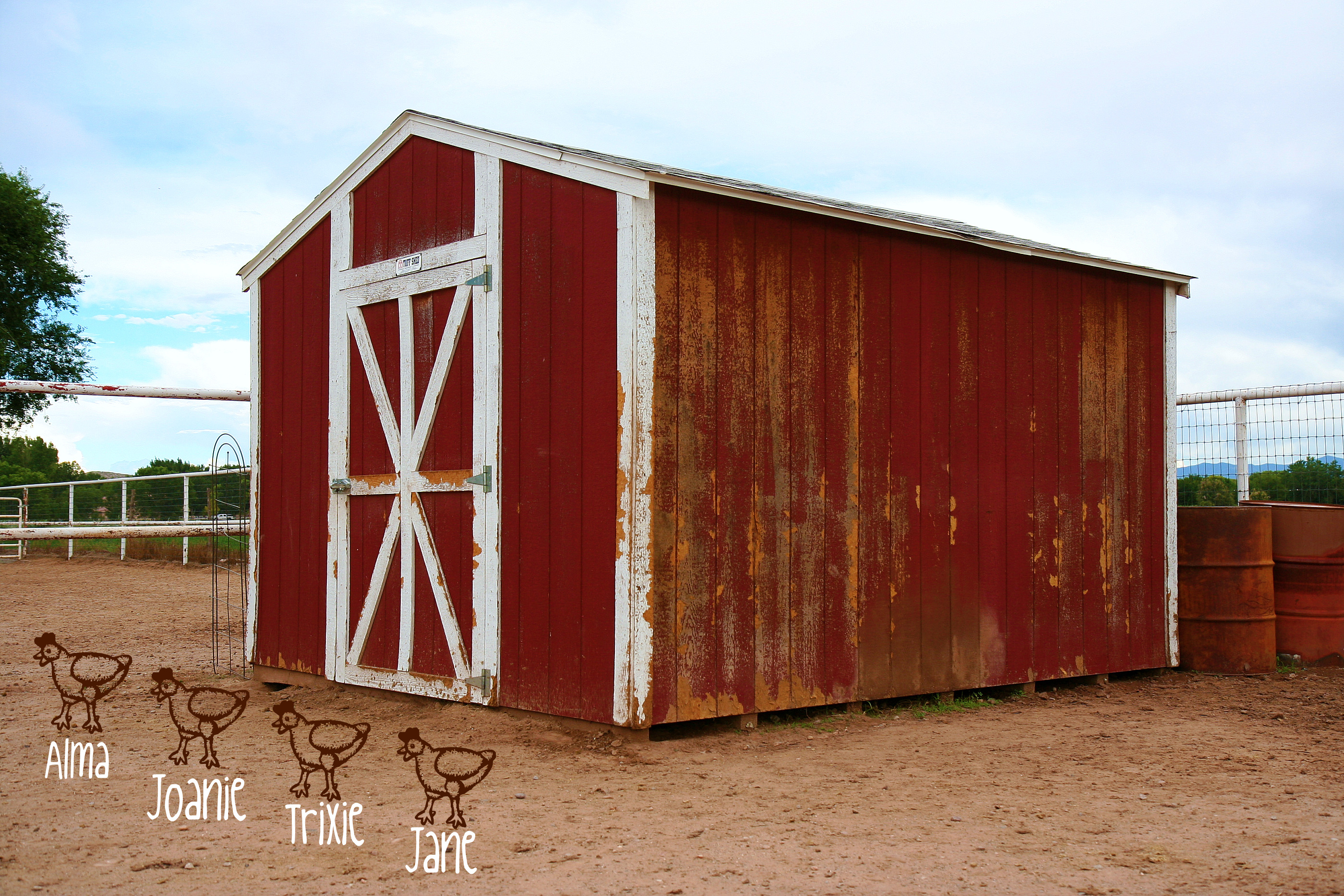
With some changes and updates, our old shed might make a fine chicken coop.

 If we do get chickens, they’ll be named after our favorite female characters in Deadwood. And, if we do get chickens, it won’t be until next year.

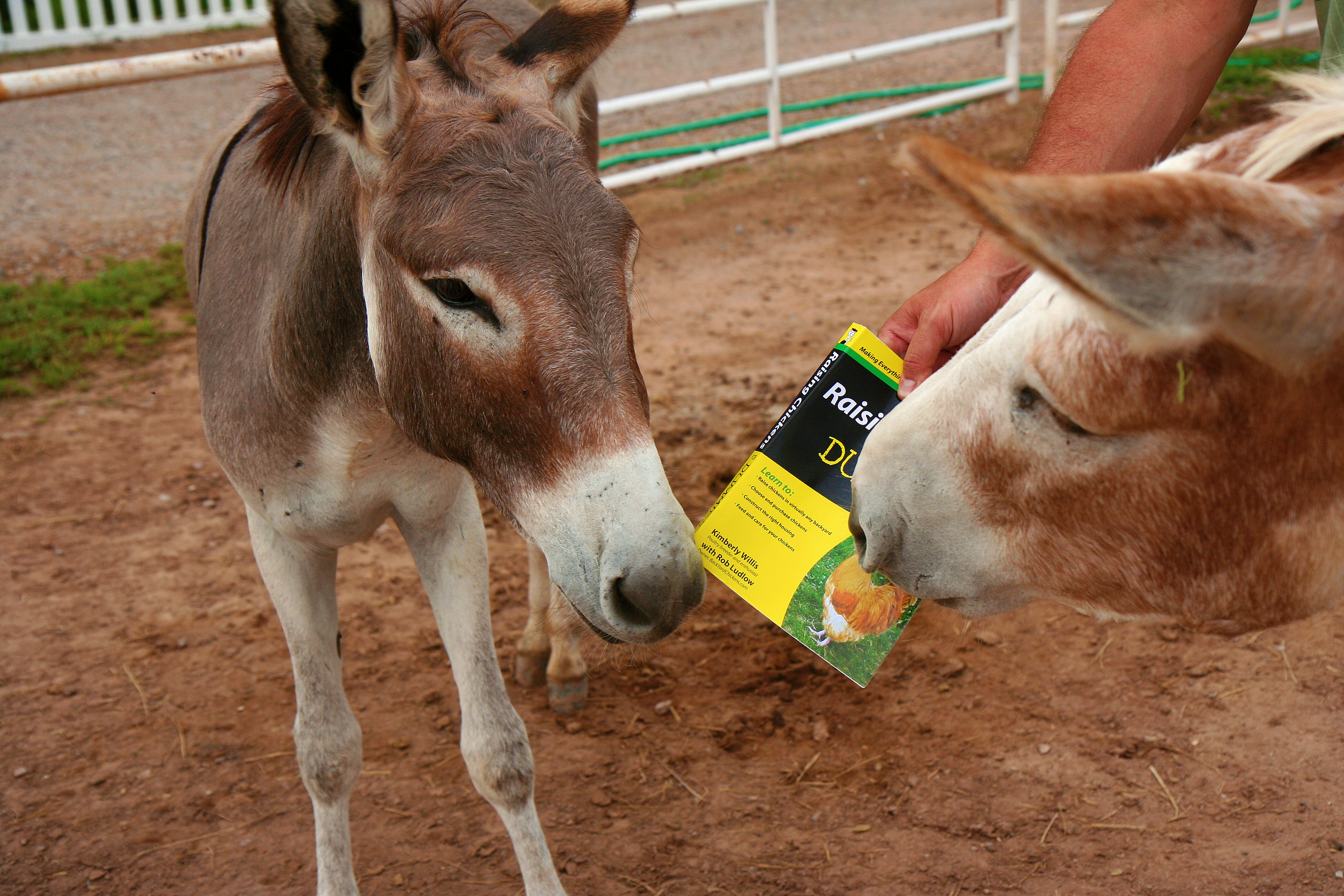
 Of course, we asked the boys what they thought about having chickens. While Bernard was noncommittal, Ellsworth thought it was a good idea.  

And while Fergus thought it might be cool,

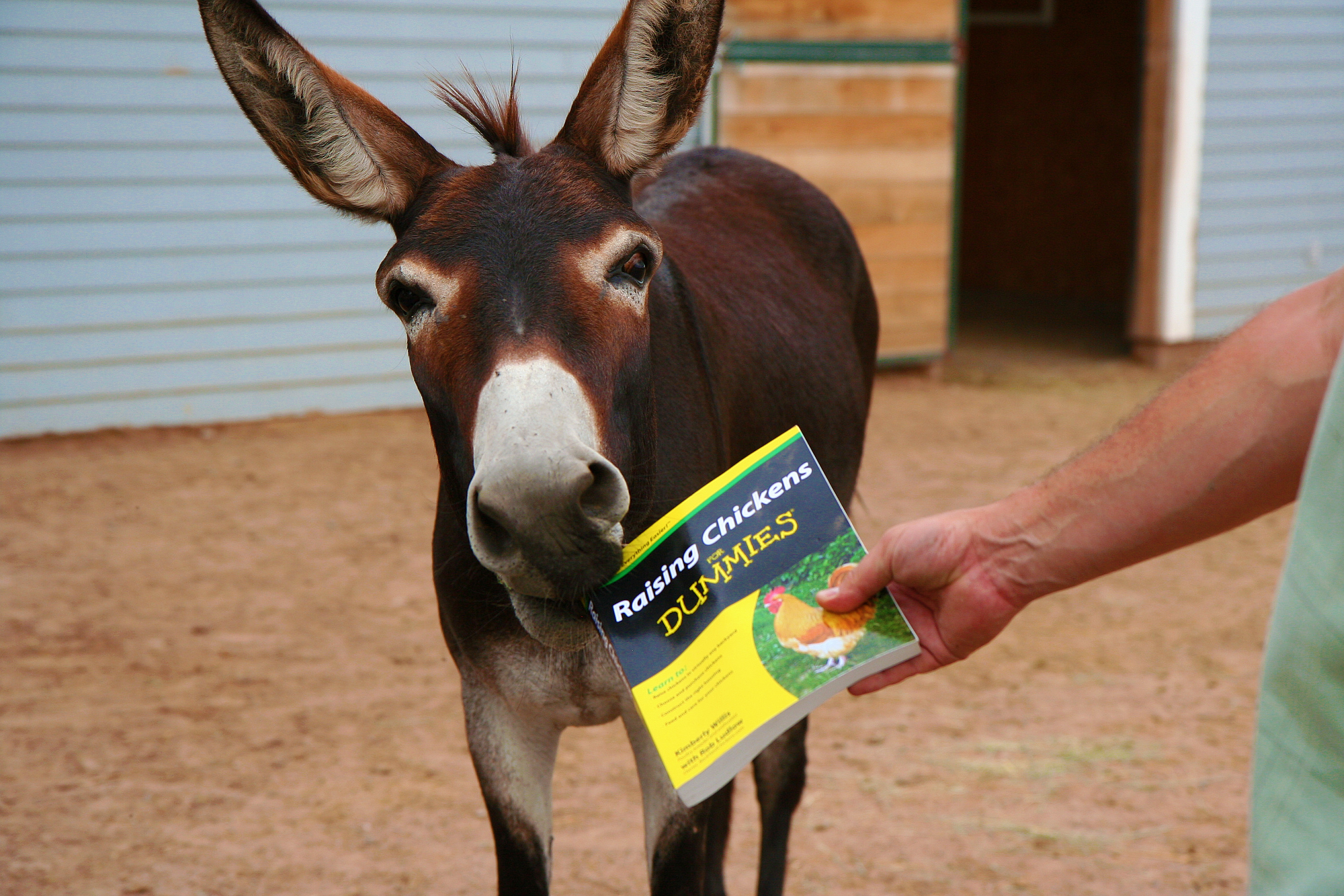
Nigel thought the idea rocked. He even asked to borrow the book so he could do some more research on the topic.

What do you think?

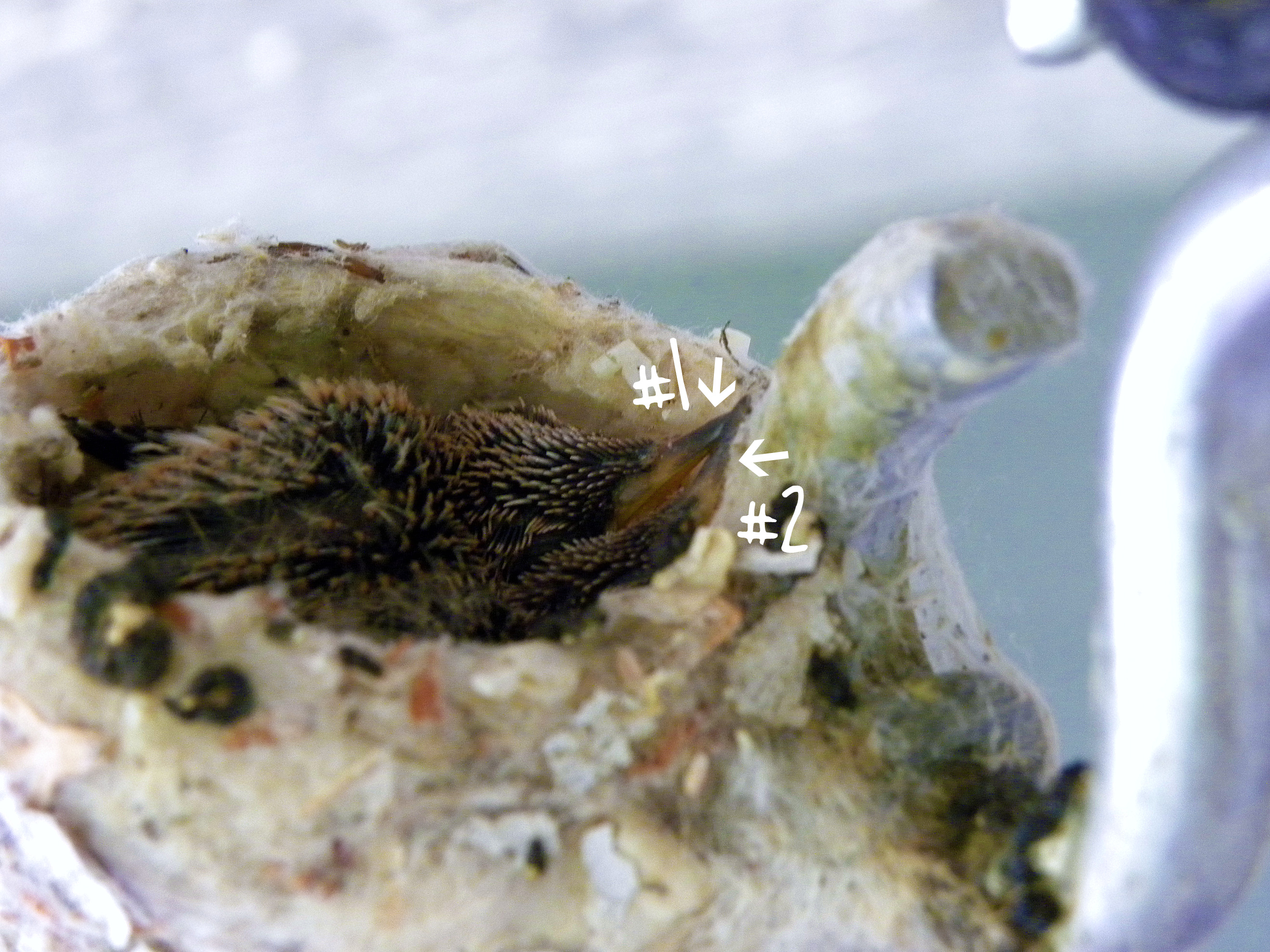
Our hummingbird babies are doing well. So well in fact, they’re quickly filling up their nest. When Don checked on them yesterday, he said it looked like they’re stacked in there like firewood.

You might have to click on the photo to get a better look. I have pointed the arrows at their little beaks.

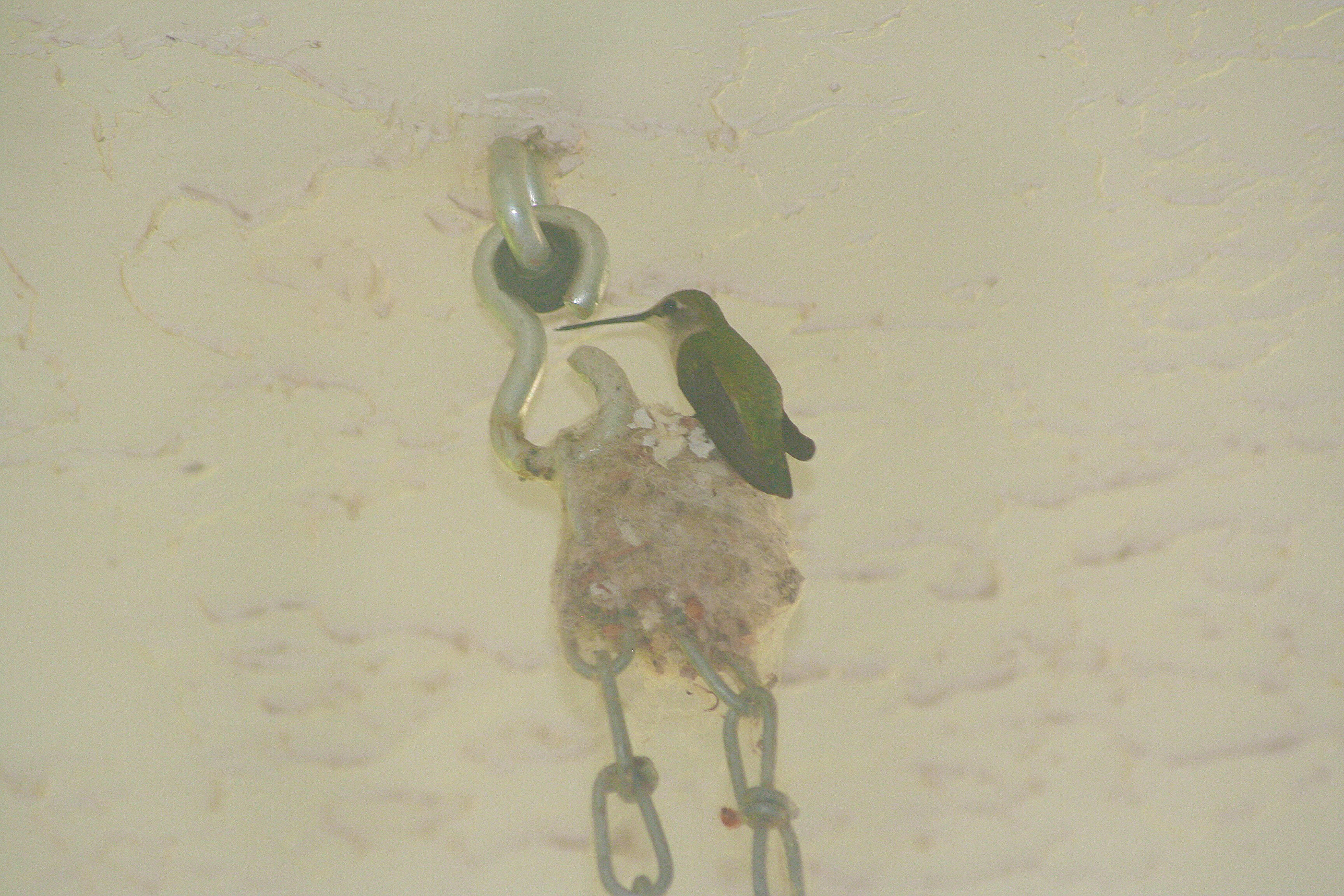
There has been more activity at the nest outside our kitchen window this past week. When we looked out yesterday, we watched as a hummingbird appeared to be feeding something in the nest. This picture was taken through the kitchen window:

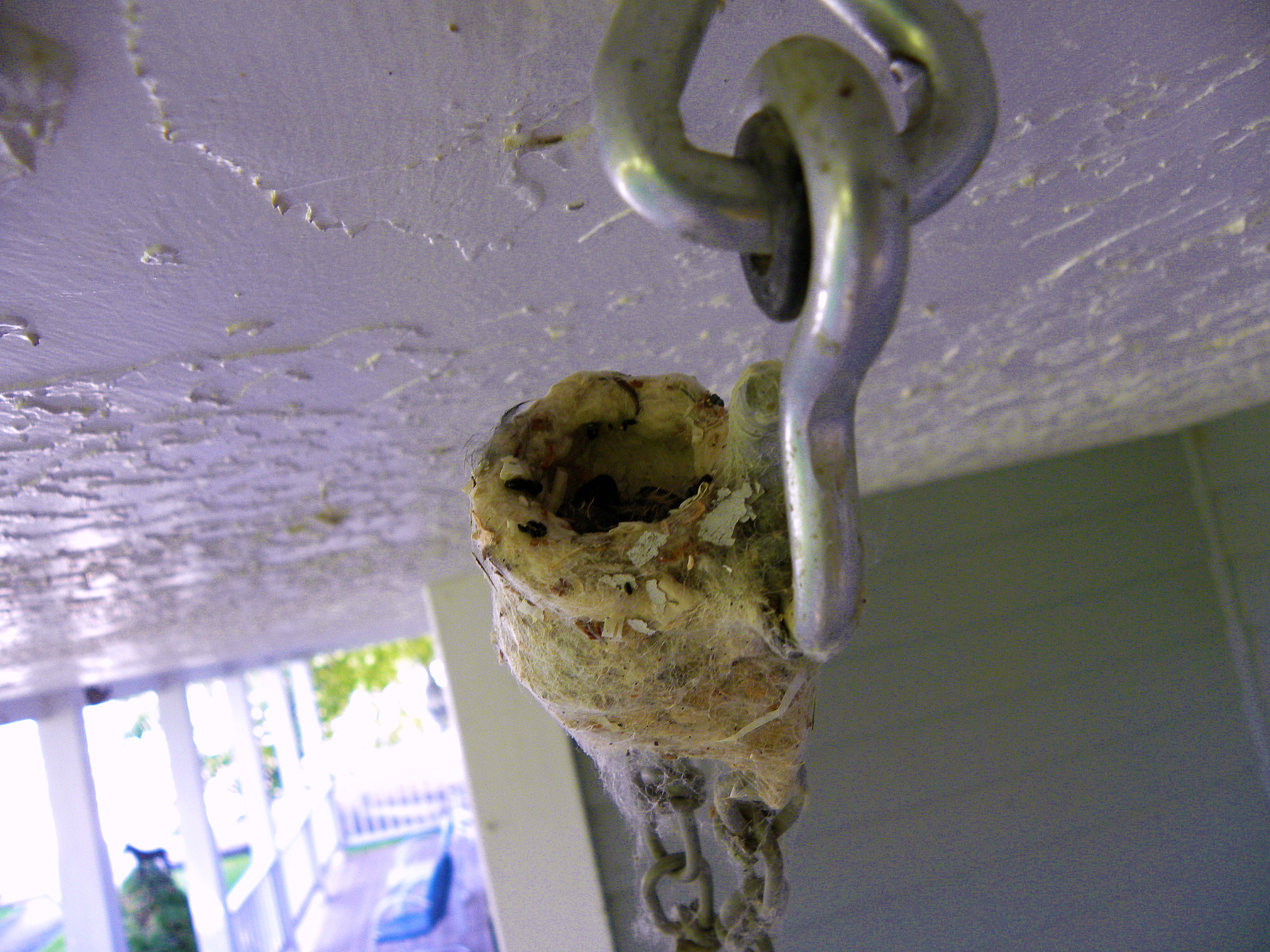
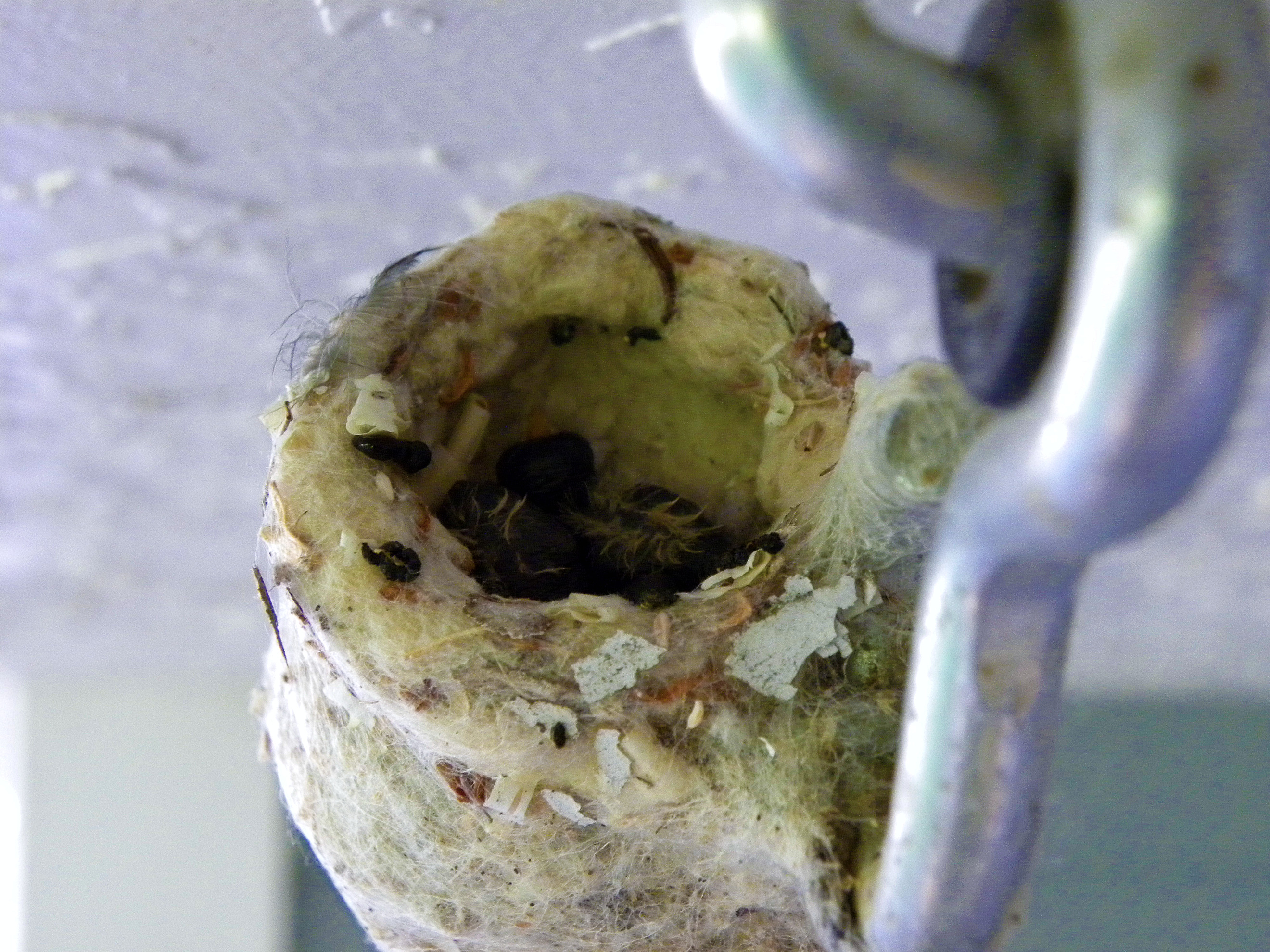
When the hummingbird flew off, we ran outside to see if there were babies in the nest. Don climbed up on our porch railing…

…and yes, there are two babies in the nest. 

June over at Aging Gratefully asked about this nest a couple of times. We’re pretty sure these babies were delivered just for her. ♥

We visited the Rio Grande Nature Center State Park with my dad over the weekend. The park is about eight miles from us, and like Morning Bray Farm, is located in what we call the bosque, otherwise known as our cottonwood forest. The park has 270 acres of woods, meadows and farmland.

Would you look at that? Lenny was there. He blends so brilliantly into the landscape.

Evidence of beavers.

And turtles, which made us Marylanders feel right at home. Go Terps!

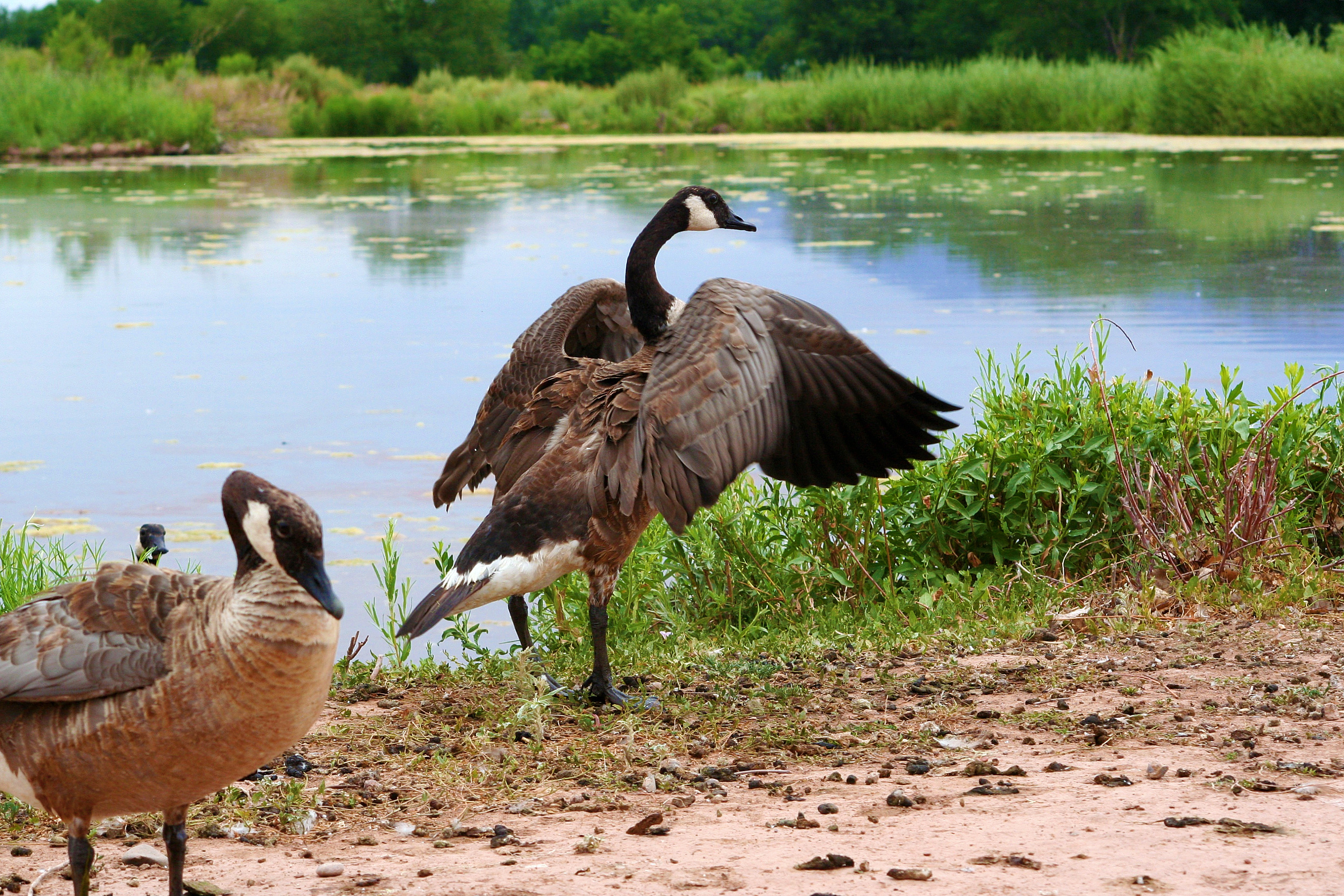
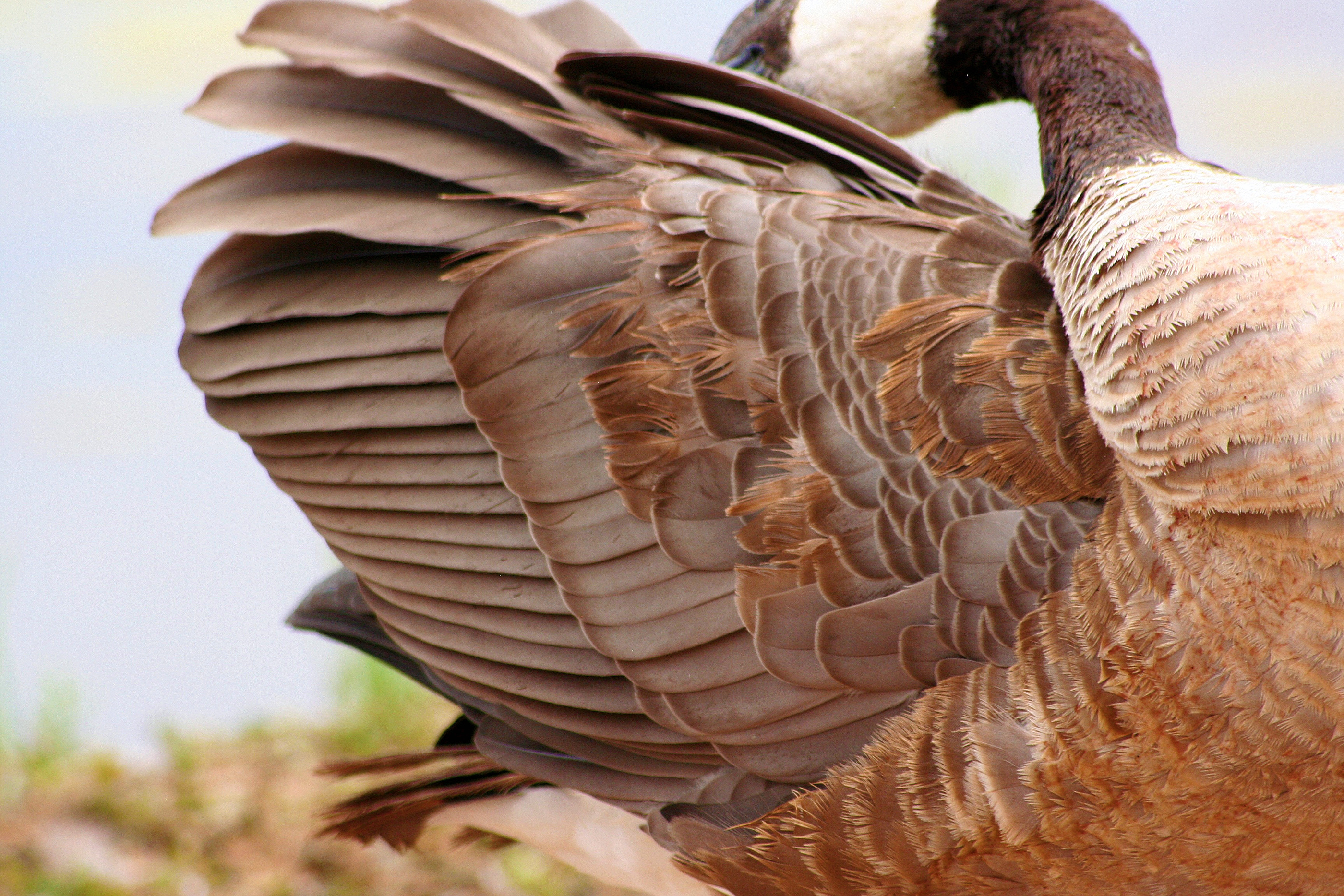
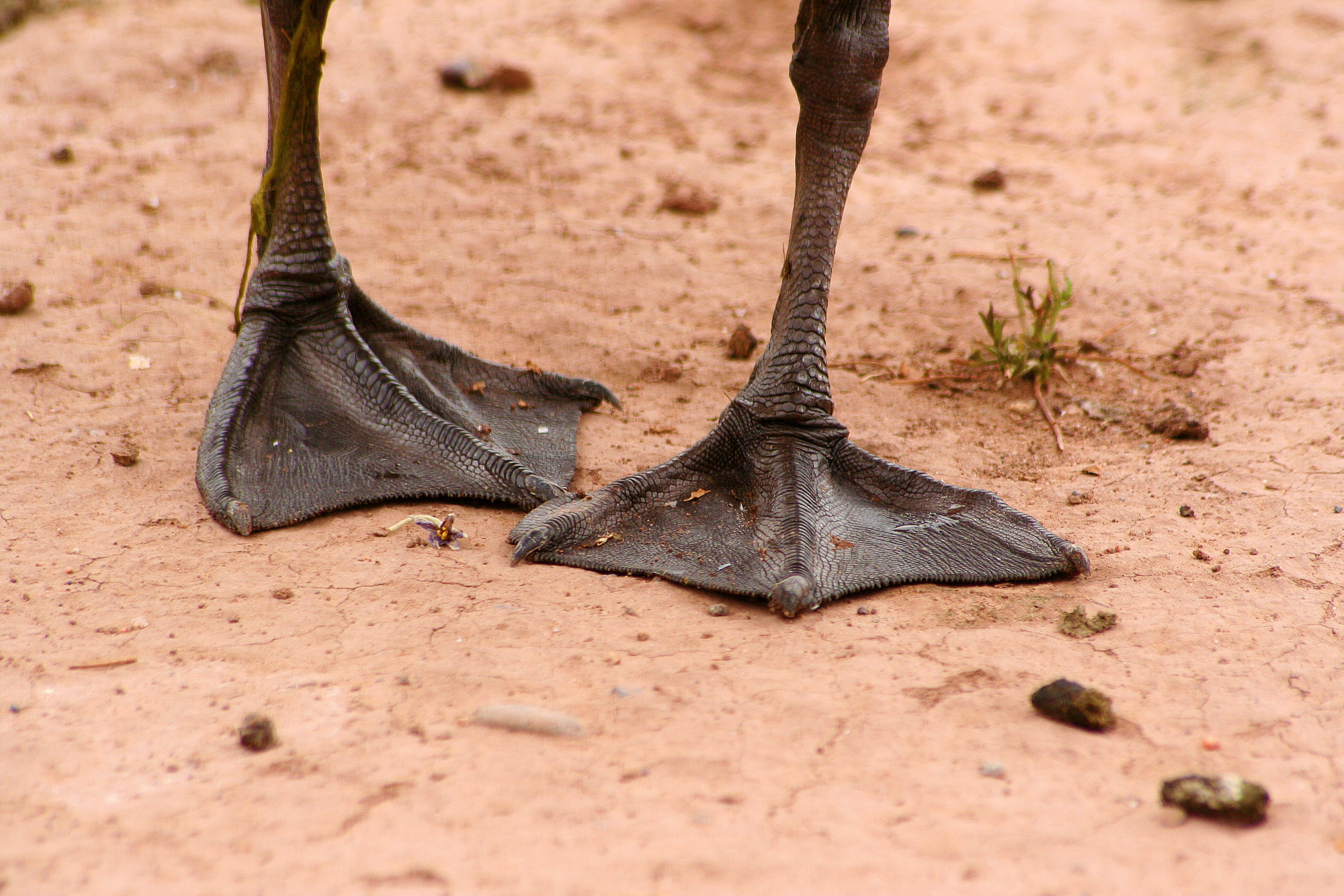
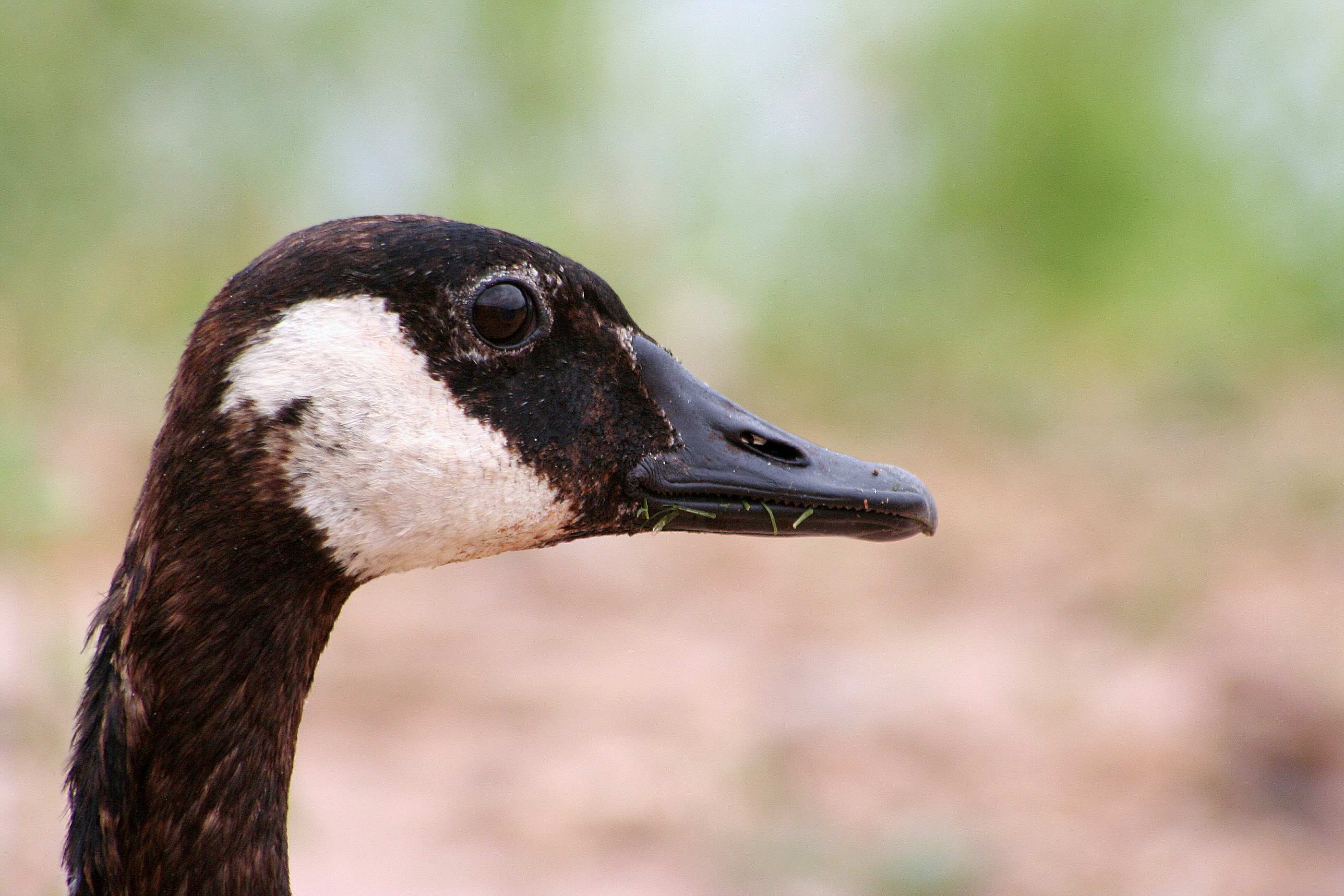
I loved watching the geese. They’re so full of personality. 

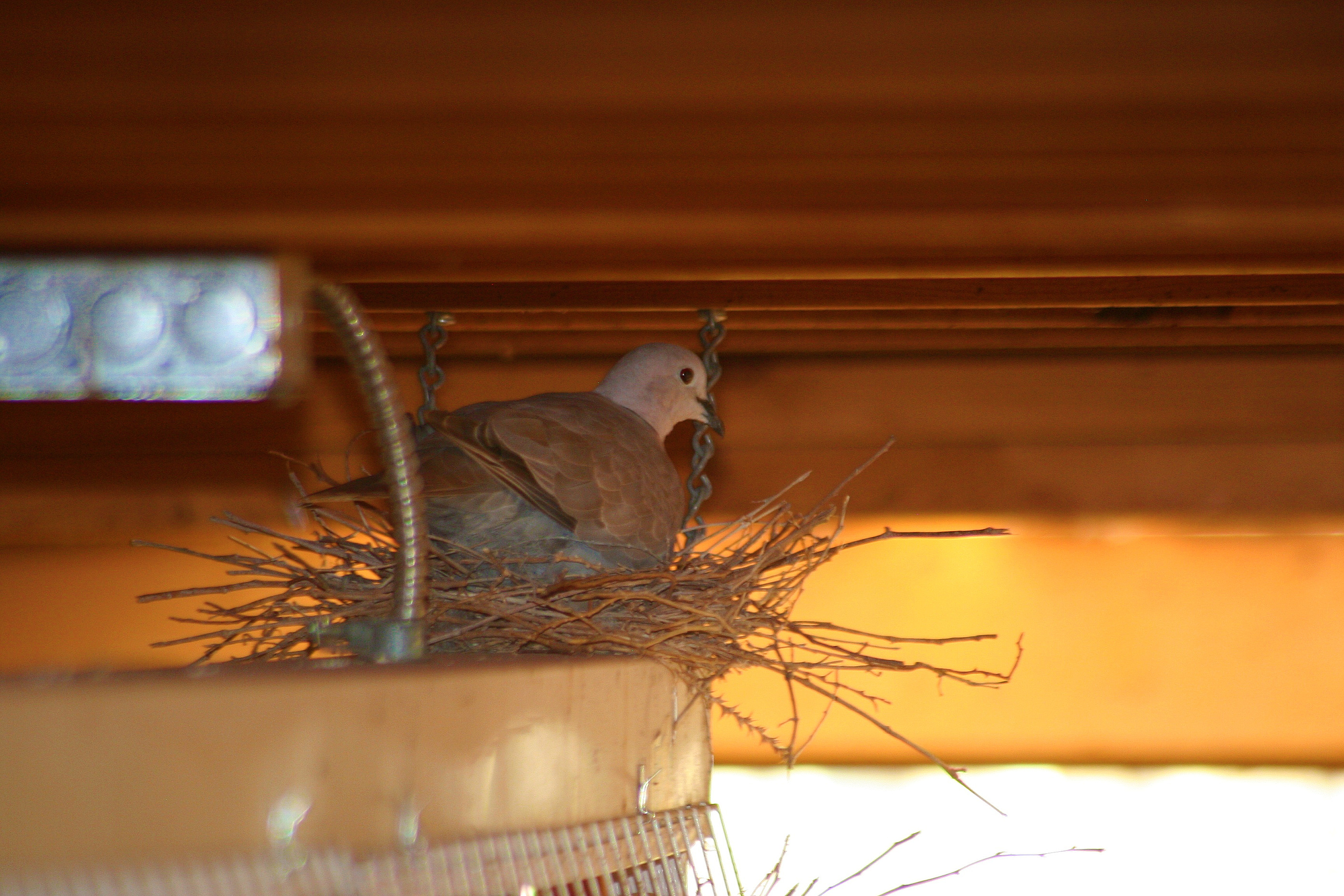
We have a dove nesting above one of the light fixtures in the barn. Not surprising due to the fact that we have a plethora of doves here.

One of the things I’ve come to love about blogging is that I learn so much – not only because I’m always looking things up to be accurate in my posts, but also because I’m constantly learning new things from all of you.

I found the screeching calls of the  doves in Albuquerque very strange until I took the time (only yesterday!) to identify our barn dove. She’s not a Mourning Dove. She’s a Eurasian Collared-Dove and has a very different voice than a Mourning Dove.

Some interesting facts about Eurasian Collared-Doves from whatbird.com:

  • The Eurasian Collared-Dove is one of two species that have been argued to be the wild ancestor of the domestic Barbary Dove.
  • Their scientific name, Streptopeleia decaocto, literally means a collar (streptos) dove (peleia). In Greek mythology, Decaocto was an overworked, underpaid servant girl. The gods heard her prayers for help and changed her into a dove so she could escape her misery. The dove’s call still echoes the mournful cries of her former life.
  • Introduced into the Bahamas in the 1970s, some migrated to Florida in the 1980s. They went unnoticed at first because they look much like the Ringed Turtle-Dove. It wasn’t until the mid-1980s that ornithologists realized the suddenly prolific and quickly spreading “turtle-doves” they were watching were actually Eurasian Collared-Doves. Their impact on native species is unknown; some have suggested that their spread represents exploitation of a niche made available by the extinction of the Passenger Pigeon.
  • A group of doves has many collective nouns, including a “bevy”, “cote”, “dole”, “dule”, and “flight” of doves.

We had so much fun watching Tina Louise; our neighbor’s puppy, play with Sam the rooster yesterday.  Tina Louise would chase Sam… then Sam would chase Tina Louise…

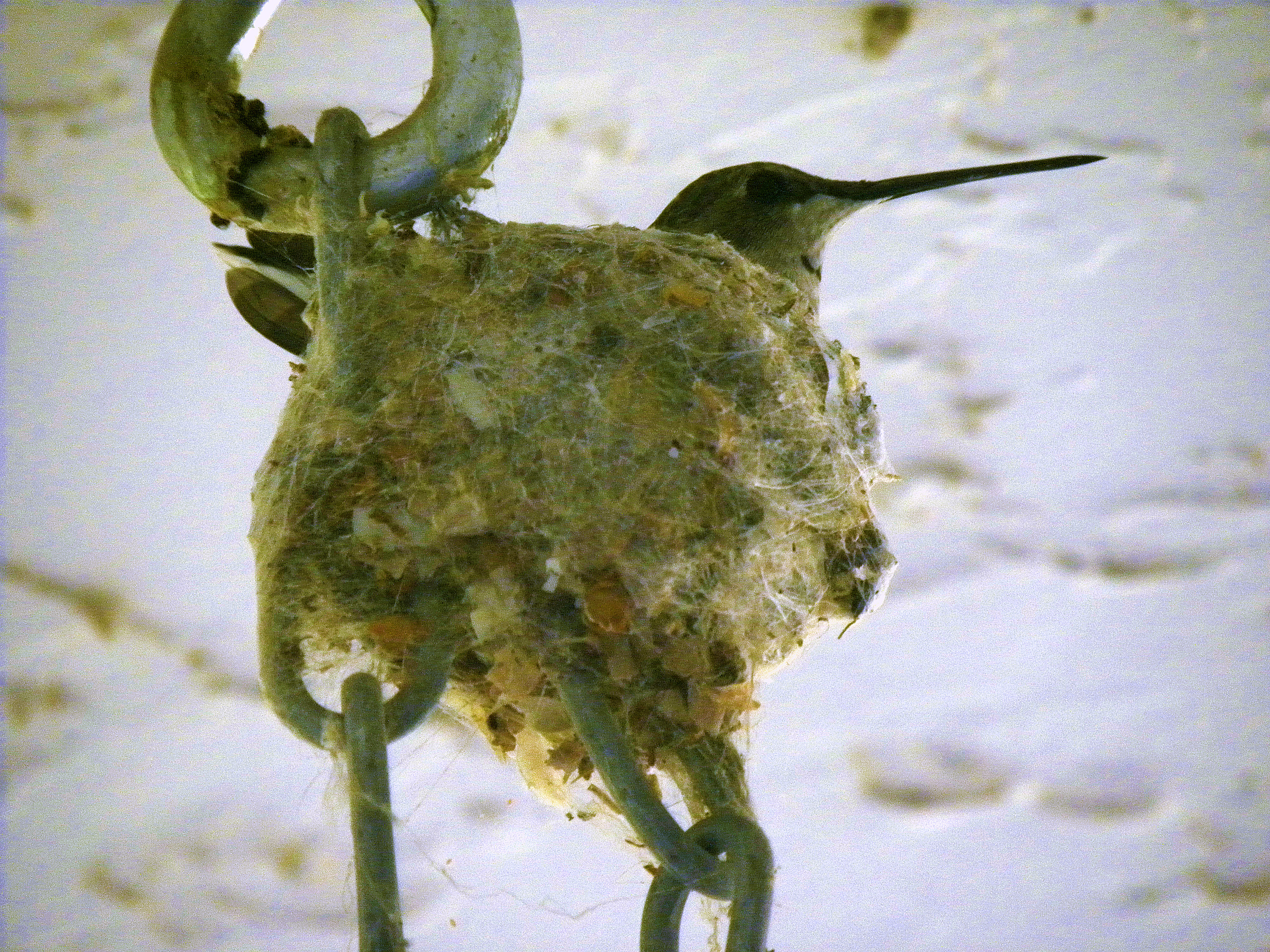
Right outside our kitchen window, a hummingbird sits in her nest. The nest is leftover from last year and was built on top of one of our porch swing chains. To give you some perspective, not much more than a quarter would fit easily into the nest.

I wish we could figure how to get a better picture without disturbing her or the nest. For now, we’ll stick to taking pictures through the window. In the meantime, you should check out this post from one of Carson’s visits to Morning Bray Farm last summer, when she took some amazing photos of our hummer babies.

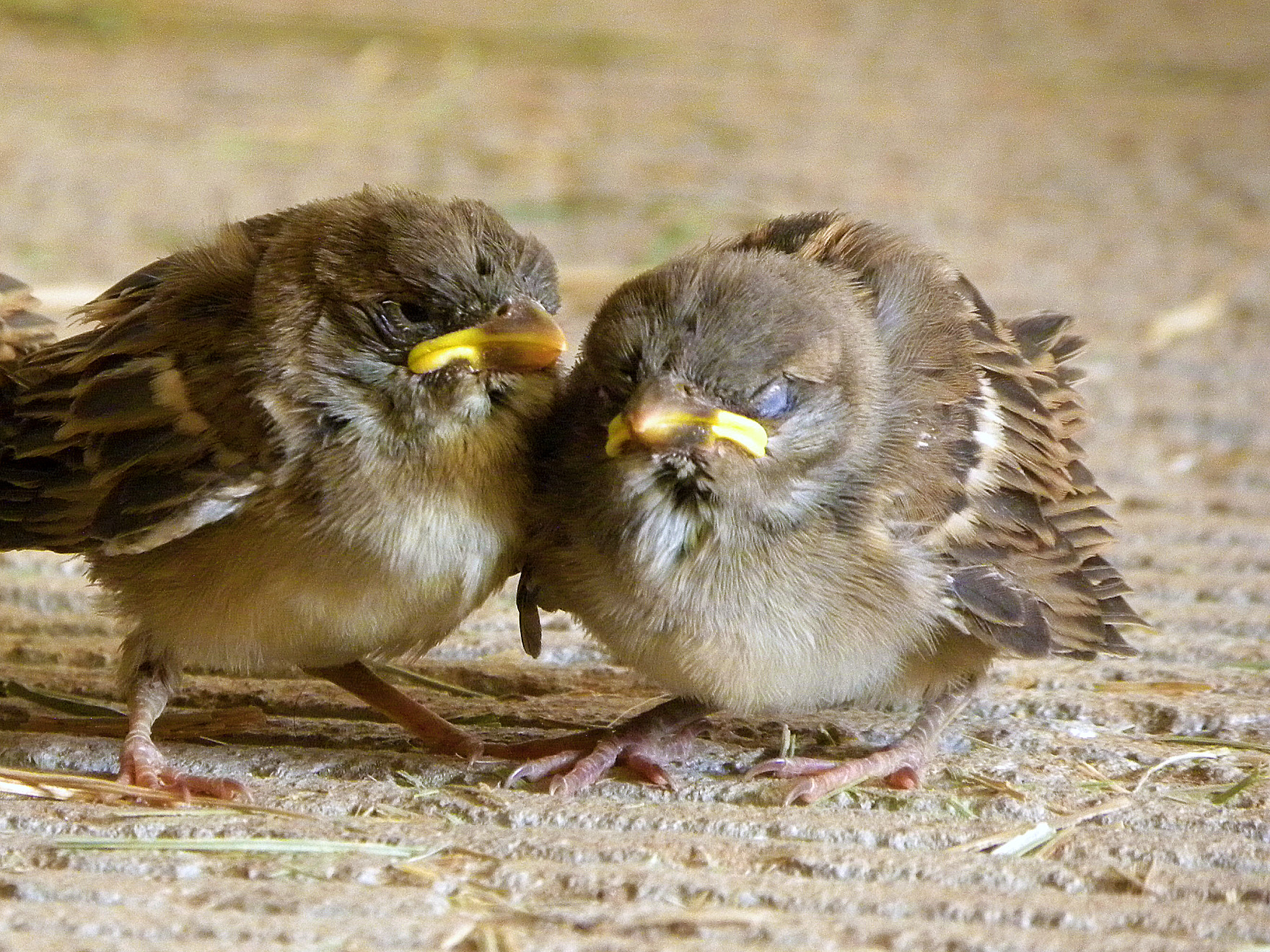
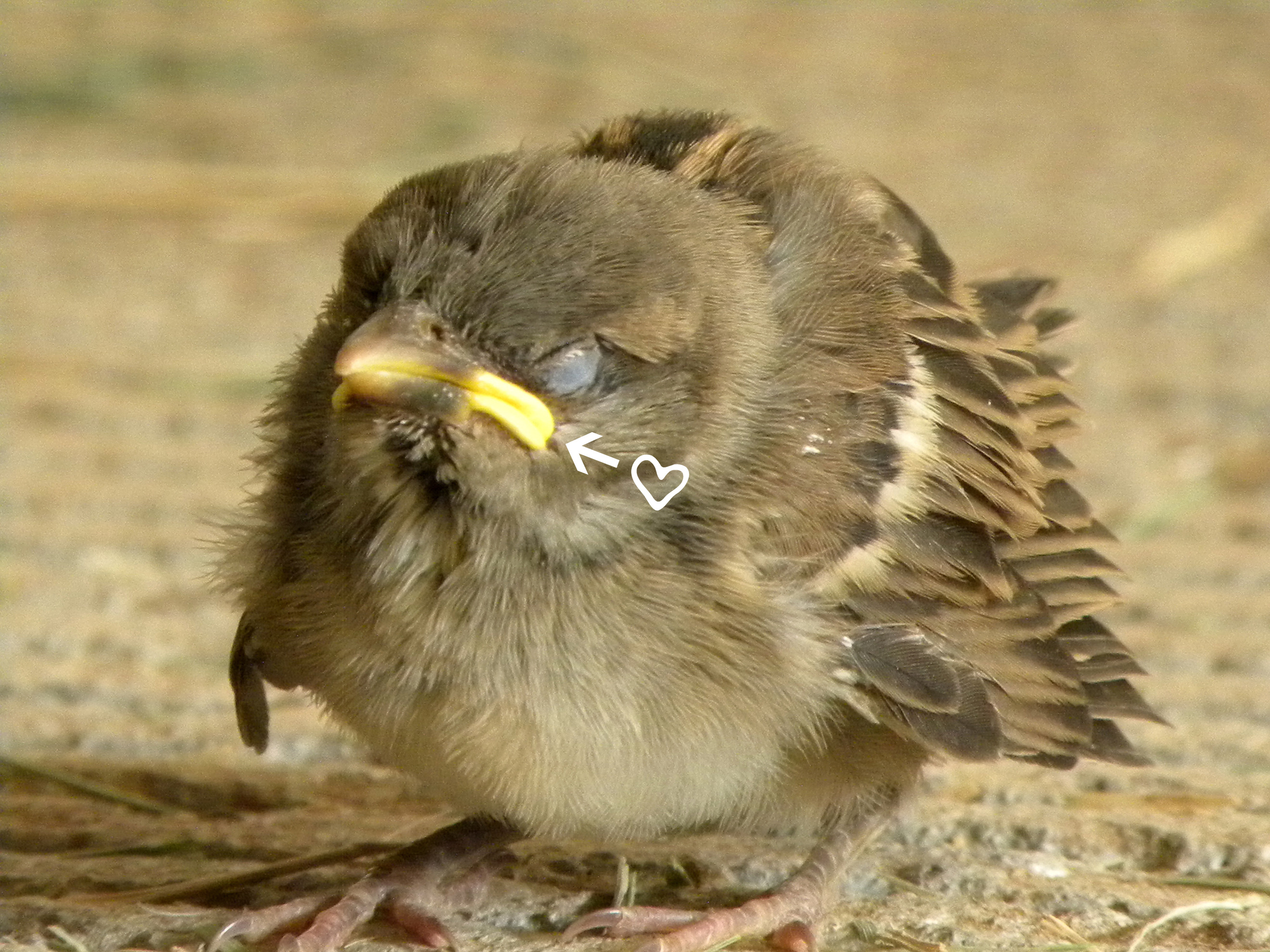
‘Tis the season for baby birds once again. These little guys were sitting on the barn floor Sunday afternoon.

I just love how well-defined their little mouths are. I wonder if they are designed that way to act as beacons for mom and dad.

I always find it comforting to hear their little peeps resonating throughout the barn.

Some interesting facts about sparrows from whatbird.com:

  • The Old Testament Bible associates the symbol of the sparrow with loneliness and solitude, while the New Testament views it as a sign of insignificance. Poor House Sparrow.
  • In Japan the sparrow is traditionally a symbol of loyalty, perhaps because of its sociable nature and how it gets along in large numbers.
  • These birds return to their birthplace after every migration (a characteristic known as philopatric). Because of this, local populations have adapted to the color of their habitat resulting in 15 distinct subspecies in the West.
  • A group of house sparrows are collectively known as a “blight”, “humiliation”, and “subdivision” of sparrows.

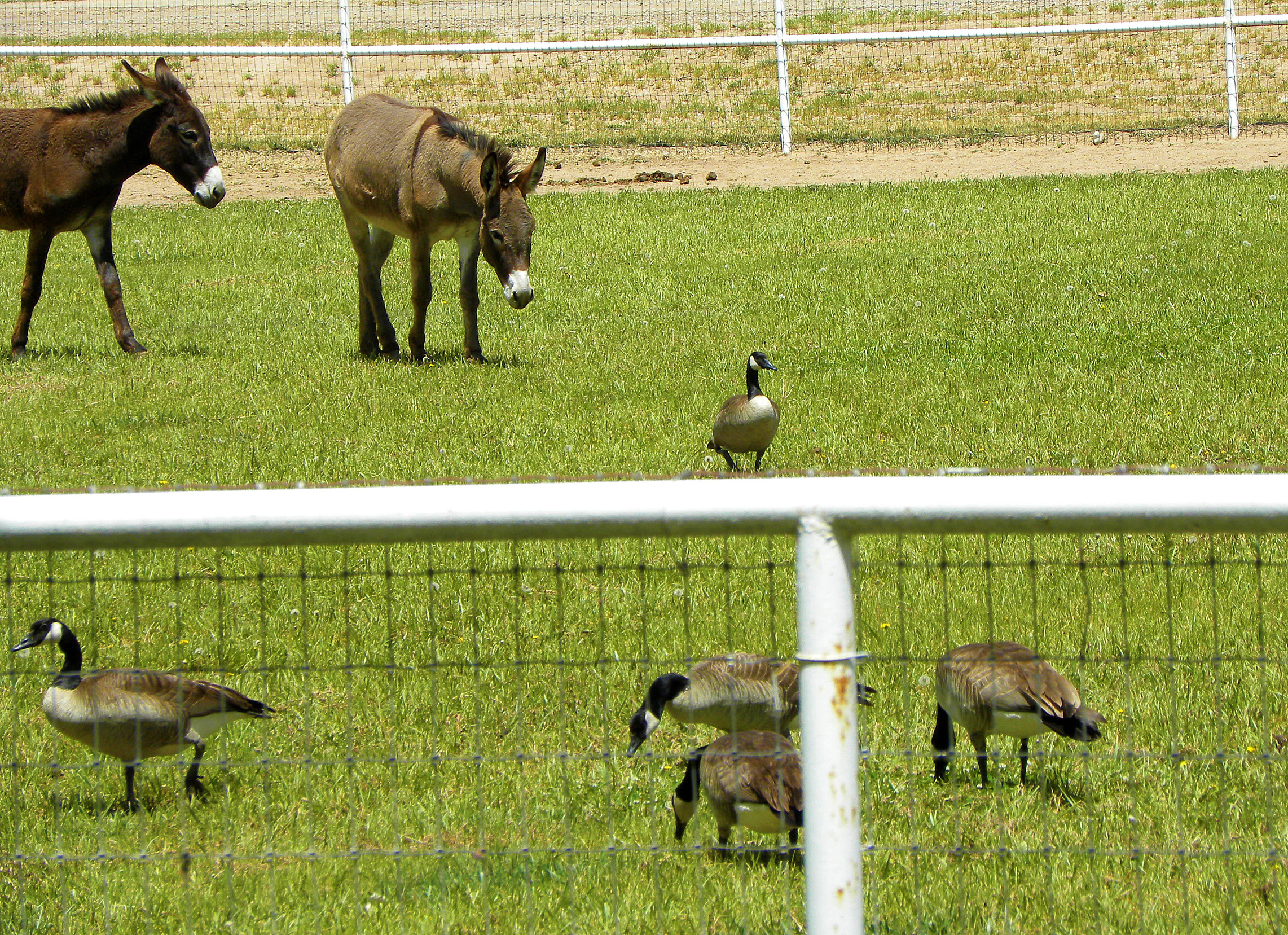
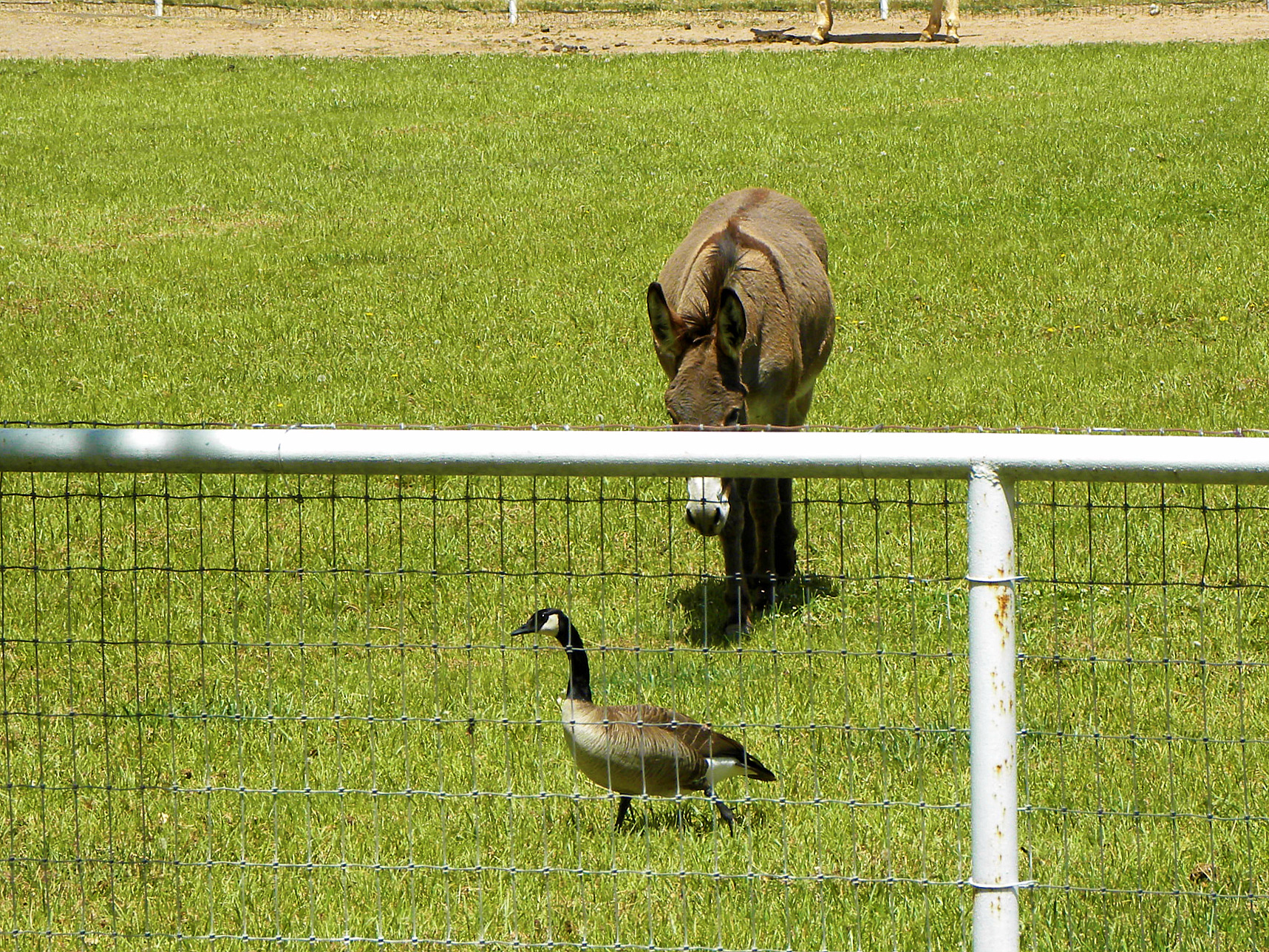
Canada geese were still hanging out in our pasture yesterday after we irrigated Saturday. Seeing as how Fergus and Nigel hail from just outside Death Valley National Park in California, I wonder if they’ve ever seen geese before coming to Morning Bray Farm. Fergus seemed quite intrigued.

 Poor Fergus. The geese didn’t seem quite as intrigued by him.

Wrapping things up from our 100th post celebration, Sandra asked to see what a Morning Bray Farm tote bag looks like. Here it is:

CeeCee asked us to explain how the boys had four very distinct emotions going on in the photo for that post. The answer: apple slices. ♥

« Previous PageNext Page »